

254 David Prandle
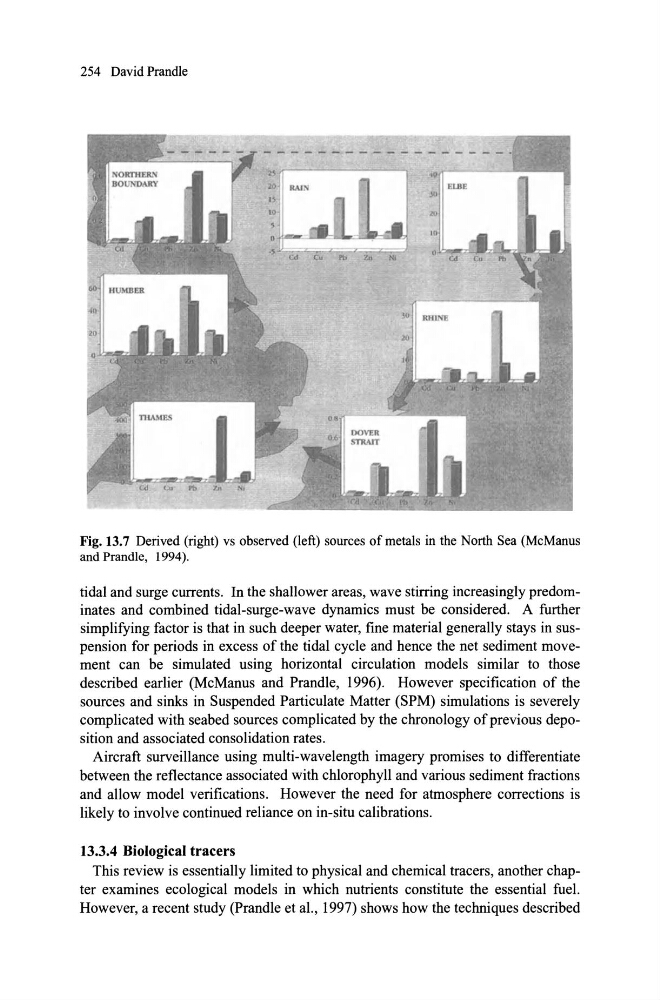
Fig. 13.7 Derived (right) vs observed (left) sources of metals in the North Sea (McManus
and Prandle, 1994).
tidal and surge currents. In the shallower areas, wave stirring increasingly predominates and combined tidal-surge-wave dynamics must be considered. A further
simplifying factor is that in such deeper water, fine material generally stays in suspension for periods in excess of the tidal cycle and hence the net sediment movement can be simulated using horizontal circulation models similar to those
described earlier (McManus and Prandle, 1996). However specification of the
sources and sinks in Suspended Particulate Matter (SPM) simulations is severely
complicated with seabed sources complicated by the chronology of previous deposition and associated consolidation rates.
Aircraft surveillance using multi-wavelength imagery promises to differentiate
between the reflectance associated with chlorophyll and various sediment fractions
and allow model verifications. However the need for atmosphere corrections is
likely to involve continued reliance on in-situ calibrations.
13.3.4 Biological tracers
This review is essentially limited to physical and chemi cal tracers, another chapter examines ecological models in which nutrients constitute the essential fuel.
However, a recent study (Prandle et al., 1997) shows how the techniques described
Fig. 13.7 Derived (right) vs observed (left) sources of metals in the North Sea (McManus
and Prandle, 1994).
tidal and surge currents. In the shallower areas, wave stirring increasingly predominates and combined tidal-surge-wave dynamics must be considered. A further
simplifying factor is that in such deeper water, fine material generally stays in suspension for periods in excess of the tidal cycle and hence the net sediment movement can be simulated using horizontal circulation models similar to those
described earlier (McManus and Prandle, 1996). However specification of the
sources and sinks in Suspended Particulate Matter (SPM) simulations is severely
complicated with seabed sources complicated by the chronology of previous deposition and associated consolidation rates.
Aircraft surveillance using multi-wavelength imagery promises to differentiate
between the reflectance associated with chlorophyll and various sediment fractions
and allow model verifications. However the need for atmosphere corrections is
likely to involve continued reliance on in-situ calibrations.
13.3.4 Biological tracers
This review is essentially limited to physical and chemi cal tracers, another chapter examines ecological models in which nutrients constitute the essential fuel.
However, a recent study (Prandle et al., 1997) shows how the techniques described