

Forecasting ofSea-leve1, Currents and Sea Ice in the Baltic Sea
235
Pressure
Wind
Temperature
Humidity
Clouds
HIRLAM
Atmospheric model
BOBA
Ice model
water stress
2D Ocean model
PROBE
ID vertical ocean model
r- -- - -- -- -- - - - - - - - - - - - ..
i HIRLAM i
i~-~~~~~-~-l _ _ _ _ _
'------,.------' '
i SST
i Observations
,
-------- -------,..------- --------,
i Ice freezing i
i and melting i
1 ______ - -
_______ .1
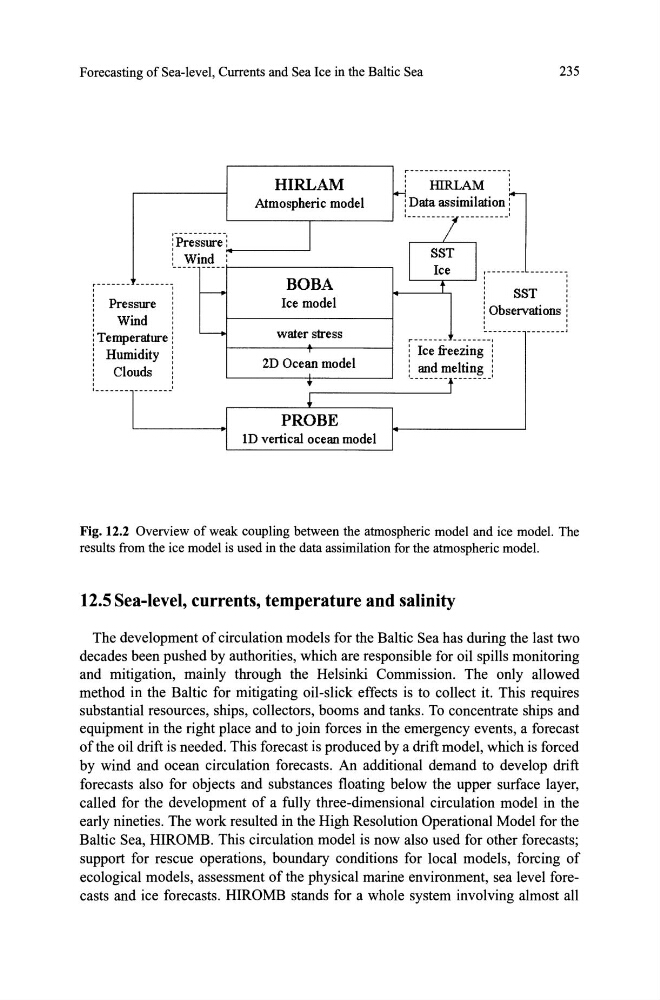
Fig. 12.2 Overview of weak coupling between the atmospheric model and ice model. The
results from the ice model is used in the data assimilation for the atmospheric model.
12.5 Sea-level, currents, temperature and salinity
The development of circulation models for the Baltic Sea has during the last two
decades been pushed by authorities, which are responsible for oiI spills monitoring
and mitigation, mainly through the Helsinki Commission. The only alIowed
method in the Baltic for mitigating oil-slick effects is to collect it. This requires
substantial resources, ships, collectors, booms and tanks. To concentrate ships and
equipment in the right place and to join forces in the emergency events, a forecast
of the oiI drift is needed. This forecast is produced by a drift model, which is forced
by wind and ocean circulation forecasts. An additional demand to develop drift
forecasts also for objects and substances floating below the upper surf ace layer,
called for the development of a fully three-dimensional circulation model in the
early nineties. The work resulted in the High Resolution Operational Model for the
Baltic Sea, HIROMB. This circulation model is now also used for other forecasts;
support for rescue operations, boundary conditions for local models, forcing of
ecological models, assessment of the physical marine environment, sea level forecasts and ice forecasts. HIROMB stands for a whole system involving almost alI
235
Pressure
Wind
Temperature
Humidity
Clouds
HIRLAM
Atmospheric model
BOBA
Ice model
water stress
2D Ocean model
PROBE
ID vertical ocean model
r- -- - -- -- -- - - - - - - - - - - - ..
i HIRLAM i
i~-~~~~~-~-l _ _ _ _ _
'------,.------' '
i SST
i Observations
,
-------- -------,..------- --------,
i Ice freezing i
i and melting i
1 ______ - -
_______ .1
Fig. 12.2 Overview of weak coupling between the atmospheric model and ice model. The
results from the ice model is used in the data assimilation for the atmospheric model.
12.5 Sea-level, currents, temperature and salinity
The development of circulation models for the Baltic Sea has during the last two
decades been pushed by authorities, which are responsible for oiI spills monitoring
and mitigation, mainly through the Helsinki Commission. The only alIowed
method in the Baltic for mitigating oil-slick effects is to collect it. This requires
substantial resources, ships, collectors, booms and tanks. To concentrate ships and
equipment in the right place and to join forces in the emergency events, a forecast
of the oiI drift is needed. This forecast is produced by a drift model, which is forced
by wind and ocean circulation forecasts. An additional demand to develop drift
forecasts also for objects and substances floating below the upper surf ace layer,
called for the development of a fully three-dimensional circulation model in the
early nineties. The work resulted in the High Resolution Operational Model for the
Baltic Sea, HIROMB. This circulation model is now also used for other forecasts;
support for rescue operations, boundary conditions for local models, forcing of
ecological models, assessment of the physical marine environment, sea level forecasts and ice forecasts. HIROMB stands for a whole system involving almost alI