

a
c
Numerical Examples
Ia.
1:301
Mo••.18•~
Min=-.0188
lcl
,. 301
M&u- 8280
M1n:. 1806
(OftiOul lnlcttvol 1261
69
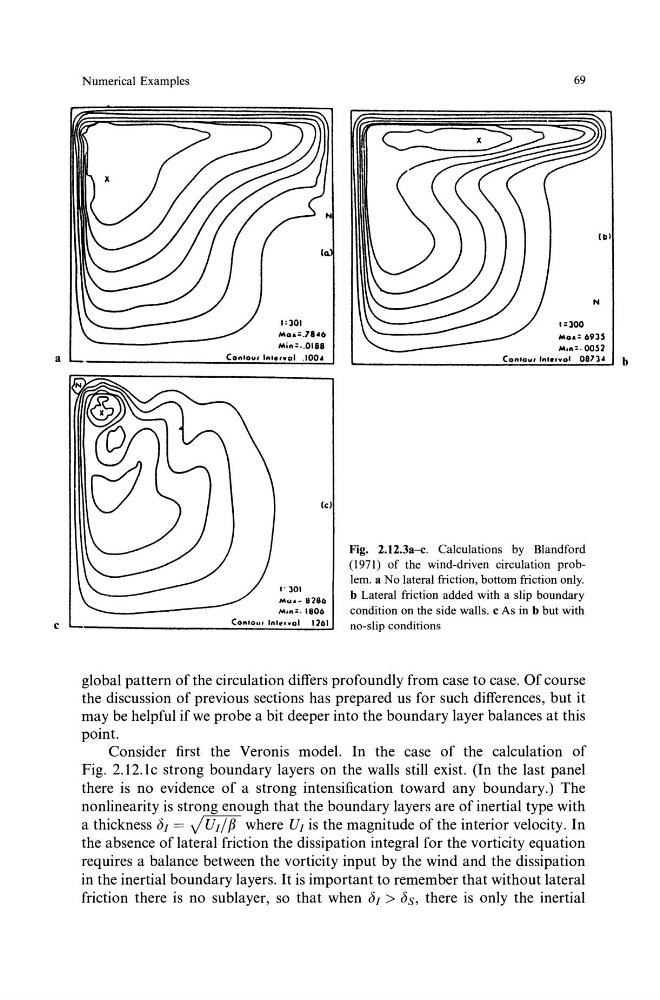
Fig. 2.12.3a-c. Calculations by Blandford
(1971) of the wind-driven circulation problem. a No lateral friction, bottom friction only.
b Lateral friction added with a slip boundary
condition on the side walls. c As in b but with
no-slip conditions
global pattern of the circulation differs profoundly from case to case. Of course
the discussion of previous sections has prepared us for such differences, but it
may be helpful if we probe a bit deeper into the boundary layer balances at this
point.
Consider first the Veronis model. In the case of the calculation of
Fig. 2.12.lc strong boundary layers on the walls still exist. (In the last panel
there is no evidence of a strong intensification toward any boundary.) The
nonlinearity is strong enough that the boundary layers are of inertial type with
a thickness ch = JUI/P where U1 is the magnitude of the interior velocity. In
the absence of lateral friction the dissipation integral for the vorticity equation
requires a balance between the vorticity input by the wind and the dissipation
in the inertial boundary layers. It is important to remember that without lateral
friction there is no sublayer, so that when (>1 > (> 8 , there is only the inertial
c
Numerical Examples
Ia.
1:301
Mo••.18•~
Min=-.0188
lcl
,. 301
M&u- 8280
M1n:. 1806
(OftiOul lnlcttvol 1261
69
Fig. 2.12.3a-c. Calculations by Blandford
(1971) of the wind-driven circulation problem. a No lateral friction, bottom friction only.
b Lateral friction added with a slip boundary
condition on the side walls. c As in b but with
no-slip conditions
global pattern of the circulation differs profoundly from case to case. Of course
the discussion of previous sections has prepared us for such differences, but it
may be helpful if we probe a bit deeper into the boundary layer balances at this
point.
Consider first the Veronis model. In the case of the calculation of
Fig. 2.12.lc strong boundary layers on the walls still exist. (In the last panel
there is no evidence of a strong intensification toward any boundary.) The
nonlinearity is strong enough that the boundary layers are of inertial type with
a thickness ch = JUI/P where U1 is the magnitude of the interior velocity. In
the absence of lateral friction the dissipation integral for the vorticity equation
requires a balance between the vorticity input by the wind and the dissipation
in the inertial boundary layers. It is important to remember that without lateral
friction there is no sublayer, so that when (>1 > (> 8 , there is only the inertial