

58
Russ E. Davis
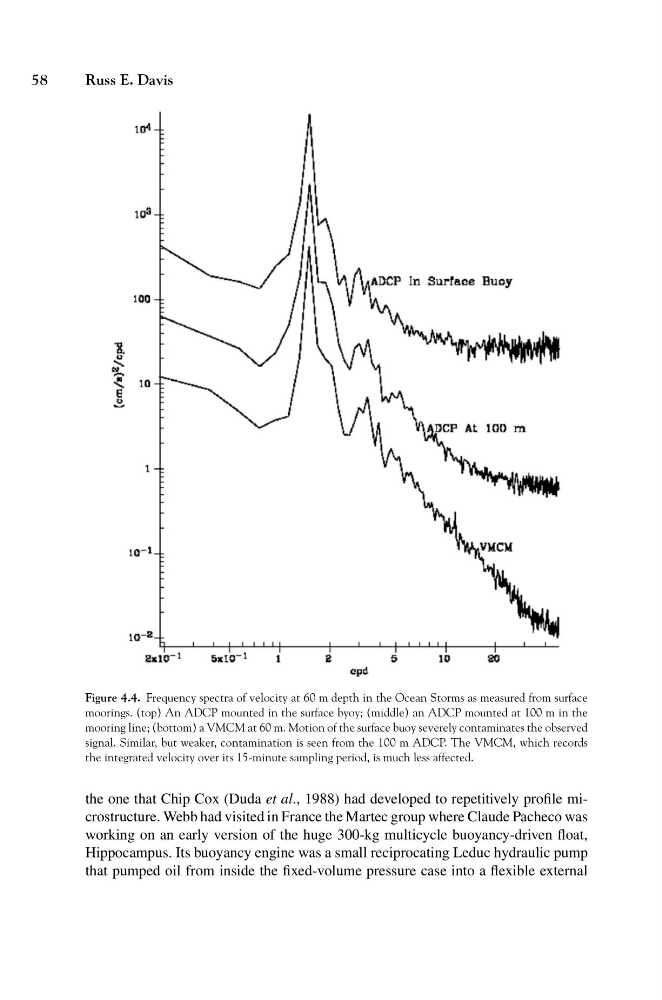
Figure 4.4. Frequency spectra of velocity at 60 m depth in the Ocean Storms as measured from surface
moorings. (top) An ADCP mounted in the surface byoy; (middle) an ADCP mounted at 100 m in the
mooring line; (bottom) a VMCM at 60 m. Motion of the surface buoy severely contaminates the observed
signal. Similar, but weaker, contamination is seen from the 100 m ADCP. The VMCM, which records
the integrated velocity over its 15-minute sampling period, is much less affected.
the one that Chip Cox (Duda et al., 1988) had developed to repetitively profile microstructure. Webb had visited in France the Martec group where Claude Pacheco was
working on an early version of the huge 300-kg multicycle buoyancy-driven float,
Hippocampus. Its buoyancy engine was a small reciprocating Leduc hydraulic pump
that pumped oil from inside the fixed-volume pressure case into a flexible external
Russ E. Davis
Figure 4.4. Frequency spectra of velocity at 60 m depth in the Ocean Storms as measured from surface
moorings. (top) An ADCP mounted in the surface byoy; (middle) an ADCP mounted at 100 m in the
mooring line; (bottom) a VMCM at 60 m. Motion of the surface buoy severely contaminates the observed
signal. Similar, but weaker, contamination is seen from the 100 m ADCP. The VMCM, which records
the integrated velocity over its 15-minute sampling period, is much less affected.
the one that Chip Cox (Duda et al., 1988) had developed to repetitively profile microstructure. Webb had visited in France the Martec group where Claude Pacheco was
working on an early version of the huge 300-kg multicycle buoyancy-driven float,
Hippocampus. Its buoyancy engine was a small reciprocating Leduc hydraulic pump
that pumped oil from inside the fixed-volume pressure case into a flexible external