

Modeling Ocean Circulation
33
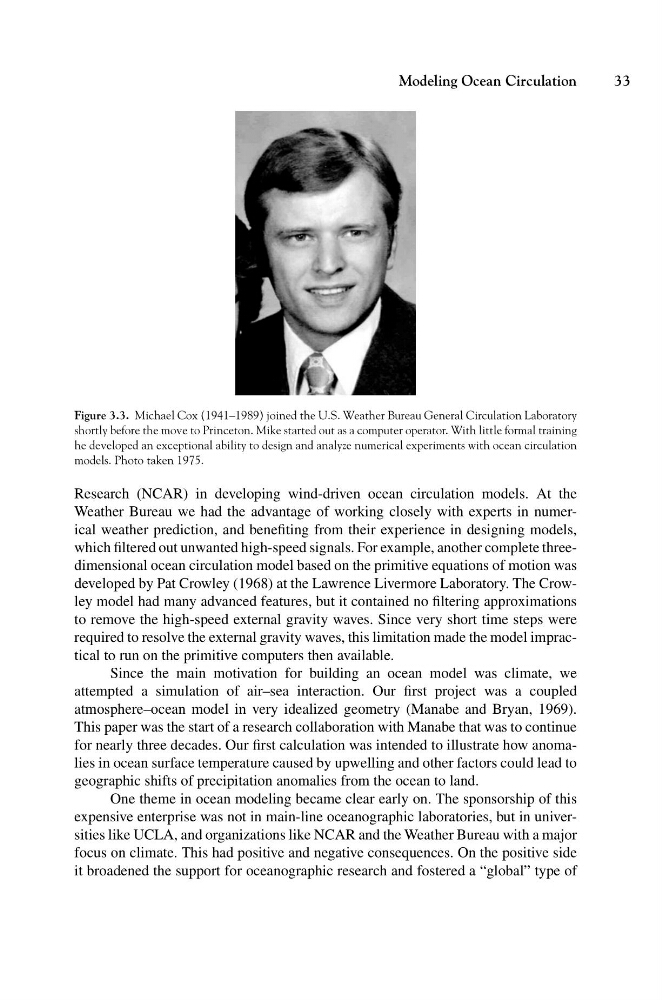
Figure 3.3. Michael Cox (1941–1989) joined the U.S. Weather Bureau General Circulation Laboratory
shortly before the move to Princeton. Mike started out as a computer operator. With little formal training
he developed an exceptional ability to design and analyze numerical experiments with ocean circulation
models. Photo taken 1975.
Research (NCAR) in developing wind-driven ocean circulation models. At the
Weather Bureau we had the advantage of working closely with experts in numerical weather prediction, and benefiting from their experience in designing models,
which filtered out unwanted high-speed signals. For example, another complete threedimensional ocean circulation model based on the primitive equations of motion was
developed by Pat Crowley (1968) at the Lawrence Livermore Laboratory. The Crowley model had many advanced features, but it contained no filtering approximations
to remove the high-speed external gravity waves. Since very short time steps were
required to resolve the external gravity waves, this limitation made the model impractical to run on the primitive computers then available.
Since the main motivation for building an ocean model was climate, we
attempted a simulation of air–sea interaction. Our first project was a coupled
atmosphere–ocean model in very idealized geometry (Manabe and Bryan, 1969).
This paper was the start of a research collaboration with Manabe that was to continue
for nearly three decades. Our first calculation was intended to illustrate how anomalies in ocean surface temperature caused by upwelling and other factors could lead to
geographic shifts of precipitation anomalies from the ocean to land.
One theme in ocean modeling became clear early on. The sponsorship of this
expensive enterprise was not in main-line oceanographic laboratories, but in universities like UCLA, and organizations like NCAR and the Weather Bureau with a major
focus on climate. This had positive and negative consequences. On the positive side
it broadened the support for oceanographic research and fostered a “global” type of
33
Figure 3.3. Michael Cox (1941–1989) joined the U.S. Weather Bureau General Circulation Laboratory
shortly before the move to Princeton. Mike started out as a computer operator. With little formal training
he developed an exceptional ability to design and analyze numerical experiments with ocean circulation
models. Photo taken 1975.
Research (NCAR) in developing wind-driven ocean circulation models. At the
Weather Bureau we had the advantage of working closely with experts in numerical weather prediction, and benefiting from their experience in designing models,
which filtered out unwanted high-speed signals. For example, another complete threedimensional ocean circulation model based on the primitive equations of motion was
developed by Pat Crowley (1968) at the Lawrence Livermore Laboratory. The Crowley model had many advanced features, but it contained no filtering approximations
to remove the high-speed external gravity waves. Since very short time steps were
required to resolve the external gravity waves, this limitation made the model impractical to run on the primitive computers then available.
Since the main motivation for building an ocean model was climate, we
attempted a simulation of air–sea interaction. Our first project was a coupled
atmosphere–ocean model in very idealized geometry (Manabe and Bryan, 1969).
This paper was the start of a research collaboration with Manabe that was to continue
for nearly three decades. Our first calculation was intended to illustrate how anomalies in ocean surface temperature caused by upwelling and other factors could lead to
geographic shifts of precipitation anomalies from the ocean to land.
One theme in ocean modeling became clear early on. The sponsorship of this
expensive enterprise was not in main-line oceanographic laboratories, but in universities like UCLA, and organizations like NCAR and the Weather Bureau with a major
focus on climate. This had positive and negative consequences. On the positive side
it broadened the support for oceanographic research and fostered a “global” type of