

196
Carl Wunsch
SOME AFTERTHOUGHTS
WOCE was a watershed in the history of oceanography, and it is difficult to envision
any similar program being carried out ever again: with WOCE, the era of pure exploration of the fluid ocean largely ended. One could no longer point (as we did in our
planning documents) to large regions of frequency/wave number space where there
was no information at all (e.g., “how much does the ocean vary on time scales of
3 months on spatial scales of 2000 km?” was an unaddressable question. Now we can
give very precise answers for much of the system.). We are now in an era where spatial
scales ranging from millimeters to 10,000 km, and global-scale temporal variations
of days to decades, have been measured. Not all such scales have been measured in
all geographical regions, but there is no longer a “mare incognita” of the same extent.
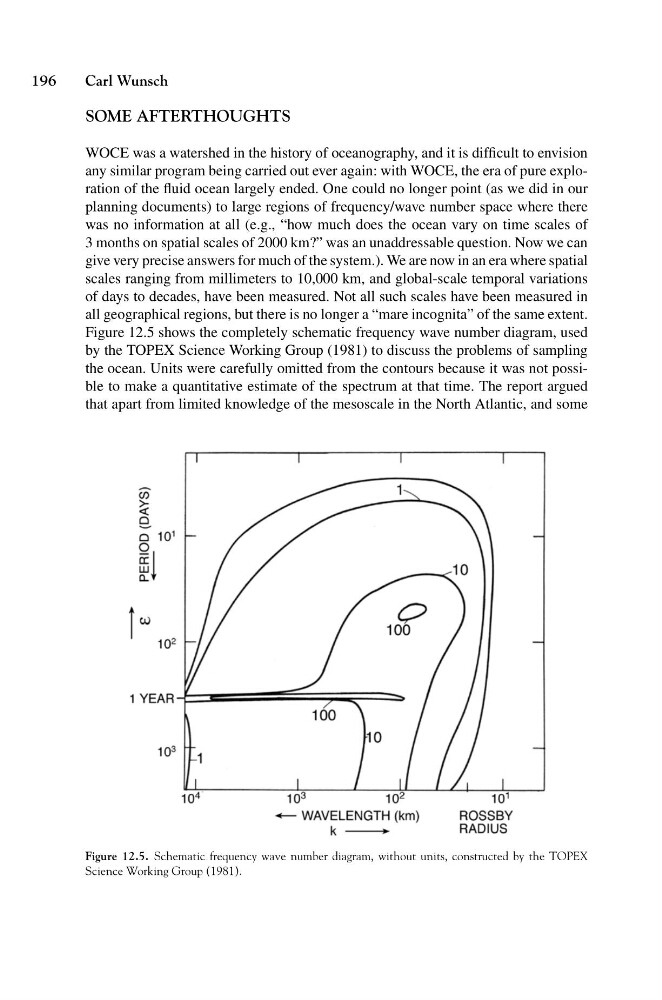
Figure 12.5 shows the completely schematic frequency wave number diagram, used
by the TOPEX Science Working Group (1981) to discuss the problems of sampling
the ocean. Units were carefully omitted from the contours because it was not possible to make a quantitative estimate of the spectrum at that time. The report argued
that apart from limited knowledge of the mesoscale in the North Atlantic, and some
Figure 12.5. Schematic frequency wave number diagram, without units, constructed by the TOPEX
Science Working Group (1981).
Carl Wunsch
SOME AFTERTHOUGHTS
WOCE was a watershed in the history of oceanography, and it is difficult to envision
any similar program being carried out ever again: with WOCE, the era of pure exploration of the fluid ocean largely ended. One could no longer point (as we did in our
planning documents) to large regions of frequency/wave number space where there
was no information at all (e.g., “how much does the ocean vary on time scales of
3 months on spatial scales of 2000 km?” was an unaddressable question. Now we can
give very precise answers for much of the system.). We are now in an era where spatial
scales ranging from millimeters to 10,000 km, and global-scale temporal variations
of days to decades, have been measured. Not all such scales have been measured in
all geographical regions, but there is no longer a “mare incognita” of the same extent.
Figure 12.5 shows the completely schematic frequency wave number diagram, used
by the TOPEX Science Working Group (1981) to discuss the problems of sampling
the ocean. Units were carefully omitted from the contours because it was not possible to make a quantitative estimate of the spectrum at that time. The report argued
that apart from limited knowledge of the mesoscale in the North Atlantic, and some
Figure 12.5. Schematic frequency wave number diagram, without units, constructed by the TOPEX
Science Working Group (1981).