

688
Herterich et al.
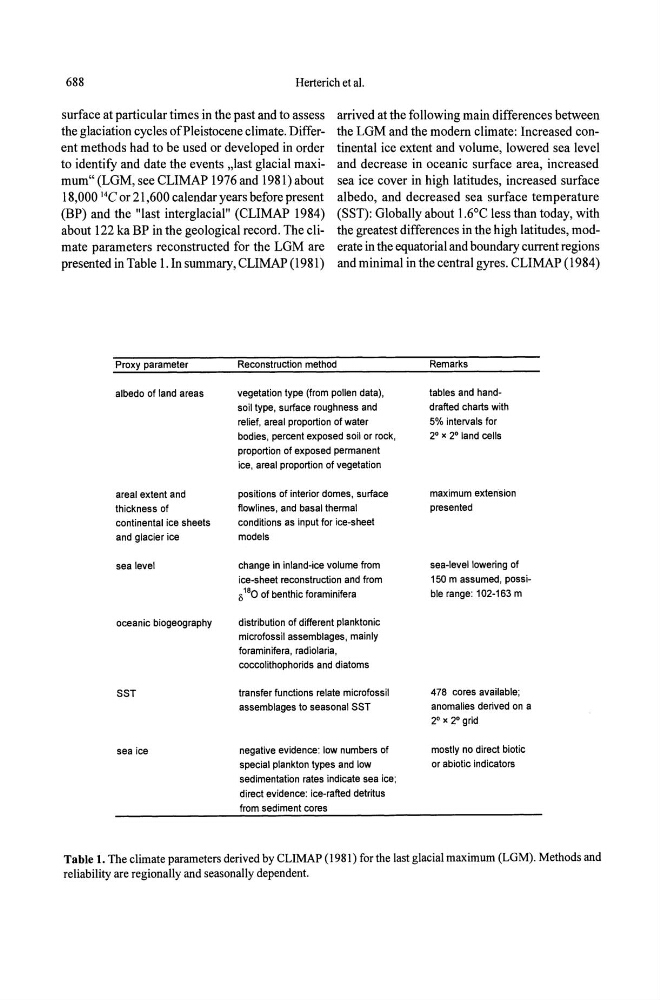
surface at particular times in the past and to assess arrived at the following main differences between
the glaciation cycles of Pleistocene climate. Differ- the LGM and the modem climate: Increased conent methods had to be used or developed in order tinental ice extent and volume, lowered sea level
to identify and date the events "Iast glacial maxi- and decrease in oceanic surface area, increased
mum" (LGM, see CLIMAP 1976 and 1981) about sea ice cover in high latitudes, increased surface
18,000 14C or 21 ,600 calendar years before present albedo, and decreased sea surface temperature
(BP) and the "last interglacial" (CLIMAP 1984) (SST): Globally about 1.6°C less than today, with
about 122 ka BP in the geological record. The c1i- the greatest differences in the high latitudes, modmate parameters reconstructed for the LGM are erate in the equatorial and boundary current regions
presented in Table 1. In summary, CLIMAP (1981) and minimal in the central gyres. CLIMAP (1984)
Proxy parameter
Reconstruction method
Remarks
albedo of land areas
vegetation type (from pollen data),
tables and handsoil type. surface roughness and
drafted charts with
relief, areal proportion of water
5% intervals for
bodies, percent exposed soil or rock,
2° x 2° land cells
proportion of exposed permanent
ice, areal proportion of vegetation
areal extent and
positions of interior domes, surface
maximum extension
thickness of
flowlines, and basal thermal
presented
continental ice sheets
conditions as input for ice-sheet
and glacier ice
models
sea level
change in inland-ice volume from
sea-level lowering of
ice-sheet reconstruction and from
150 m assumed, possiS 1BO of benthic foraminifera
ble range: 102-163 m
oceanic biogeography
distribution of different planktonic
microfossil assemblages, mainly
foraminifera, radiolaria,
coccolithophorids and diatoms
SST
transfer functions relate microfossil
478 cores available;
assemblages to seasonal SST
anomalies derived on a
2° x 2° grid
sea ice
negative evidence: low numbers of
mostly no direct biotic
special plankton types and low
or abiotic indicators
sedimentation rates indicate sea ice;
direct evidence: ice-rafted detritus
from sediment cores
Table 1. The climate parameters derived by CLIMAP (I 981) for the last glacial maximum (LGM). Methods and
reliability are regionally and seasonally dependent.