

450
Holmes et al.
6' W
O'
5' E
10' E
1S' E
20' E
AFRICA S' N
~ -<
0"
- - " SECC
5' 5
10' 5
15' 5
20' S
, ~
25' S
~
Orange R Iransect
30' S
1-- --,,..---,.---,.---+--.:..:::>..1- 35' S
1984). Combustion can be done off-line by placing
sample material in quartz tubes with cupric oxide
wire, silver foil and copper metal, evacuating and
sealing the tubes and heating them to 850°C and
then allowing them to cool slowly (Minagawa et al.
1984). Many laboratories, including our own, use
an automated system in which a CRN-elemental
analyzer is connected to an isotope ratio mass
spectrometer (Fry et al. 1992). Most of the samples discussed in the present work (except where
noted) were analyzed using a Heraeus CRN elemental analyzer and a Finnigan MAT 252 mass
spectrometer interfaced by an automated trapping
box. This method theoretically allows the measurement of 8 J3 C and 8 1 'N as well as the conceno'g
tration of bulk nitrogen and organic carbon (OC)
in one sample. The inorganic carbon fraction in the
sample, which is usually mainly carbonate, must be
removed in order to measure the organic carbon.
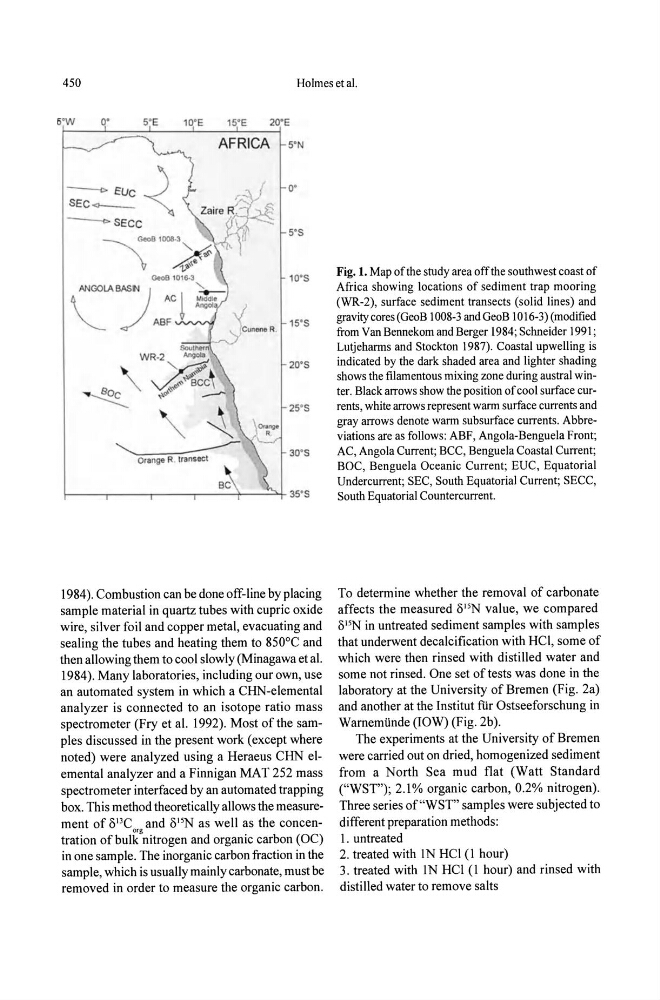
Fig. 1. Map of the study area off the southwest coast of
Africa showing locations of sediment trap mooring
(WR-2), surface sediment transects (solid lines) and
gravity cores (GeoB 1008-3 and GeoB 1016-3)(modified
from Van Bennekom and Berger 1984; Schneider 1991;
Lutjehanns and Stockton 1987). Coastal upwelling is
indicated by the dark shaded area and lighter shading
shows the filamentous mixing zone during austral winter. Black arrows show the position of cool surface currents, white arrows represent wann surface currents and
gray arrows denote wann subsurface currents. Abbreviations are as follows: ABF, Angola-Benguela Front;
AC, Angola Current; BCC, Benguela Coastal Current;
BOC, Benguela Oceanic Current; EUC, Equatorial
Undercurrent; SEC, South Equatorial Current; SECC,
South Equatorial Countercurrent.
To determine whether the removal of carbonate
affects the measured 8 1 'N value, we compared
8 1 'N in untreated sediment samples with samples
that underwent decalcification with HCI, some of
which were then rinsed with distilled water and
some not rinsed. One set of tests was done in the
laboratory at the University of Bremen (Fig. 2a)
and another at the Institut flir Ostseeforschung in
Warnemtinde (rOW) (Fig. 2b).
The experiments at the University of Bremen
were carried out on dried, homogenized sediment
from a North Sea mud flat (Watt Standard
("WST"); 2.1 % organic carbon, 0.2% nitrogen).
Three series of"WST" samples were subjected to
different preparation methods:
1. untreated
2. treated with IN HCI (1 hour)
3. treated with IN HCI (1 hour) and rinsed with
distilled water to remove salts
Holmes et al.
6' W
O'
5' E
10' E
1S' E
20' E
AFRICA S' N
~ -<
0"
- - " SECC
5' 5
10' 5
15' 5
20' S
, ~
25' S
~
Orange R Iransect
30' S
1-- --,,..---,.---,.---+--.:..:::>..1- 35' S
1984). Combustion can be done off-line by placing
sample material in quartz tubes with cupric oxide
wire, silver foil and copper metal, evacuating and
sealing the tubes and heating them to 850°C and
then allowing them to cool slowly (Minagawa et al.
1984). Many laboratories, including our own, use
an automated system in which a CRN-elemental
analyzer is connected to an isotope ratio mass
spectrometer (Fry et al. 1992). Most of the samples discussed in the present work (except where
noted) were analyzed using a Heraeus CRN elemental analyzer and a Finnigan MAT 252 mass
spectrometer interfaced by an automated trapping
box. This method theoretically allows the measurement of 8 J3 C and 8 1 'N as well as the conceno'g
tration of bulk nitrogen and organic carbon (OC)
in one sample. The inorganic carbon fraction in the
sample, which is usually mainly carbonate, must be
removed in order to measure the organic carbon.
Fig. 1. Map of the study area off the southwest coast of
Africa showing locations of sediment trap mooring
(WR-2), surface sediment transects (solid lines) and
gravity cores (GeoB 1008-3 and GeoB 1016-3)(modified
from Van Bennekom and Berger 1984; Schneider 1991;
Lutjehanns and Stockton 1987). Coastal upwelling is
indicated by the dark shaded area and lighter shading
shows the filamentous mixing zone during austral winter. Black arrows show the position of cool surface currents, white arrows represent wann surface currents and
gray arrows denote wann subsurface currents. Abbreviations are as follows: ABF, Angola-Benguela Front;
AC, Angola Current; BCC, Benguela Coastal Current;
BOC, Benguela Oceanic Current; EUC, Equatorial
Undercurrent; SEC, South Equatorial Current; SECC,
South Equatorial Countercurrent.
To determine whether the removal of carbonate
affects the measured 8 1 'N value, we compared
8 1 'N in untreated sediment samples with samples
that underwent decalcification with HCI, some of
which were then rinsed with distilled water and
some not rinsed. One set of tests was done in the
laboratory at the University of Bremen (Fig. 2a)
and another at the Institut flir Ostseeforschung in
Warnemtinde (rOW) (Fig. 2b).
The experiments at the University of Bremen
were carried out on dried, homogenized sediment
from a North Sea mud flat (Watt Standard
("WST"); 2.1 % organic carbon, 0.2% nitrogen).
Three series of"WST" samples were subjected to
different preparation methods:
1. untreated
2. treated with IN HCI (1 hour)
3. treated with IN HCI (1 hour) and rinsed with
distilled water to remove salts