

Stable Carbon Isotopes in Benthic Foraminifera
233
blowing away ofthe thin sea-ice cover, the surface
water sinks through the underlying warmer Weddell
Sea Deep Water (WSOW) and flows down the
slope (Carmack and Foster 1975; Foldvik and
Gammelsr0d 1988; Fahrbach et al. 1995).
The data further show a thermodynamic imprint
of 0.3 to 0.6 %0 in WSOW and Weddell Sea Bottom Water (WSBW). No indication, however, is
given that these isotopically heavy deep water
masses leave the Weddell Sea abyssal plain towards the north into the South Atlantic, at least in
the eastern part of the investigated area (Fig. 2).
There is so little newly formed WSOW and WSBW
leaving the northeastern Weddell Sea compared to
the amount of old \3C depleted CPOW that the ther60'
Argentlne
Basin
30'
• •
modynamic tag is diluted by mixing ofWSDW with
Circumpolar Deep Water (CPOW). This is in accordance with common oceanographic knowledge
of deep and bottom water circulation in the Southern Ocean that points to a mayor outflow of
WSOW into the western South Atlantic basins
(Georgi 1981;Reid 1989;Orsietal. 1993; Fahrbach
et al. 1995).
Because high ~&I)Cl:C02 values and low & 18 0
values are coupled to near-surface water and newly
formed bottom water in the Weddell Sea, one might
expect a good correlation between these two independent parameters. High ~&I)Cl:C02 values are
indicative of saline and dense waters formed by
convective mixing in polynyas, whereas low& 18 0
20'
0'
10'
00•• • • •
Weddell Sea ••
7075'
S
(011 F _·Ronoo Ice Shell)
~
5040'
70'
30'
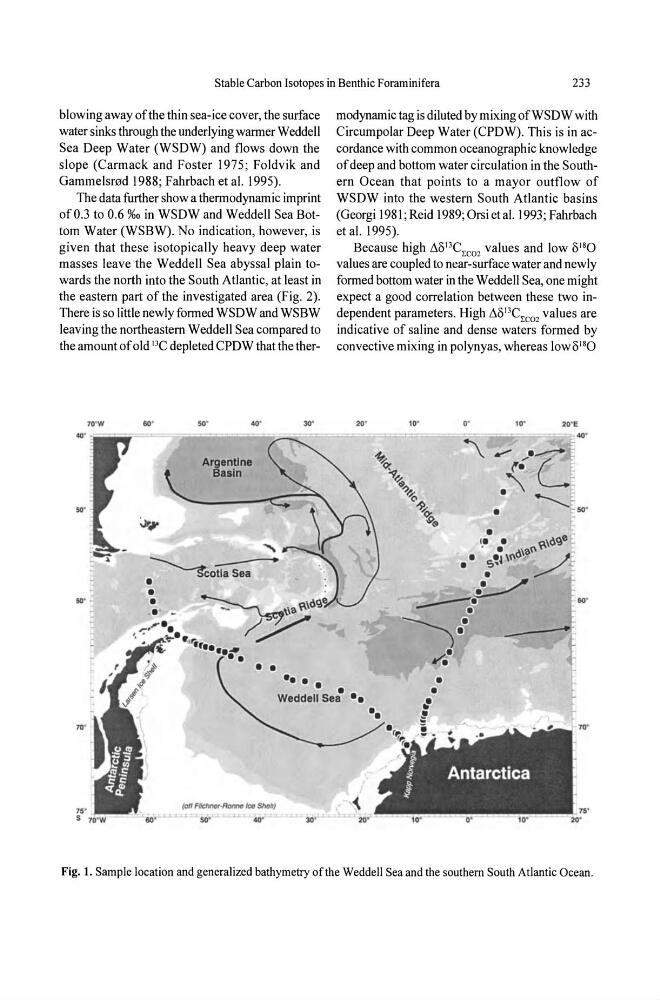
Fig. 1. Sample location and generalized bathymetry of the Weddell Sea and the southern South Atlantic Ocean.
233
blowing away ofthe thin sea-ice cover, the surface
water sinks through the underlying warmer Weddell
Sea Deep Water (WSOW) and flows down the
slope (Carmack and Foster 1975; Foldvik and
Gammelsr0d 1988; Fahrbach et al. 1995).
The data further show a thermodynamic imprint
of 0.3 to 0.6 %0 in WSOW and Weddell Sea Bottom Water (WSBW). No indication, however, is
given that these isotopically heavy deep water
masses leave the Weddell Sea abyssal plain towards the north into the South Atlantic, at least in
the eastern part of the investigated area (Fig. 2).
There is so little newly formed WSOW and WSBW
leaving the northeastern Weddell Sea compared to
the amount of old \3C depleted CPOW that the ther60'
Argentlne
Basin
30'
• •
modynamic tag is diluted by mixing ofWSDW with
Circumpolar Deep Water (CPOW). This is in accordance with common oceanographic knowledge
of deep and bottom water circulation in the Southern Ocean that points to a mayor outflow of
WSOW into the western South Atlantic basins
(Georgi 1981;Reid 1989;Orsietal. 1993; Fahrbach
et al. 1995).
Because high ~&I)Cl:C02 values and low & 18 0
values are coupled to near-surface water and newly
formed bottom water in the Weddell Sea, one might
expect a good correlation between these two independent parameters. High ~&I)Cl:C02 values are
indicative of saline and dense waters formed by
convective mixing in polynyas, whereas low& 18 0
20'
0'
10'
00•• • • •
Weddell Sea ••
7075'
S
(011 F _·Ronoo Ice Shell)
~
5040'
70'
30'
Fig. 1. Sample location and generalized bathymetry of the Weddell Sea and the southern South Atlantic Ocean.