

On the Reconstruction of Paleo salinities
209
31
29
. ..
0 27
. .
~
~
25
.a 23
£!!
..
Q)
~ 21
~
Cl 19
c:
·c
.a 17
:;
0 15
13 -3
-2
-1
o
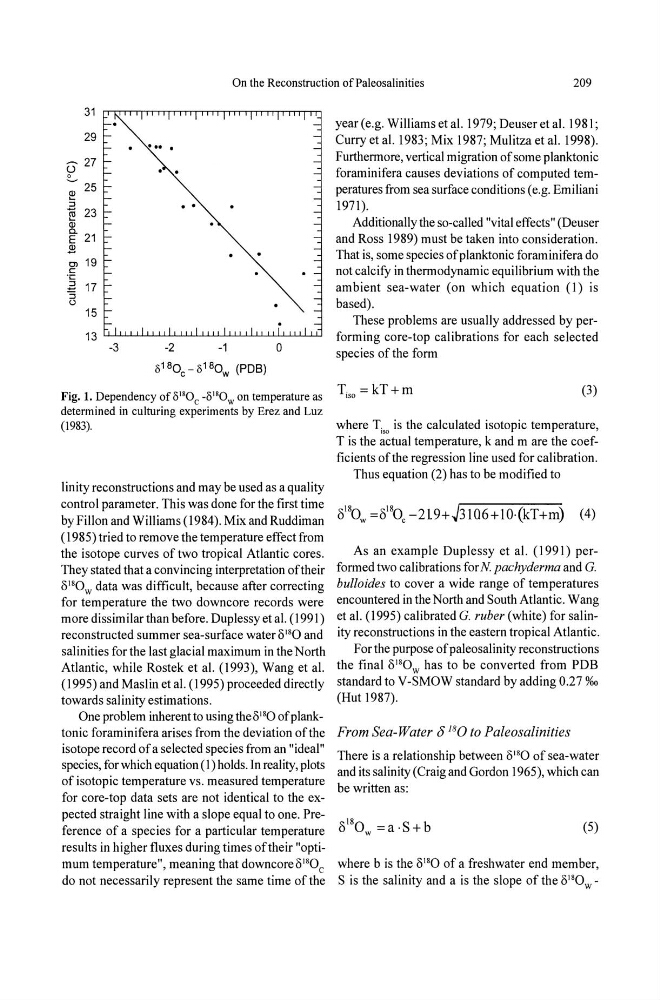
Fig. 1. Dependency of cS 1 ·Oc -cS 1 ·O W on temperature as
determined in culturing experiments by Erez and Luz
(1983).
Iinity reconstructions and may be used as a quality
control parameter. This was done for the first time
by Filion and Williams (1984). Mix and Ruddiman
(1985) tried to remove the temperature effect from
the isotope curves of two tropical Atlantic cores.
They stated that a convincing interpretation of their
8 1 ·O W data was difficult, because after correcting
for temperature the two downcore records were
more dissimilar than before. Duplessy et al. (1991 )
reconstructed summer sea-surface water 8 1 '0 and
salinities for the last glacial maximum in the North
Atlantic, while Rostek et al. (1993), Wang et al.
(1995) and Maslin et al. (1995) proceeded directly
towards salinity estimations.
One problem inherentto using the8 1 ·O of planktonic foraminifera arises from the deviation of the
isotope record of a selected species from an "ideal"
species, for which equation (I) holds. In reality, plots
of isotopic temperature vs. measured temperature
for core-top data sets are not identical to the expected straight line with a slope equal to one. Preference of a species for a particular temperature
results in higher fluxes during times oftheir "optimum temperature", meaning that downcore8 18 0 c
do not necessarily represent the same time ofthe
year (e.g. Williams et al. 1979; Deuser et al. 1981;
Curry et al. 1983; Mix 1987; Mulitza et al. 1998) .
Furthermore, vertical migration of some planktonic
foraminifera causes deviations of computed temperatures from sea surface conditions (e.g. Emiliani
1971) .
Additionally the so-called "vital effects" (Deuser
and Ross 1989) must be taken into consideration.
That is, some species of planktonic foraminifera do
not calcify in thermodynamic equilibrium with the
ambient sea-water (on which equation (I) is
based).
These problems are usually addressed by performing core-top calibrations for each selected
species ofthe form
T iso =kT+rn
(3)
where T iso is the calculated isotopic temperature,
T is the actual temperature, k and m are the coefficients ofthe regression line used for calibration.
Thus equation (2) has to be modified to
As an example Duplessy et al. (1991) performed two calibrations for N pachyderma and G.
bulloides to cover a wide range of temperatures
encountered in the North and South Atlantic. Wang
et al. (1995) calibrated G. ruber (white) for salinity reconstructions in the eastern tropical Atlantic.
For the purpose of paleosalinity reconstructions
the final 8 18 0 W has to be converted from PDB
standard to V-SMOW standard by adding 0.27 %.
(Hut 1987).
From Sea-Water (j 18 0 to Paleosalinities
There is a relationship between 8180 of sea-water
and its salinity (Craig and Gordon 1965), which can
be written as:
(5)
where b is the 8180 of a freshwater end member,
S is the salinity and a is the slope of the 8 18 0 w -
209
31
29
. ..
0 27
. .
~
~
25
.a 23
£!!
..
Q)
~ 21
~
Cl 19
c:
·c
.a 17
:;
0 15
13 -3
-2
-1
o
Fig. 1. Dependency of cS 1 ·Oc -cS 1 ·O W on temperature as
determined in culturing experiments by Erez and Luz
(1983).
Iinity reconstructions and may be used as a quality
control parameter. This was done for the first time
by Filion and Williams (1984). Mix and Ruddiman
(1985) tried to remove the temperature effect from
the isotope curves of two tropical Atlantic cores.
They stated that a convincing interpretation of their
8 1 ·O W data was difficult, because after correcting
for temperature the two downcore records were
more dissimilar than before. Duplessy et al. (1991 )
reconstructed summer sea-surface water 8 1 '0 and
salinities for the last glacial maximum in the North
Atlantic, while Rostek et al. (1993), Wang et al.
(1995) and Maslin et al. (1995) proceeded directly
towards salinity estimations.
One problem inherentto using the8 1 ·O of planktonic foraminifera arises from the deviation of the
isotope record of a selected species from an "ideal"
species, for which equation (I) holds. In reality, plots
of isotopic temperature vs. measured temperature
for core-top data sets are not identical to the expected straight line with a slope equal to one. Preference of a species for a particular temperature
results in higher fluxes during times oftheir "optimum temperature", meaning that downcore8 18 0 c
do not necessarily represent the same time ofthe
year (e.g. Williams et al. 1979; Deuser et al. 1981;
Curry et al. 1983; Mix 1987; Mulitza et al. 1998) .
Furthermore, vertical migration of some planktonic
foraminifera causes deviations of computed temperatures from sea surface conditions (e.g. Emiliani
1971) .
Additionally the so-called "vital effects" (Deuser
and Ross 1989) must be taken into consideration.
That is, some species of planktonic foraminifera do
not calcify in thermodynamic equilibrium with the
ambient sea-water (on which equation (I) is
based).
These problems are usually addressed by performing core-top calibrations for each selected
species ofthe form
T iso =kT+rn
(3)
where T iso is the calculated isotopic temperature,
T is the actual temperature, k and m are the coefficients ofthe regression line used for calibration.
Thus equation (2) has to be modified to
As an example Duplessy et al. (1991) performed two calibrations for N pachyderma and G.
bulloides to cover a wide range of temperatures
encountered in the North and South Atlantic. Wang
et al. (1995) calibrated G. ruber (white) for salinity reconstructions in the eastern tropical Atlantic.
For the purpose of paleosalinity reconstructions
the final 8 18 0 W has to be converted from PDB
standard to V-SMOW standard by adding 0.27 %.
(Hut 1987).
From Sea-Water (j 18 0 to Paleosalinities
There is a relationship between 8180 of sea-water
and its salinity (Craig and Gordon 1965), which can
be written as:
(5)
where b is the 8180 of a freshwater end member,
S is the salinity and a is the slope of the 8 18 0 w -