

8
Weferetal.
A
Equatorial Divergence - GeoS 1105
30 Warm season
MAT
25
20
15
e:
25
!!! 20
::>
i!
l'i 15
E
..
t- 10
10 Seasonal contrast
,j ,,:~ :' " MAT ./ . ./-/1':\
5
j:\..:' ~'.J :.{ .. \ t\ /
o
.. '
i'
o
3
. ,
5
, i '
100
Age (ka)
7
, .
200
B South Equatorial Current - GeoB 1112
30 1
:~.~rm sea:on .:'. " ~'~' ~" "
25
.............. ::.....
. .... .
20
TTF
15 Cold season
MAT
e:
25
~ 20
~
l'i 15
E
. .
t- 10
8
4
o
Seasonal contrast
I ' , , , ,
i i ' i i ' i • , i i , , • , i • , , i i i
o
100
200
Age (ka)
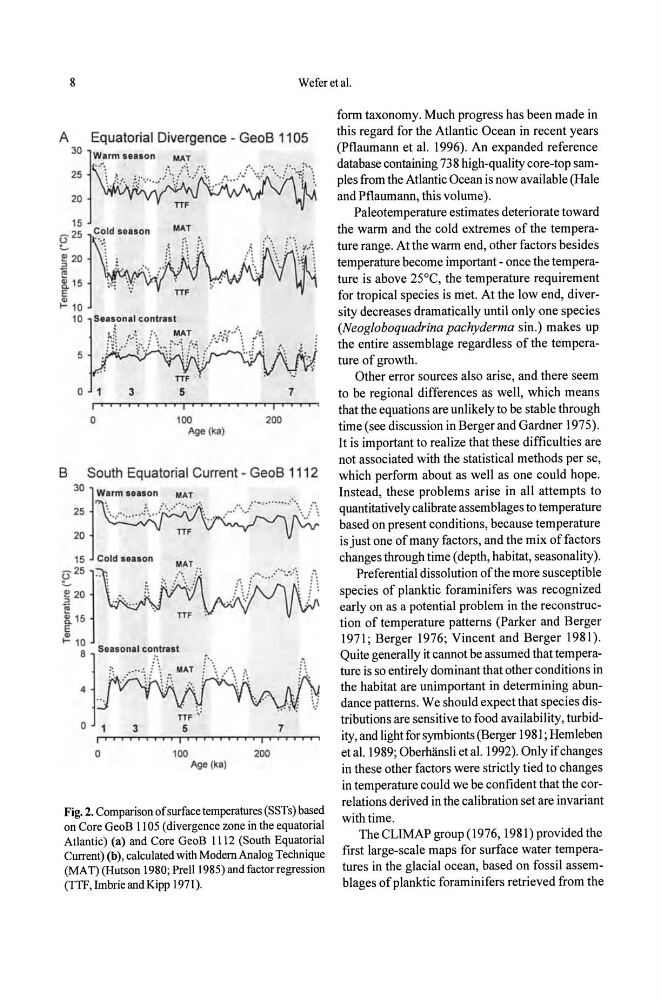
Fig. 2. Comparison of surface temperatures (SSTs) based
on Core GeoB 11 05 (divergence zone in the equatorial
Atlantic) (a) and Core GeoB 1112 (South Equatorial
Current) (b), calculated with Modem Analog Technique
(MAT) (Hutson 1980; Prell \985) and factor regression
(TTF, Imbrie and Kipp 1971).
form taxonomy. Much progress has been made in
this regard for the Atlantic Ocean in recent years
(Ptlaumann et al. 1996). An expanded reference
database containing 738 high-quality core-top samples from the Atlantic Ocean is now available (Hale
and Ptlaumann, this volume).
Paleotemperature estimates deteriorate toward
the warm and the cold extremes of the temperature range. At the warm end, other factors besides
temperature become important - once the temperature is above 25°C, the temperature requirement
for tropical species is met. At the low end, diversity decreases dramatically until only one species
(Neogloboquadrina pachyderm a sin.) makes up
the entire assemblage regardless of the temperature of growth .
Other error sources also arise, and there seem
to be regional differences as well, which means
that the equations are unlikely to be stable through
time (see discussion in Berger and Gardner 1975).
It is important to realize that these difficulties are
not associated with the statistical methods per se,
which perform about as well as one could hope.
Instead, these problems arise in all attempts to
quantitatively calibrate assemblages to temperature
based on present conditions, because temperature
isjust one of many factors, and the mix of factors
changes through time (depth, habitat, seasonality).
Preferential dissolution ofthe more susceptible
species of planktic foraminifers was recognized
early on as a potential problem in the reconstruction of temperature patterns (Parker and Berger
1971; Berger 1976; Vincent and Berger 1981).
Quite generally it cannot be assumed that temperature is so entirely dominant that other conditions in
the habitat are unimportant in determining abundance patterns. We should expect that species distributions are sensitive to food availability, turbidity, and light for symbionts (Berger 1981; Hemleben
et al. 1989; Oberhansli et al. 1992). Only if changes
in these other factors were strictly tied to changes
in temperature could we be confident that the correlations derived in the calibration set are invariant
with time.
The CLIMAP group (1976, 1981) provided the
first large-scale maps for surface water temperatures in the glacial ocean, based on fossil assemblages of planktic foraminifers retrieved from the
Weferetal.
A
Equatorial Divergence - GeoS 1105
30 Warm season
MAT
25
20
15
e:
25
!!! 20
::>
i!
l'i 15
E
..
t- 10
10 Seasonal contrast
,j ,,:~ :' " MAT ./ . ./-/1':\
5
j:\..:' ~'.J :.{ .. \ t\ /
o
.. '
i'
o
3
. ,
5
, i '
100
Age (ka)
7
, .
200
B South Equatorial Current - GeoB 1112
30 1
:~.~rm sea:on .:'. " ~'~' ~" "
25
.............. ::.....
. .... .
20
TTF
15 Cold season
MAT
e:
25
~ 20
~
l'i 15
E
. .
t- 10
8
4
o
Seasonal contrast
I ' , , , ,
i i ' i i ' i • , i i , , • , i • , , i i i
o
100
200
Age (ka)
Fig. 2. Comparison of surface temperatures (SSTs) based
on Core GeoB 11 05 (divergence zone in the equatorial
Atlantic) (a) and Core GeoB 1112 (South Equatorial
Current) (b), calculated with Modem Analog Technique
(MAT) (Hutson 1980; Prell \985) and factor regression
(TTF, Imbrie and Kipp 1971).
form taxonomy. Much progress has been made in
this regard for the Atlantic Ocean in recent years
(Ptlaumann et al. 1996). An expanded reference
database containing 738 high-quality core-top samples from the Atlantic Ocean is now available (Hale
and Ptlaumann, this volume).
Paleotemperature estimates deteriorate toward
the warm and the cold extremes of the temperature range. At the warm end, other factors besides
temperature become important - once the temperature is above 25°C, the temperature requirement
for tropical species is met. At the low end, diversity decreases dramatically until only one species
(Neogloboquadrina pachyderm a sin.) makes up
the entire assemblage regardless of the temperature of growth .
Other error sources also arise, and there seem
to be regional differences as well, which means
that the equations are unlikely to be stable through
time (see discussion in Berger and Gardner 1975).
It is important to realize that these difficulties are
not associated with the statistical methods per se,
which perform about as well as one could hope.
Instead, these problems arise in all attempts to
quantitatively calibrate assemblages to temperature
based on present conditions, because temperature
isjust one of many factors, and the mix of factors
changes through time (depth, habitat, seasonality).
Preferential dissolution ofthe more susceptible
species of planktic foraminifers was recognized
early on as a potential problem in the reconstruction of temperature patterns (Parker and Berger
1971; Berger 1976; Vincent and Berger 1981).
Quite generally it cannot be assumed that temperature is so entirely dominant that other conditions in
the habitat are unimportant in determining abundance patterns. We should expect that species distributions are sensitive to food availability, turbidity, and light for symbionts (Berger 1981; Hemleben
et al. 1989; Oberhansli et al. 1992). Only if changes
in these other factors were strictly tied to changes
in temperature could we be confident that the correlations derived in the calibration set are invariant
with time.
The CLIMAP group (1976, 1981) provided the
first large-scale maps for surface water temperatures in the glacial ocean, based on fossil assemblages of planktic foraminifers retrieved from the