

100
Kern Ie-von Miicke and Oberhansli
Planktic Foraminifers as Tracers of
Surface Water Hydrography
Hydrographic conditions within the South Equatorial Current and Equatorial Counter Current (N and
S branches: SECC, NECC), the geostrophic branch
of the Benguela Current (BC) and the coastal
branch of the Benguela Current (i.e., AngolaBenguela Front (ABF)), the tropical Cyclonic Gyre
(CG), and the Angola Current (AC) can be characterized by the planktic foraminiferal assemblages. However, in order to use foraminiferal assemblages from plankton tows for that purpose,
biological factors which are superimposed have to
be identified. According to Bijma et al. (1990), the
reproduction cycle also control the concentration
of selected planktic foraminifers within the water
column. So at least some of the abundance variations have to be related to this fact (e.g. station
GeoB 1034; Fig. 4).
Only Globigerinita glutinata and the
Turborotalita quinquelobalT clarkei group occurred, although at varying numbers, at all investigated stations (Fig. 5). Particularly important also
are G. ruber, G. sacculifer, G. rubescens, N.
incompta, G. scitula, G. menardii, G. crassajormis, G. bulloides, and G. jalconensis. All
these species together constitute >80-90 % of the
total standing stock. Based on the abundance patterns of selected species, three well defined
hydrographic regimes can be identified in the eastern equatorial Atlantic and South Atlantic: 1) the
South Equatorial Current; 2) the Angola Current,
South Equatorial Counter Current/Equatorial Undercurrent and Tropical Cyclonic Gyres, and 3) the
Angola-Benguela Front and Benguela Current
(Fig. 1).
The South Equatorial Current Regime
The east equatorial Atlantic is characterized by a
small-scale variability of water masses with a system of geostrophic divergence and convergence
between 5° Nand 5° S (Figs. 2, 7; Hastenrath and
Merle 1987). The seasonal thermocline (Fig. 2) and
nutricline are shallow and nutrients are available in
the euphotic zone troughout the year. The Equatorial Divergence Zone, where nutrients are relatively abundant, is indicated by high concentrations
of T quinqueloba, N. dutertrei, G. sacculifer and
G. menardii (GeoB 1404, 1402, 1041; Figs. 5,6)
and high total foraminiferal standing stocks (Fig. 3)
in the upper 50 m (Oberhansli et al. 1992; Kemlevon Mucke 1994).
While tow stations in the tropical Atlantic
did not exhibit any significant temperature differences, surface-water salinity shows a relatively
wide range (Figs. 2,9). Abundance changes of G.
jalconensis, N. dutertrei, and G. siphonifera allowed us to distinguish the Northern and Southern
shallow-living species
intermediate-living species
deep-living species
O-SOm
G. sacculifer
G. ruber p.lw.
N incompta
T clarkei
G. siphonifera
G. rubescens
G. bulloideslG. falconensis
2S-100m
N dutertrei
G. menardii
>IOOm
G. crassaformis
H. pelagica
G. scitula
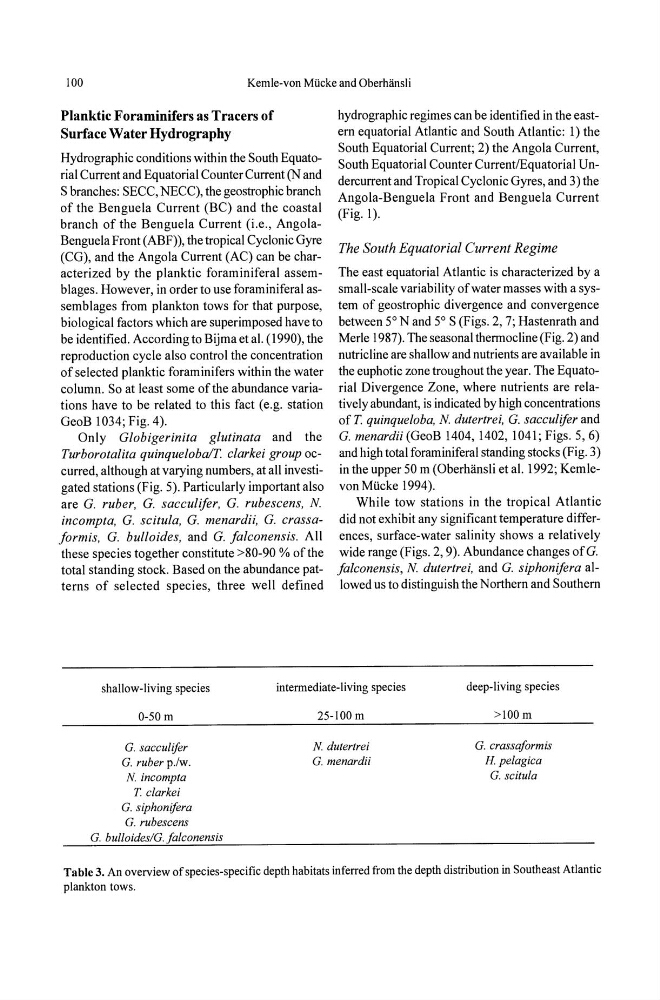
Table 3. An overview of species-specific depth habitats inferred from the depth distribution in Southeast Atlantic
plankton tows.
Kern Ie-von Miicke and Oberhansli
Planktic Foraminifers as Tracers of
Surface Water Hydrography
Hydrographic conditions within the South Equatorial Current and Equatorial Counter Current (N and
S branches: SECC, NECC), the geostrophic branch
of the Benguela Current (BC) and the coastal
branch of the Benguela Current (i.e., AngolaBenguela Front (ABF)), the tropical Cyclonic Gyre
(CG), and the Angola Current (AC) can be characterized by the planktic foraminiferal assemblages. However, in order to use foraminiferal assemblages from plankton tows for that purpose,
biological factors which are superimposed have to
be identified. According to Bijma et al. (1990), the
reproduction cycle also control the concentration
of selected planktic foraminifers within the water
column. So at least some of the abundance variations have to be related to this fact (e.g. station
GeoB 1034; Fig. 4).
Only Globigerinita glutinata and the
Turborotalita quinquelobalT clarkei group occurred, although at varying numbers, at all investigated stations (Fig. 5). Particularly important also
are G. ruber, G. sacculifer, G. rubescens, N.
incompta, G. scitula, G. menardii, G. crassajormis, G. bulloides, and G. jalconensis. All
these species together constitute >80-90 % of the
total standing stock. Based on the abundance patterns of selected species, three well defined
hydrographic regimes can be identified in the eastern equatorial Atlantic and South Atlantic: 1) the
South Equatorial Current; 2) the Angola Current,
South Equatorial Counter Current/Equatorial Undercurrent and Tropical Cyclonic Gyres, and 3) the
Angola-Benguela Front and Benguela Current
(Fig. 1).
The South Equatorial Current Regime
The east equatorial Atlantic is characterized by a
small-scale variability of water masses with a system of geostrophic divergence and convergence
between 5° Nand 5° S (Figs. 2, 7; Hastenrath and
Merle 1987). The seasonal thermocline (Fig. 2) and
nutricline are shallow and nutrients are available in
the euphotic zone troughout the year. The Equatorial Divergence Zone, where nutrients are relatively abundant, is indicated by high concentrations
of T quinqueloba, N. dutertrei, G. sacculifer and
G. menardii (GeoB 1404, 1402, 1041; Figs. 5,6)
and high total foraminiferal standing stocks (Fig. 3)
in the upper 50 m (Oberhansli et al. 1992; Kemlevon Mucke 1994).
While tow stations in the tropical Atlantic
did not exhibit any significant temperature differences, surface-water salinity shows a relatively
wide range (Figs. 2,9). Abundance changes of G.
jalconensis, N. dutertrei, and G. siphonifera allowed us to distinguish the Northern and Southern
shallow-living species
intermediate-living species
deep-living species
O-SOm
G. sacculifer
G. ruber p.lw.
N incompta
T clarkei
G. siphonifera
G. rubescens
G. bulloideslG. falconensis
2S-100m
N dutertrei
G. menardii
>IOOm
G. crassaformis
H. pelagica
G. scitula
Table 3. An overview of species-specific depth habitats inferred from the depth distribution in Southeast Atlantic
plankton tows.