

Marine Outfalls 32.5 Outfall Construction 735
Part C | 32.5
a)
b)
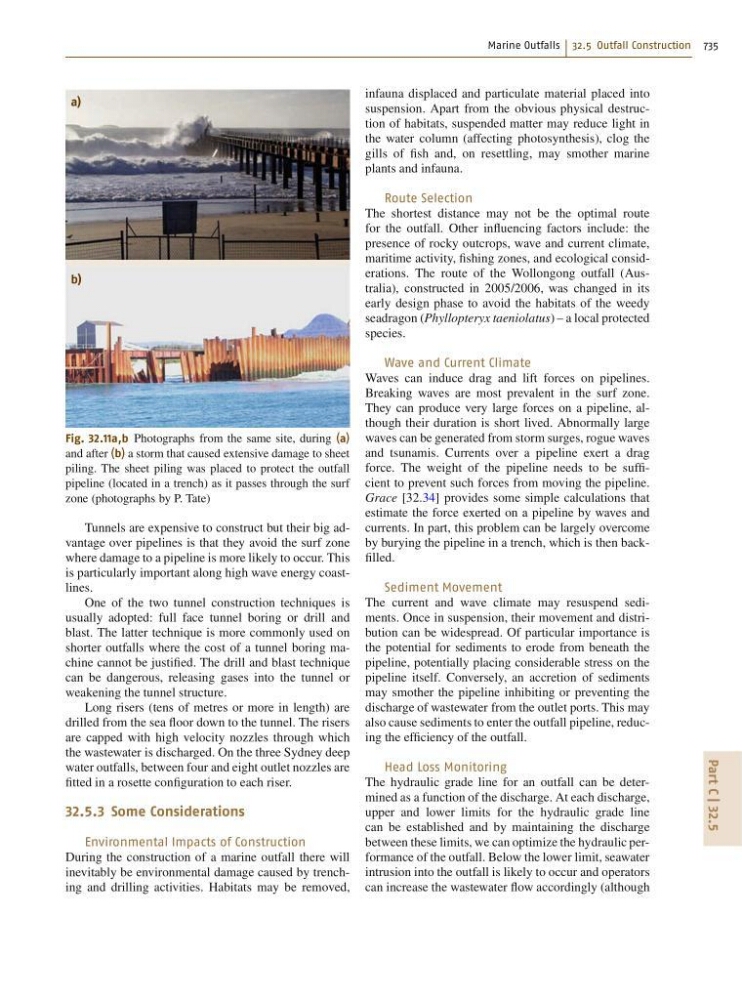
Fig. 32.11a,b Photographs from the same site, during (a)
and after (b) a storm that caused extensive damage to sheet
piling. The sheet piling was placed to protect the outfall
pipeline (located in a trench) as it passes through the surf
zone (photographs by P. Tate)
Tunnels are expensive to construct but their big advantage over pipelines is that they avoid the surf zone
where damage to a pipeline is more likely to occur. This
is particularly important along high wave energy coastlines.
One of the two tunnel construction techniques is
usually adopted: full face tunnel boring or drill and
blast. The latter technique is more commonly used on
shorter outfalls where the cost of a tunnel boring machine cannot be justified. The drill and blast technique
can be dangerous, releasing gases into the tunnel or
weakening the tunnel structure.
Long risers (tens of metres or more in length) are
drilled from the sea floor down to the tunnel. The risers
are capped with high velocity nozzles through which
the wastewater is discharged. On the three Sydney deep
water outfalls, between four and eight outlet nozzles are
fitted in a rosette configuration to each riser.
32.5.3 Some Considerations
Environmental Impacts of Construction
During the construction of a marine outfall there will
inevitably be environmental damage caused by trenching and drilling activities. Habitats may be removed,
infauna displaced and particulate material placed into
suspension. Apart from the obvious physical destruction of habitats, suspended matter may reduce light in
the water column (affecting photosynthesis), clog the
gills of fish and, on resettling, may smother marine
plants and infauna.
Route Selection
The shortest distance may not be the optimal route
for the outfall. Other influencing factors include: the
presence of rocky outcrops, wave and current climate,
maritime activity, fishing zones, and ecological considerations. The route of the Wollongong outfall (Australia), constructed in 2005/2006, was changed in its
early design phase to avoid the habitats of the weedy
seadragon (Phyllopteryx taeniolatus) – a local protected
species.
Wave and Current Climate
Waves can induce drag and lift forces on pipelines.
Breaking waves are most prevalent in the surf zone.
They can produce very large forces on a pipeline, although their duration is short lived. Abnormally large
waves can be generated from storm surges, rogue waves
and tsunamis. Currents over a pipeline exert a drag
force. The weight of the pipeline needs to be sufficient to prevent such forces from moving the pipeline.
Grace [32.34] provides some simple calculations that
estimate the force exerted on a pipeline by waves and
currents. In part, this problem can be largely overcome
by burying the pipeline in a trench, which is then backfilled.
Sediment Movement
The current and wave climate may resuspend sediments. Once in suspension, their movement and distribution can be widespread. Of particular importance is
the potential for sediments to erode from beneath the
pipeline, potentially placing considerable stress on the
pipeline itself. Conversely, an accretion of sediments
may smother the pipeline inhibiting or preventing the
discharge of wastewater from the outlet ports. This may
also cause sediments to enter the outfall pipeline, reducing the efficiency of the outfall.
Head Loss Monitoring
The hydraulic grade line for an outfall can be determined as a function of the discharge. At each discharge,
upper and lower limits for the hydraulic grade line
can be established and by maintaining the discharge
between these limits, we can optimize the hydraulic performance of the outfall. Below the lower limit, seawater
intrusion into the outfall is likely to occur and operators
can increase the wastewater flow accordingly (although