

Cooperative Vehicle Target Tracking 22.2 Distributed Sensing, Control, and Decisions 503
Part B | 22.2
conclusions induced by the model are intrinsic to it,
and not dependent on a specific implementation or
algorithm. This property gives us the flexibility to
develop a range of inference algorithms, which may
be appropriate in different settings. As long as each
algorithm remains faithful to the underlying model
semantics, we know it to be correct. The existence of
a declarative representation allows us to separate
out the two sources of error, modeling error and algorithmic error, and consider each separately.
Influence diagrams (Fig. 22.1) are able to represent
agents beliefs and decision-making processes [22.35].
The reason they are well suited is that it is possible to
implement factored reasoning (which is exploiting independence) for monitoring team formations [22.36].
They can also be applied to implement decision making
in open mixed networks [22.37]. In [22.38], a graphbased model of distributed cooperative navigation for
multirobot measurement is presented. Solving the task
of cooperative target tracking could start with similar
mathematical tools, expanded to include targets acting
in a noncooperative manner. The influence diagrams
can be used to explicitly visualize the steps of the
trading methodology. This will be further discussed in
Sect. 22.5.
22.2 Distributed Sensing, Control, and Decisions
If the data fusion is performed correctly, multisensor measurements have a better detection performance
than the best single sensor among them [22.39]. For
example, spatially distributed sensors resolve target ambiguity by providing different aspects of the target. Not
all information has to be sent to a fusion center. Depending on the setup, it might be sufficient to send only
selected information to specific team members (optimally, this should be the most important information).
This links the distributed sensing task to a local decision
rule that specifies which data should be sent to whom to
increase the overall utility function with the constraint
of limited bandwidth.
Based on the incoming data, either from own measurements or via communication channels, each team
member has to fulfill its specific control tasks, which
again (although individually executed) are to increase
R-3
AP
AP
AP
R-1
R-2
R-4
R-5
R-6
R-7
Central
server
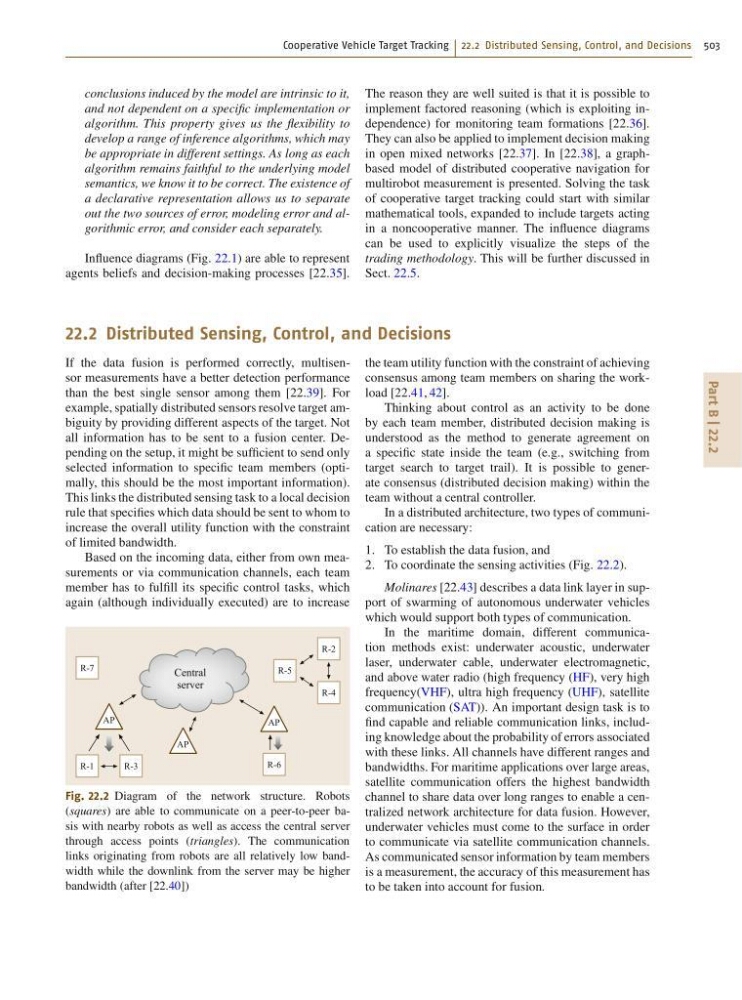
Fig. 22.2 Diagram of the network structure. Robots
(squares) are able to communicate on a peer-to-peer basis with nearby robots as well as access the central server
through access points (triangles). The communication
links originating from robots are all relatively low bandwidth while the downlink from the server may be higher
bandwidth (after [22.40])
the team utility function with the constraint of achieving
consensus among team members on sharing the workload [22.41, 42].
Thinking about control as an activity to be done
by each team member, distributed decision making is
understood as the method to generate agreement on
a specific state inside the team (e.g., switching from
target search to target trail). It is possible to generate consensus (distributed decision making) within the
team without a central controller.
In a distributed architecture, two types of communication are necessary:
1. To establish the data fusion, and
2. To coordinate the sensing activities (Fig. 22.2).
Molinares [22.43] describes a data link layer in support of swarming of autonomous underwater vehicles
which would support both types of communication.
In the maritime domain, different communication methods exist: underwater acoustic, underwater
laser, underwater cable, underwater electromagnetic,
and above water radio (high frequency (HF), very high
frequency(VHF), ultra high frequency (UHF), satellite
communication (SAT)). An important design task is to
find capable and reliable communication links, including knowledge about the probability of errors associated
with these links. All channels have different ranges and
bandwidths. For maritime applications over large areas,
satellite communication offers the highest bandwidth
channel to share data over long ranges to enable a centralized network architecture for data fusion. However,
underwater vehicles must come to the surface in order
to communicate via satellite communication channels.
As communicated sensor information by team members
is a measurement, the accuracy of this measurement has
to be taken into account for fusion.
Part B | 22.2
conclusions induced by the model are intrinsic to it,
and not dependent on a specific implementation or
algorithm. This property gives us the flexibility to
develop a range of inference algorithms, which may
be appropriate in different settings. As long as each
algorithm remains faithful to the underlying model
semantics, we know it to be correct. The existence of
a declarative representation allows us to separate
out the two sources of error, modeling error and algorithmic error, and consider each separately.
Influence diagrams (Fig. 22.1) are able to represent
agents beliefs and decision-making processes [22.35].
The reason they are well suited is that it is possible to
implement factored reasoning (which is exploiting independence) for monitoring team formations [22.36].
They can also be applied to implement decision making
in open mixed networks [22.37]. In [22.38], a graphbased model of distributed cooperative navigation for
multirobot measurement is presented. Solving the task
of cooperative target tracking could start with similar
mathematical tools, expanded to include targets acting
in a noncooperative manner. The influence diagrams
can be used to explicitly visualize the steps of the
trading methodology. This will be further discussed in
Sect. 22.5.
22.2 Distributed Sensing, Control, and Decisions
If the data fusion is performed correctly, multisensor measurements have a better detection performance
than the best single sensor among them [22.39]. For
example, spatially distributed sensors resolve target ambiguity by providing different aspects of the target. Not
all information has to be sent to a fusion center. Depending on the setup, it might be sufficient to send only
selected information to specific team members (optimally, this should be the most important information).
This links the distributed sensing task to a local decision
rule that specifies which data should be sent to whom to
increase the overall utility function with the constraint
of limited bandwidth.
Based on the incoming data, either from own measurements or via communication channels, each team
member has to fulfill its specific control tasks, which
again (although individually executed) are to increase
R-3
AP
AP
AP
R-1
R-2
R-4
R-5
R-6
R-7
Central
server
Fig. 22.2 Diagram of the network structure. Robots
(squares) are able to communicate on a peer-to-peer basis with nearby robots as well as access the central server
through access points (triangles). The communication
links originating from robots are all relatively low bandwidth while the downlink from the server may be higher
bandwidth (after [22.40])
the team utility function with the constraint of achieving
consensus among team members on sharing the workload [22.41, 42].
Thinking about control as an activity to be done
by each team member, distributed decision making is
understood as the method to generate agreement on
a specific state inside the team (e.g., switching from
target search to target trail). It is possible to generate consensus (distributed decision making) within the
team without a central controller.
In a distributed architecture, two types of communication are necessary:
1. To establish the data fusion, and
2. To coordinate the sensing activities (Fig. 22.2).
Molinares [22.43] describes a data link layer in support of swarming of autonomous underwater vehicles
which would support both types of communication.
In the maritime domain, different communication methods exist: underwater acoustic, underwater
laser, underwater cable, underwater electromagnetic,
and above water radio (high frequency (HF), very high
frequency(VHF), ultra high frequency (UHF), satellite
communication (SAT)). An important design task is to
find capable and reliable communication links, including knowledge about the probability of errors associated
with these links. All channels have different ranges and
bandwidths. For maritime applications over large areas,
satellite communication offers the highest bandwidth
channel to share data over long ranges to enable a centralized network architecture for data fusion. However,
underwater vehicles must come to the surface in order
to communicate via satellite communication channels.
As communicated sensor information by team members
is a measurement, the accuracy of this measurement has
to be taken into account for fusion.