

Non-Acoustic Sensors 18.2 Classical Non-Acoustic Ocean Sensors 425
Part B | 18.2
1μm 10μm 100 μm 1 mm 1 cm
Acoustics:
High frequency
CCD video cameras
Large scale optics
Light sheet
10 MHz
100 MHz
Low frequency
Fish
F
Invertebrates
I
Phytoplankton
GLOBEC
JGOFS
Zooplankton
Z
P
10 cm
1 m
a) Time to double (days)
b)
Particle diameter
1μm
10μm
Small scale optics
Attenuation
Absorption
Scattering
Fluorescence
100μm 1 mm
1 cm
10 cm
1m
Particle diameter
1000
100
10
1
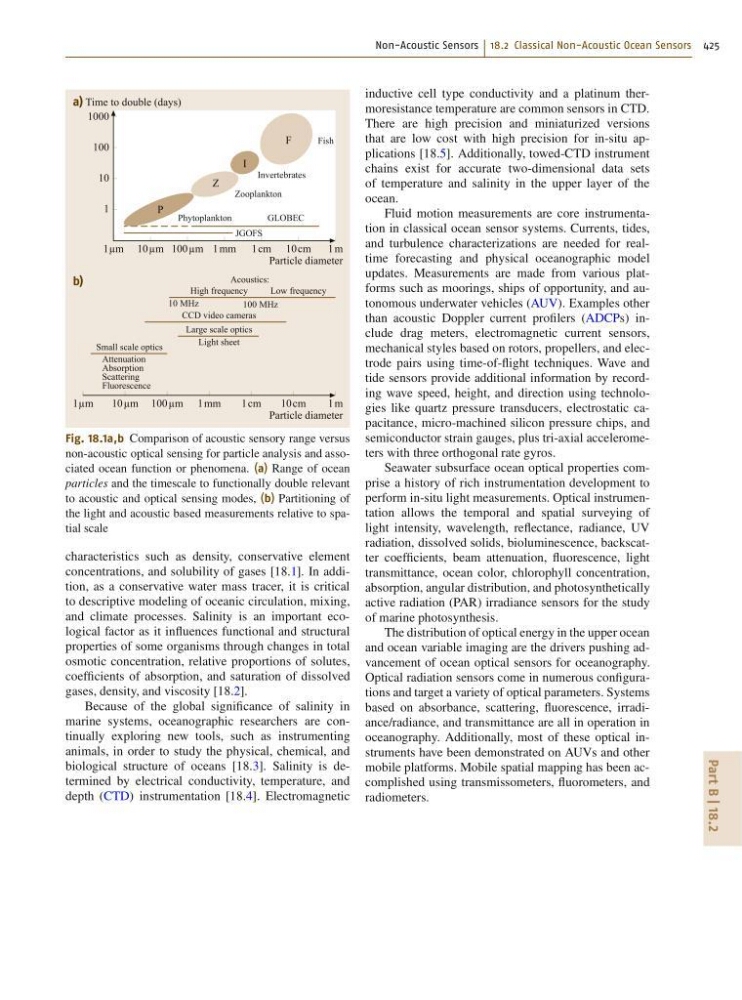
Fig. 18.1a,b Comparison of acoustic sensory range versus
non-acoustic optical sensing for particle analysis and associated ocean function or phenomena. (a) Range of ocean
particles and the timescale to functionally double relevant
to acoustic and optical sensing modes, (b) Partitioning of
the light and acoustic based measurements relative to spatial scale
characteristics such as density, conservative element
concentrations, and solubility of gases [18.1]. In addition, as a conservative water mass tracer, it is critical
to descriptive modeling of oceanic circulation, mixing,
and climate processes. Salinity is an important ecological factor as it influences functional and structural
properties of some organisms through changes in total
osmotic concentration, relative proportions of solutes,
coefficients of absorption, and saturation of dissolved
gases, density, and viscosity [18.2].
Because of the global significance of salinity in
marine systems, oceanographic researchers are continually exploring new tools, such as instrumenting
animals, in order to study the physical, chemical, and
biological structure of oceans [18.3]. Salinity is determined by electrical conductivity, temperature, and
depth (CTD) instrumentation [18.4]. Electromagnetic
inductive cell type conductivity and a platinum thermoresistance temperature are common sensors in CTD.
There are high precision and miniaturized versions
that are low cost with high precision for in-situ applications [18.5]. Additionally, towed-CTD instrument
chains exist for accurate two-dimensional data sets
of temperature and salinity in the upper layer of the
ocean.
Fluid motion measurements are core instrumentation in classical ocean sensor systems. Currents, tides,
and turbulence characterizations are needed for realtime forecasting and physical oceanographic model
updates. Measurements are made from various platforms such as moorings, ships of opportunity, and autonomous underwater vehicles (AUV). Examples other
than acoustic Doppler current profilers (ADCPs) include drag meters, electromagnetic current sensors,
mechanical styles based on rotors, propellers, and electrode pairs using time-of-flight techniques. Wave and
tide sensors provide additional information by recording wave speed, height, and direction using technologies like quartz pressure transducers, electrostatic capacitance, micro-machined silicon pressure chips, and
semiconductor strain gauges, plus tri-axial accelerometers with three orthogonal rate gyros.
Seawater subsurface ocean optical properties comprise a history of rich instrumentation development to
perform in-situ light measurements. Optical instrumentation allows the temporal and spatial surveying of
light intensity, wavelength, reflectance, radiance, UV
radiation, dissolved solids, bioluminescence, backscatter coefficients, beam attenuation, fluorescence, light
transmittance, ocean color, chlorophyll concentration,
absorption, angular distribution, and photosynthetically
active radiation (PAR) irradiance sensors for the study
of marine photosynthesis.
The distribution of optical energy in the upper ocean
and ocean variable imaging are the drivers pushing advancement of ocean optical sensors for oceanography.
Optical radiation sensors come in numerous configurations and target a variety of optical parameters. Systems
based on absorbance, scattering, fluorescence, irradiance/radiance, and transmittance are all in operation in
oceanography. Additionally, most of these optical instruments have been demonstrated on AUVs and other
mobile platforms. Mobile spatial mapping has been accomplished using transmissometers, fluorometers, and
radiometers.
Part B | 18.2
1μm 10μm 100 μm 1 mm 1 cm
Acoustics:
High frequency
CCD video cameras
Large scale optics
Light sheet
10 MHz
100 MHz
Low frequency
Fish
F
Invertebrates
I
Phytoplankton
GLOBEC
JGOFS
Zooplankton
Z
P
10 cm
1 m
a) Time to double (days)
b)
Particle diameter
1μm
10μm
Small scale optics
Attenuation
Absorption
Scattering
Fluorescence
100μm 1 mm
1 cm
10 cm
1m
Particle diameter
1000
100
10
1
Fig. 18.1a,b Comparison of acoustic sensory range versus
non-acoustic optical sensing for particle analysis and associated ocean function or phenomena. (a) Range of ocean
particles and the timescale to functionally double relevant
to acoustic and optical sensing modes, (b) Partitioning of
the light and acoustic based measurements relative to spatial scale
characteristics such as density, conservative element
concentrations, and solubility of gases [18.1]. In addition, as a conservative water mass tracer, it is critical
to descriptive modeling of oceanic circulation, mixing,
and climate processes. Salinity is an important ecological factor as it influences functional and structural
properties of some organisms through changes in total
osmotic concentration, relative proportions of solutes,
coefficients of absorption, and saturation of dissolved
gases, density, and viscosity [18.2].
Because of the global significance of salinity in
marine systems, oceanographic researchers are continually exploring new tools, such as instrumenting
animals, in order to study the physical, chemical, and
biological structure of oceans [18.3]. Salinity is determined by electrical conductivity, temperature, and
depth (CTD) instrumentation [18.4]. Electromagnetic
inductive cell type conductivity and a platinum thermoresistance temperature are common sensors in CTD.
There are high precision and miniaturized versions
that are low cost with high precision for in-situ applications [18.5]. Additionally, towed-CTD instrument
chains exist for accurate two-dimensional data sets
of temperature and salinity in the upper layer of the
ocean.
Fluid motion measurements are core instrumentation in classical ocean sensor systems. Currents, tides,
and turbulence characterizations are needed for realtime forecasting and physical oceanographic model
updates. Measurements are made from various platforms such as moorings, ships of opportunity, and autonomous underwater vehicles (AUV). Examples other
than acoustic Doppler current profilers (ADCPs) include drag meters, electromagnetic current sensors,
mechanical styles based on rotors, propellers, and electrode pairs using time-of-flight techniques. Wave and
tide sensors provide additional information by recording wave speed, height, and direction using technologies like quartz pressure transducers, electrostatic capacitance, micro-machined silicon pressure chips, and
semiconductor strain gauges, plus tri-axial accelerometers with three orthogonal rate gyros.
Seawater subsurface ocean optical properties comprise a history of rich instrumentation development to
perform in-situ light measurements. Optical instrumentation allows the temporal and spatial surveying of
light intensity, wavelength, reflectance, radiance, UV
radiation, dissolved solids, bioluminescence, backscatter coefficients, beam attenuation, fluorescence, light
transmittance, ocean color, chlorophyll concentration,
absorption, angular distribution, and photosynthetically
active radiation (PAR) irradiance sensors for the study
of marine photosynthesis.
The distribution of optical energy in the upper ocean
and ocean variable imaging are the drivers pushing advancement of ocean optical sensors for oceanography.
Optical radiation sensors come in numerous configurations and target a variety of optical parameters. Systems
based on absorbance, scattering, fluorescence, irradiance/radiance, and transmittance are all in operation in
oceanography. Additionally, most of these optical instruments have been demonstrated on AUVs and other
mobile platforms. Mobile spatial mapping has been accomplished using transmissometers, fluorometers, and
radiometers.