

Underwater Vehicle Manipulators 17.4 Sensor-Based Manipulator Control 411
Part B | 17.4
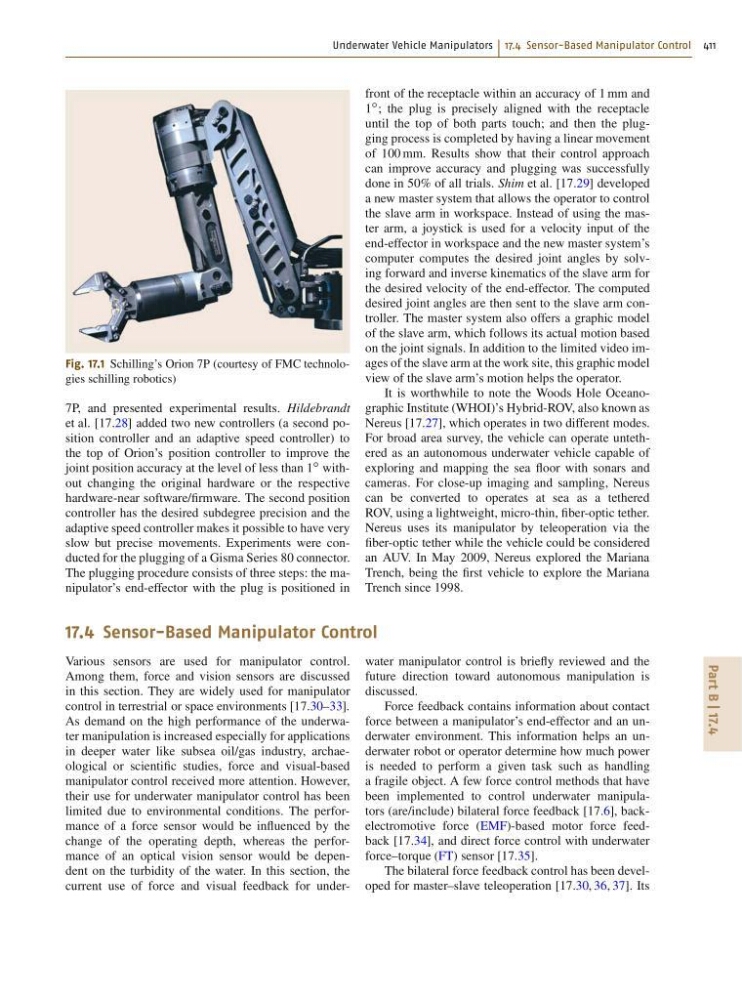
Fig. 17.1 Schilling’s Orion 7P (courtesy of FMC technologies schilling robotics)
7P, and presented experimental results. Hildebrandt
et al. [17.28] added two new controllers (a second position controller and an adaptive speed controller) to
the top of Orion’s position controller to improve the
joint position accuracy at the level of less than 1
ı without changing the original hardware or the respective
hardware-near software/firmware. The second position
controller has the desired subdegree precision and the
adaptive speed controller makes it possible to have very
slow but precise movements. Experiments were conducted for the plugging of a Gisma Series 80 connector.
The plugging procedure consists of three steps: the manipulator’s end-effector with the plug is positioned in
front of the receptacle within an accuracy of 1 mm and
1
ı ; the plug is precisely aligned with the receptacle
until the top of both parts touch; and then the plugging process is completed by having a linear movement
of 100 mm. Results show that their control approach
can improve accuracy and plugging was successfully
done in 50% of all trials. Shim et al. [17.29] developed
a new master system that allows the operator to control
the slave arm in workspace. Instead of using the master arm, a joystick is used for a velocity input of the
end-effector in workspace and the new master system’s
computer computes the desired joint angles by solving forward and inverse kinematics of the slave arm for
the desired velocity of the end-effector. The computed
desired joint angles are then sent to the slave arm controller. The master system also offers a graphic model
of the slave arm, which follows its actual motion based
on the joint signals. In addition to the limited video images of the slave arm at the work site, this graphic model
view of the slave arm’s motion helps the operator.
It is worthwhile to note the Woods Hole Oceanographic Institute (WHOI)’s Hybrid-ROV, also known as
Nereus [17.27], which operates in two different modes.
For broad area survey, the vehicle can operate untethered as an autonomous underwater vehicle capable of
exploring and mapping the sea floor with sonars and
cameras. For close-up imaging and sampling, Nereus
can be converted to operates at sea as a tethered
ROV, using a lightweight, micro-thin, fiber-optic tether.
Nereus uses its manipulator by teleoperation via the
fiber-optic tether while the vehicle could be considered
an AUV. In May 2009, Nereus explored the Mariana
Trench, being the first vehicle to explore the Mariana
Trench since 1998.
17.4 Sensor-Based Manipulator Control
Various sensors are used for manipulator control.
Among them, force and vision sensors are discussed
in this section. They are widely used for manipulator
control in terrestrial or space environments [17.30–33].
As demand on the high performance of the underwater manipulation is increased especially for applications
in deeper water like subsea oil/gas industry, archaeological or scientific studies, force and visual-based
manipulator control received more attention. However,
their use for underwater manipulator control has been
limited due to environmental conditions. The performance of a force sensor would be influenced by the
change of the operating depth, whereas the performance of an optical vision sensor would be dependent on the turbidity of the water. In this section, the
current use of force and visual feedback for underwater manipulator control is briefly reviewed and the
future direction toward autonomous manipulation is
discussed.
Force feedback contains information about contact
force between a manipulator’s end-effector and an underwater environment. This information helps an underwater robot or operator determine how much power
is needed to perform a given task such as handling
a fragile object. A few force control methods that have
been implemented to control underwater manipulators (are/include) bilateral force feedback [17.6], backelectromotive force (EMF)-based motor force feedback [17.34], and direct force control with underwater
force–torque (FT) sensor [17.35].
The bilateral force feedback control has been developed for master–slave teleoperation [17.30, 36, 37]. Its
Part B | 17.4
Fig. 17.1 Schilling’s Orion 7P (courtesy of FMC technologies schilling robotics)
7P, and presented experimental results. Hildebrandt
et al. [17.28] added two new controllers (a second position controller and an adaptive speed controller) to
the top of Orion’s position controller to improve the
joint position accuracy at the level of less than 1
ı without changing the original hardware or the respective
hardware-near software/firmware. The second position
controller has the desired subdegree precision and the
adaptive speed controller makes it possible to have very
slow but precise movements. Experiments were conducted for the plugging of a Gisma Series 80 connector.
The plugging procedure consists of three steps: the manipulator’s end-effector with the plug is positioned in
front of the receptacle within an accuracy of 1 mm and
1
ı ; the plug is precisely aligned with the receptacle
until the top of both parts touch; and then the plugging process is completed by having a linear movement
of 100 mm. Results show that their control approach
can improve accuracy and plugging was successfully
done in 50% of all trials. Shim et al. [17.29] developed
a new master system that allows the operator to control
the slave arm in workspace. Instead of using the master arm, a joystick is used for a velocity input of the
end-effector in workspace and the new master system’s
computer computes the desired joint angles by solving forward and inverse kinematics of the slave arm for
the desired velocity of the end-effector. The computed
desired joint angles are then sent to the slave arm controller. The master system also offers a graphic model
of the slave arm, which follows its actual motion based
on the joint signals. In addition to the limited video images of the slave arm at the work site, this graphic model
view of the slave arm’s motion helps the operator.
It is worthwhile to note the Woods Hole Oceanographic Institute (WHOI)’s Hybrid-ROV, also known as
Nereus [17.27], which operates in two different modes.
For broad area survey, the vehicle can operate untethered as an autonomous underwater vehicle capable of
exploring and mapping the sea floor with sonars and
cameras. For close-up imaging and sampling, Nereus
can be converted to operates at sea as a tethered
ROV, using a lightweight, micro-thin, fiber-optic tether.
Nereus uses its manipulator by teleoperation via the
fiber-optic tether while the vehicle could be considered
an AUV. In May 2009, Nereus explored the Mariana
Trench, being the first vehicle to explore the Mariana
Trench since 1998.
17.4 Sensor-Based Manipulator Control
Various sensors are used for manipulator control.
Among them, force and vision sensors are discussed
in this section. They are widely used for manipulator
control in terrestrial or space environments [17.30–33].
As demand on the high performance of the underwater manipulation is increased especially for applications
in deeper water like subsea oil/gas industry, archaeological or scientific studies, force and visual-based
manipulator control received more attention. However,
their use for underwater manipulator control has been
limited due to environmental conditions. The performance of a force sensor would be influenced by the
change of the operating depth, whereas the performance of an optical vision sensor would be dependent on the turbidity of the water. In this section, the
current use of force and visual feedback for underwater manipulator control is briefly reviewed and the
future direction toward autonomous manipulation is
discussed.
Force feedback contains information about contact
force between a manipulator’s end-effector and an underwater environment. This information helps an underwater robot or operator determine how much power
is needed to perform a given task such as handling
a fragile object. A few force control methods that have
been implemented to control underwater manipulators (are/include) bilateral force feedback [17.6], backelectromotive force (EMF)-based motor force feedback [17.34], and direct force control with underwater
force–torque (FT) sensor [17.35].
The bilateral force feedback control has been developed for master–slave teleoperation [17.30, 36, 37]. Its