

Part B | 15.5
380 Part B Autonomous Ocean Vehicles, Subsystems and Control
access control (MAC) and routing protocols for underwater acoustic networks. The fundamental aspects of
underwater acoustic networking have been highlighted
in several survey articles [15.87–90]. At the moment,
there is a solid base of custom-designed protocols that
are suitable for poor-quality, interference-prone, delaychallenged acoustic channels, and are ready for testing
in the field.
A full spectrum of network applications is not
yet obvious, as integrated system capabilities depend
on many aspects whose proof-of-concept, in turn, depends on in-situ testing. Unlike with signal processing,
testing of networked systems cannot be performed offline. Network simulation tools have thus started to
emerge; an example is the World Ocean System Simulator (WOSS) [15.53], which integrates the Bellhop ray
tracer with digital ocean maps and the NS-2 network
simulator.
Due to a lack of typical applications, we tend to
think about two types of networks: one with fixed,
bottom-mounted nodes deployed for longer periods of
Node 2
Node 2
Node n
Node n
Node 1
Node 1
a)
b)
Base station A
Cell A
Cell B
Base station B
To gateway
Cluster 2
Cluster 1
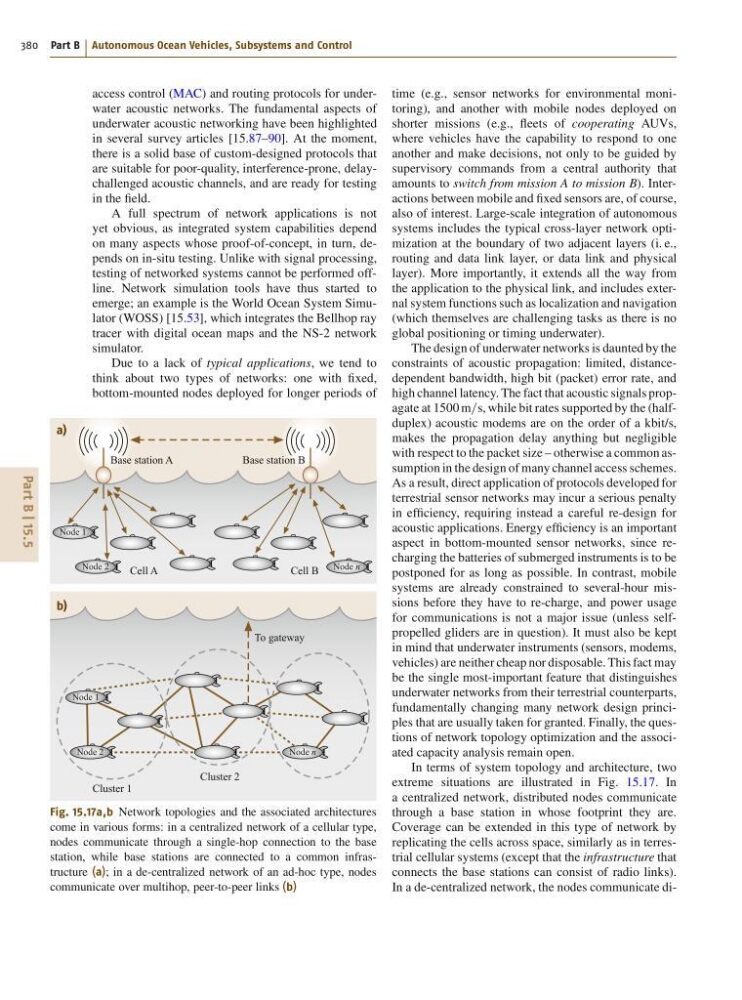
Fig. 15.17a,b Network topologies and the associated architectures
come in various forms: in a centralized network of a cellular type,
nodes communicate through a single-hop connection to the base
station, while base stations are connected to a common infrastructure (a); in a de-centralized network of an ad-hoc type, nodes
communicate over multihop, peer-to-peer links (b)
time (e.g., sensor networks for environmental monitoring), and another with mobile nodes deployed on
shorter missions (e.g., fleets of cooperating AUVs,
where vehicles have the capability to respond to one
another and make decisions, not only to be guided by
supervisory commands from a central authority that
amounts to switch from mission A to mission B). Interactions between mobile and fixed sensors are, of course,
also of interest. Large-scale integration of autonomous
systems includes the typical cross-layer network optimization at the boundary of two adjacent layers (i. e.,
routing and data link layer, or data link and physical
layer). More importantly, it extends all the way from
the application to the physical link, and includes external system functions such as localization and navigation
(which themselves are challenging tasks as there is no
global positioning or timing underwater).
The design of underwater networks is daunted by the
constraints of acoustic propagation: limited, distancedependent bandwidth, high bit (packet) error rate, and
high channel latency. The fact that acoustic signals propagate at 1500 m=s, while bit rates supported by the (halfduplex) acoustic modems are on the order of a kbit/s,
makes the propagation delay anything but negligible
with respect to the packet size – otherwise a common assumption in the design of many channel access schemes.
As a result, direct application of protocols developed for
terrestrial sensor networks may incur a serious penalty
in efficiency, requiring instead a careful re-design for
acoustic applications. Energy efficiency is an important
aspect in bottom-mounted sensor networks, since recharging the batteries of submerged instruments is to be
postponed for as long as possible. In contrast, mobile
systems are already constrained to several-hour missions before they have to re-charge, and power usage
for communications is not a major issue (unless selfpropelled gliders are in question). It must also be kept
in mind that underwater instruments (sensors, modems,
vehicles) are neither cheap nor disposable. This fact may
be the single most-important feature that distinguishes
underwater networks from their terrestrial counterparts,
fundamentally changing many network design principles that are usually taken for granted. Finally, the questions of network topology optimization and the associated capacity analysis remain open.
In terms of system topology and architecture, two
extreme situations are illustrated in Fig. 15.17. In
a centralized network, distributed nodes communicate
through a base station in whose footprint they are.
Coverage can be extended in this type of network by
replicating the cells across space, similarly as in terrestrial cellular systems (except that the infrastructure that
connects the base stations can consist of radio links).
In a de-centralized network, the nodes communicate di-
380 Part B Autonomous Ocean Vehicles, Subsystems and Control
access control (MAC) and routing protocols for underwater acoustic networks. The fundamental aspects of
underwater acoustic networking have been highlighted
in several survey articles [15.87–90]. At the moment,
there is a solid base of custom-designed protocols that
are suitable for poor-quality, interference-prone, delaychallenged acoustic channels, and are ready for testing
in the field.
A full spectrum of network applications is not
yet obvious, as integrated system capabilities depend
on many aspects whose proof-of-concept, in turn, depends on in-situ testing. Unlike with signal processing,
testing of networked systems cannot be performed offline. Network simulation tools have thus started to
emerge; an example is the World Ocean System Simulator (WOSS) [15.53], which integrates the Bellhop ray
tracer with digital ocean maps and the NS-2 network
simulator.
Due to a lack of typical applications, we tend to
think about two types of networks: one with fixed,
bottom-mounted nodes deployed for longer periods of
Node 2
Node 2
Node n
Node n
Node 1
Node 1
a)
b)
Base station A
Cell A
Cell B
Base station B
To gateway
Cluster 2
Cluster 1
Fig. 15.17a,b Network topologies and the associated architectures
come in various forms: in a centralized network of a cellular type,
nodes communicate through a single-hop connection to the base
station, while base stations are connected to a common infrastructure (a); in a de-centralized network of an ad-hoc type, nodes
communicate over multihop, peer-to-peer links (b)
time (e.g., sensor networks for environmental monitoring), and another with mobile nodes deployed on
shorter missions (e.g., fleets of cooperating AUVs,
where vehicles have the capability to respond to one
another and make decisions, not only to be guided by
supervisory commands from a central authority that
amounts to switch from mission A to mission B). Interactions between mobile and fixed sensors are, of course,
also of interest. Large-scale integration of autonomous
systems includes the typical cross-layer network optimization at the boundary of two adjacent layers (i. e.,
routing and data link layer, or data link and physical
layer). More importantly, it extends all the way from
the application to the physical link, and includes external system functions such as localization and navigation
(which themselves are challenging tasks as there is no
global positioning or timing underwater).
The design of underwater networks is daunted by the
constraints of acoustic propagation: limited, distancedependent bandwidth, high bit (packet) error rate, and
high channel latency. The fact that acoustic signals propagate at 1500 m=s, while bit rates supported by the (halfduplex) acoustic modems are on the order of a kbit/s,
makes the propagation delay anything but negligible
with respect to the packet size – otherwise a common assumption in the design of many channel access schemes.
As a result, direct application of protocols developed for
terrestrial sensor networks may incur a serious penalty
in efficiency, requiring instead a careful re-design for
acoustic applications. Energy efficiency is an important
aspect in bottom-mounted sensor networks, since recharging the batteries of submerged instruments is to be
postponed for as long as possible. In contrast, mobile
systems are already constrained to several-hour missions before they have to re-charge, and power usage
for communications is not a major issue (unless selfpropelled gliders are in question). It must also be kept
in mind that underwater instruments (sensors, modems,
vehicles) are neither cheap nor disposable. This fact may
be the single most-important feature that distinguishes
underwater networks from their terrestrial counterparts,
fundamentally changing many network design principles that are usually taken for granted. Finally, the questions of network topology optimization and the associated capacity analysis remain open.
In terms of system topology and architecture, two
extreme situations are illustrated in Fig. 15.17. In
a centralized network, distributed nodes communicate
through a base station in whose footprint they are.
Coverage can be extended in this type of network by
replicating the cells across space, similarly as in terrestrial cellular systems (except that the infrastructure that
connects the base stations can consist of radio links).
In a de-centralized network, the nodes communicate di-