

Autonomous Underwater Gliders 12.2 Hydrodynamics of Wings Versus Propellers 305
Part B | 12.2
12.2 Hydrodynamics of Wings Versus Propellers
Buoyancy-propelled winged vehicles are intrinsically
more efficient than propeller-driven vehicles because
the power needed to overcome drag (P e ) is minimized
by the simplicity of the vortex system of the wing
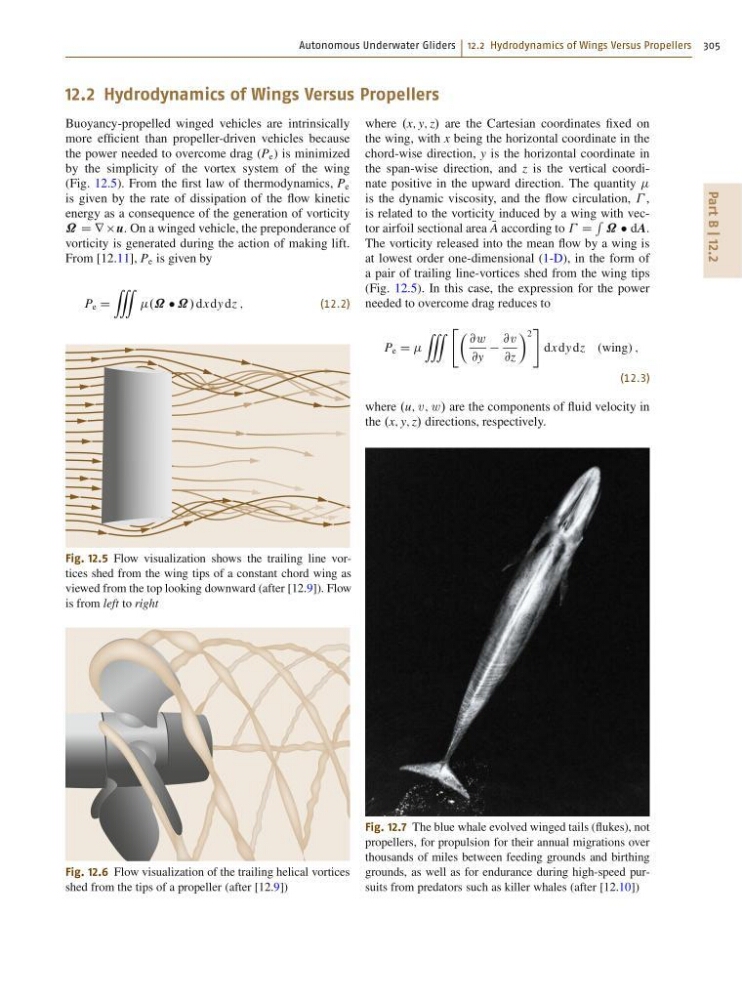
(Fig. 12.5). From the first law of thermodynamics, P e
is given by the rate of dissipation of the flow kinetic
energy as a consequence of the generation of vorticity
˝ D r r u. On a winged vehicle, the preponderance of
vorticity is generated during the action of making lift.
From [12.11], P e is given by
P e D
•
.˝ ˝/ dx dy dz ;
(12.2)
Fig. 12.5 Flow visualization shows the trailing line vortices shed from the wing tips of a constant chord wing as
viewed from the top looking downward (after [12.9]). Flow
is from left to right
Fig. 12.6 Flow visualization of the trailing helical vortices
shed from the tips of a propeller (after [12.9])
where .x; y; z/ are the Cartesian coordinates fixed on
the wing, with x being the horizontal coordinate in the
chord-wise direction, y is the horizontal coordinate in
the span-wise direction, and z is the vertical coordinate positive in the upward direction. The quantity
is the dynamic viscosity, and the flow circulation, ,
is related to the vorticity induced by a wing with vector airfoil sectional area N
A according to D
R ˝ dA.
The vorticity released into the mean flow by a wing is
at lowest order one-dimensional (1-D), in the form of
a pair of trailing line-vortices shed from the wing tips
(Fig. 12.5). In this case, the expression for the power
needed to overcome drag reduces to
P e D
• " Â @w
@y
@v
@z
à 2
#
dx dy dz (wing) ;
(12.3)
where .u; v ; w / are the components of fluid velocity in
the .x; y; z/ directions, respectively.
Fig. 12.7 The blue whale evolved winged tails (flukes), not
propellers, for propulsion for their annual migrations over
thousands of miles between feeding grounds and birthing
grounds, as well as for endurance during high-speed pursuits from predators such as killer whales (after [12.10])
Part B | 12.2
12.2 Hydrodynamics of Wings Versus Propellers
Buoyancy-propelled winged vehicles are intrinsically
more efficient than propeller-driven vehicles because
the power needed to overcome drag (P e ) is minimized
by the simplicity of the vortex system of the wing
(Fig. 12.5). From the first law of thermodynamics, P e
is given by the rate of dissipation of the flow kinetic
energy as a consequence of the generation of vorticity
˝ D r r u. On a winged vehicle, the preponderance of
vorticity is generated during the action of making lift.
From [12.11], P e is given by
P e D
•
.˝ ˝/ dx dy dz ;
(12.2)
Fig. 12.5 Flow visualization shows the trailing line vortices shed from the wing tips of a constant chord wing as
viewed from the top looking downward (after [12.9]). Flow
is from left to right
Fig. 12.6 Flow visualization of the trailing helical vortices
shed from the tips of a propeller (after [12.9])
where .x; y; z/ are the Cartesian coordinates fixed on
the wing, with x being the horizontal coordinate in the
chord-wise direction, y is the horizontal coordinate in
the span-wise direction, and z is the vertical coordinate positive in the upward direction. The quantity
is the dynamic viscosity, and the flow circulation, ,
is related to the vorticity induced by a wing with vector airfoil sectional area N
A according to D
R ˝ dA.
The vorticity released into the mean flow by a wing is
at lowest order one-dimensional (1-D), in the form of
a pair of trailing line-vortices shed from the wing tips
(Fig. 12.5). In this case, the expression for the power
needed to overcome drag reduces to
P e D
• " Â @w
@y
@v
@z
à 2
#
dx dy dz (wing) ;
(12.3)
where .u; v ; w / are the components of fluid velocity in
the .x; y; z/ directions, respectively.
Fig. 12.7 The blue whale evolved winged tails (flukes), not
propellers, for propulsion for their annual migrations over
thousands of miles between feeding grounds and birthing
grounds, as well as for endurance during high-speed pursuits from predators such as killer whales (after [12.10])