

Part A | 6.7
122 Part A Fundamentals
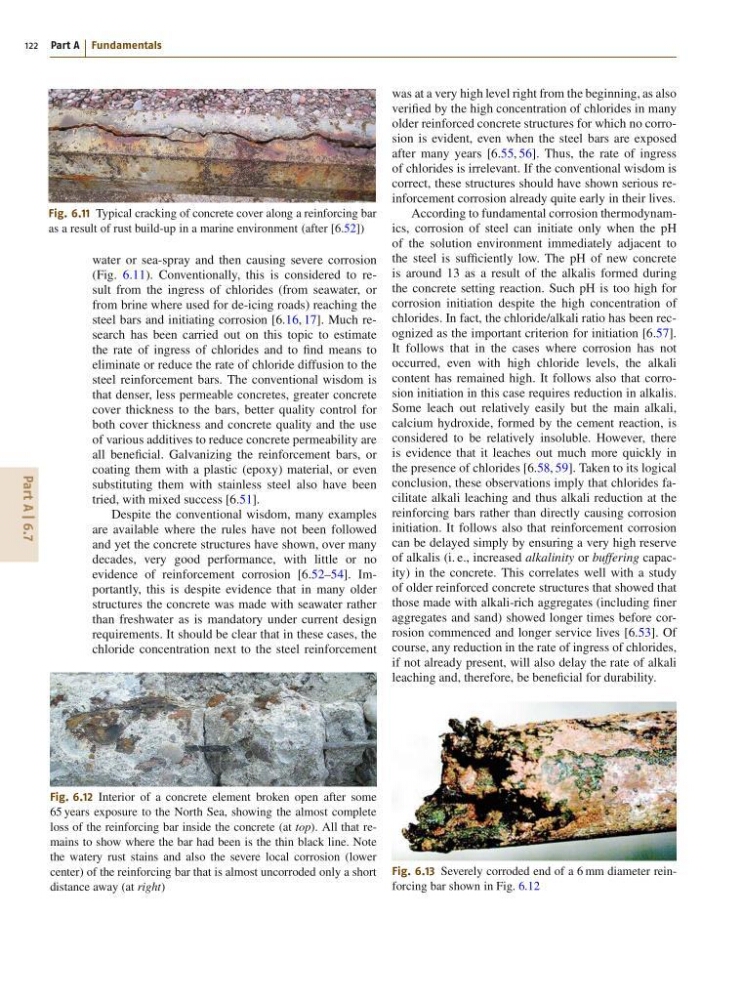
Fig. 6.11 Typical cracking of concrete cover along a reinforcing bar
as a result of rust build-up in a marine environment (after [6.52])
water or sea-spray and then causing severe corrosion
(Fig. 6.11). Conventionally, this is considered to result from the ingress of chlorides (from seawater, or
from brine where used for de-icing roads) reaching the
steel bars and initiating corrosion [6.16, 17]. Much research has been carried out on this topic to estimate
the rate of ingress of chlorides and to find means to
eliminate or reduce the rate of chloride diffusion to the
steel reinforcement bars. The conventional wisdom is
that denser, less permeable concretes, greater concrete
cover thickness to the bars, better quality control for
both cover thickness and concrete quality and the use
of various additives to reduce concrete permeability are
all beneficial. Galvanizing the reinforcement bars, or
coating them with a plastic (epoxy) material, or even
substituting them with stainless steel also have been
tried, with mixed success [6.51].
Despite the conventional wisdom, many examples
are available where the rules have not been followed
and yet the concrete structures have shown, over many
decades, very good performance, with little or no
evidence of reinforcement corrosion [6.52–54]. Importantly, this is despite evidence that in many older
structures the concrete was made with seawater rather
than freshwater as is mandatory under current design
requirements. It should be clear that in these cases, the
chloride concentration next to the steel reinforcement
Fig. 6.12 Interior of a concrete element broken open after some
65 years exposure to the North Sea, showing the almost complete
loss of the reinforcing bar inside the concrete (at top). All that remains to show where the bar had been is the thin black line. Note
the watery rust stains and also the severe local corrosion (lower
center) of the reinforcing bar that is almost uncorroded only a short
distance away (at right)
was at a very high level right from the beginning, as also
verified by the high concentration of chlorides in many
older reinforced concrete structures for which no corrosion is evident, even when the steel bars are exposed
after many years [6.55, 56]. Thus, the rate of ingress
of chlorides is irrelevant. If the conventional wisdom is
correct, these structures should have shown serious reinforcement corrosion already quite early in their lives.
According to fundamental corrosion thermodynamics, corrosion of steel can initiate only when the pH
of the solution environment immediately adjacent to
the steel is sufficiently low. The pH of new concrete
is around 13 as a result of the alkalis formed during
the concrete setting reaction. Such pH is too high for
corrosion initiation despite the high concentration of
chlorides. In fact, the chloride/alkali ratio has been recognized as the important criterion for initiation [6.57].
It follows that in the cases where corrosion has not
occurred, even with high chloride levels, the alkali
content has remained high. It follows also that corrosion initiation in this case requires reduction in alkalis.
Some leach out relatively easily but the main alkali,
calcium hydroxide, formed by the cement reaction, is
considered to be relatively insoluble. However, there
is evidence that it leaches out much more quickly in
the presence of chlorides [6.58, 59]. Taken to its logical
conclusion, these observations imply that chlorides facilitate alkali leaching and thus alkali reduction at the
reinforcing bars rather than directly causing corrosion
initiation. It follows also that reinforcement corrosion
can be delayed simply by ensuring a very high reserve
of alkalis (i. e., increased alkalinity or buffering capacity) in the concrete. This correlates well with a study
of older reinforced concrete structures that showed that
those made with alkali-rich aggregates (including finer
aggregates and sand) showed longer times before corrosion commenced and longer service lives [6.53]. Of
course, any reduction in the rate of ingress of chlorides,
if not already present, will also delay the rate of alkali
leaching and, therefore, be beneficial for durability.
Fig. 6.13 Severely corroded end of a 6 mm diameter reinforcing bar shown in Fig. 6.12
122 Part A Fundamentals
Fig. 6.11 Typical cracking of concrete cover along a reinforcing bar
as a result of rust build-up in a marine environment (after [6.52])
water or sea-spray and then causing severe corrosion
(Fig. 6.11). Conventionally, this is considered to result from the ingress of chlorides (from seawater, or
from brine where used for de-icing roads) reaching the
steel bars and initiating corrosion [6.16, 17]. Much research has been carried out on this topic to estimate
the rate of ingress of chlorides and to find means to
eliminate or reduce the rate of chloride diffusion to the
steel reinforcement bars. The conventional wisdom is
that denser, less permeable concretes, greater concrete
cover thickness to the bars, better quality control for
both cover thickness and concrete quality and the use
of various additives to reduce concrete permeability are
all beneficial. Galvanizing the reinforcement bars, or
coating them with a plastic (epoxy) material, or even
substituting them with stainless steel also have been
tried, with mixed success [6.51].
Despite the conventional wisdom, many examples
are available where the rules have not been followed
and yet the concrete structures have shown, over many
decades, very good performance, with little or no
evidence of reinforcement corrosion [6.52–54]. Importantly, this is despite evidence that in many older
structures the concrete was made with seawater rather
than freshwater as is mandatory under current design
requirements. It should be clear that in these cases, the
chloride concentration next to the steel reinforcement
Fig. 6.12 Interior of a concrete element broken open after some
65 years exposure to the North Sea, showing the almost complete
loss of the reinforcing bar inside the concrete (at top). All that remains to show where the bar had been is the thin black line. Note
the watery rust stains and also the severe local corrosion (lower
center) of the reinforcing bar that is almost uncorroded only a short
distance away (at right)
was at a very high level right from the beginning, as also
verified by the high concentration of chlorides in many
older reinforced concrete structures for which no corrosion is evident, even when the steel bars are exposed
after many years [6.55, 56]. Thus, the rate of ingress
of chlorides is irrelevant. If the conventional wisdom is
correct, these structures should have shown serious reinforcement corrosion already quite early in their lives.
According to fundamental corrosion thermodynamics, corrosion of steel can initiate only when the pH
of the solution environment immediately adjacent to
the steel is sufficiently low. The pH of new concrete
is around 13 as a result of the alkalis formed during
the concrete setting reaction. Such pH is too high for
corrosion initiation despite the high concentration of
chlorides. In fact, the chloride/alkali ratio has been recognized as the important criterion for initiation [6.57].
It follows that in the cases where corrosion has not
occurred, even with high chloride levels, the alkali
content has remained high. It follows also that corrosion initiation in this case requires reduction in alkalis.
Some leach out relatively easily but the main alkali,
calcium hydroxide, formed by the cement reaction, is
considered to be relatively insoluble. However, there
is evidence that it leaches out much more quickly in
the presence of chlorides [6.58, 59]. Taken to its logical
conclusion, these observations imply that chlorides facilitate alkali leaching and thus alkali reduction at the
reinforcing bars rather than directly causing corrosion
initiation. It follows also that reinforcement corrosion
can be delayed simply by ensuring a very high reserve
of alkalis (i. e., increased alkalinity or buffering capacity) in the concrete. This correlates well with a study
of older reinforced concrete structures that showed that
those made with alkali-rich aggregates (including finer
aggregates and sand) showed longer times before corrosion commenced and longer service lives [6.53]. Of
course, any reduction in the rate of ingress of chlorides,
if not already present, will also delay the rate of alkali
leaching and, therefore, be beneficial for durability.
Fig. 6.13 Severely corroded end of a 6 mm diameter reinforcing bar shown in Fig. 6.12