

followed by alpine tundra, and then perennial ice
and snow. This sequence of elevational zones
repeats on mountain ranges throughout the lowland, semiarid climatic zone.
Orographically modified macroclimates,
which exhibit elevational zonation, are referred
to as azonal because they can occur in any
ecoclimatic zone. The global distribution of the
regions of the type is shown in Fig. 4.13.
4.2
Types of Ecoclimatic Zones, or
Continental Ecoregions
The effects of latitude, continental position, and
elevation combine to form the world’s
ecoclimatic zones, herein referred to as
continental
ecoregions.
The
geographic
reasoning used in drawing boundaries of such
regions involves several principles.
4.2.1 Principles of Ecological Climate
Regionalization
1. The boundaries of ecoclimate zones may coincide with certain climatic elements. For example, the poleward limit of the boreal conifer
zone corresponds roughly with the 10
C
(50
F) isotherm for the warmest month. The
18
C (64
F) isotherm of the coolest month
approximates the boundary of the poleward
limit of plants that characterize the humid
tropics, such as palms. Generally speaking,
however, a combination of factors rather
than a single climatic factor determines such
boundaries and this is more in line with the
concept of ecological climate (Bonan 2002).
2. The climatic factors that delimit the main
types of world vegetation must be treated as
complex. For example, to define “drought”
temperature and precipitation must be treated
together because drought is not just a matter
of precipitation. A given amount of rainfall
may produce a humid climate under temperate
conditions, whereas the same amount of rainfall may produce arid conditions in hot zones.
This leads to the situation that any given
amount of precipitation may be interpreted
differently across ecoregions: excessive precipitation in one area may be lacking in
another.
3. Specific major factors must be used to delimit
the major ecoclimatic zones. Examples would
include the continuous high temperatures of
the tropical lowlands, the deficiency of heat in
Table 4.1 Broad plant
formations and groups of
climates
Formation
Ko ¨ppen climate group
Tropical rain forest
A (Tropical rainy climates)
Tropical desert
B (Dry climates)
Temperate deciduous forest
C (Warm temperate climates)
Boreal forest
D (Snowy-forest climates)
Tundra
E (Polar climates)
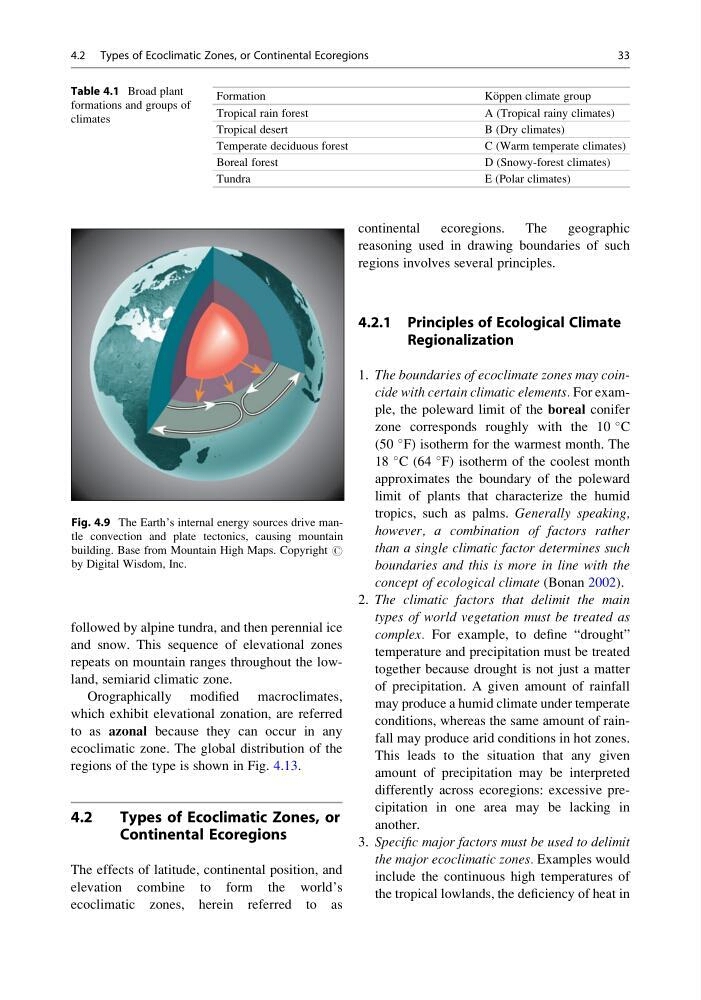
Fig. 4.9 The Earth’s internal energy sources drive mantle convection and plate tectonics, causing mountain
building. Base from Mountain High Maps. Copyright #
by Digital Wisdom, Inc.
4.2 Types of Ecoclimatic Zones, or Continental Ecoregions
33
and snow. This sequence of elevational zones
repeats on mountain ranges throughout the lowland, semiarid climatic zone.
Orographically modified macroclimates,
which exhibit elevational zonation, are referred
to as azonal because they can occur in any
ecoclimatic zone. The global distribution of the
regions of the type is shown in Fig. 4.13.
4.2
Types of Ecoclimatic Zones, or
Continental Ecoregions
The effects of latitude, continental position, and
elevation combine to form the world’s
ecoclimatic zones, herein referred to as
continental
ecoregions.
The
geographic
reasoning used in drawing boundaries of such
regions involves several principles.
4.2.1 Principles of Ecological Climate
Regionalization
1. The boundaries of ecoclimate zones may coincide with certain climatic elements. For example, the poleward limit of the boreal conifer
zone corresponds roughly with the 10
C
(50
F) isotherm for the warmest month. The
18
C (64
F) isotherm of the coolest month
approximates the boundary of the poleward
limit of plants that characterize the humid
tropics, such as palms. Generally speaking,
however, a combination of factors rather
than a single climatic factor determines such
boundaries and this is more in line with the
concept of ecological climate (Bonan 2002).
2. The climatic factors that delimit the main
types of world vegetation must be treated as
complex. For example, to define “drought”
temperature and precipitation must be treated
together because drought is not just a matter
of precipitation. A given amount of rainfall
may produce a humid climate under temperate
conditions, whereas the same amount of rainfall may produce arid conditions in hot zones.
This leads to the situation that any given
amount of precipitation may be interpreted
differently across ecoregions: excessive precipitation in one area may be lacking in
another.
3. Specific major factors must be used to delimit
the major ecoclimatic zones. Examples would
include the continuous high temperatures of
the tropical lowlands, the deficiency of heat in
Table 4.1 Broad plant
formations and groups of
climates
Formation
Ko ¨ppen climate group
Tropical rain forest
A (Tropical rainy climates)
Tropical desert
B (Dry climates)
Temperate deciduous forest
C (Warm temperate climates)
Boreal forest
D (Snowy-forest climates)
Tundra
E (Polar climates)
Fig. 4.9 The Earth’s internal energy sources drive mantle convection and plate tectonics, causing mountain
building. Base from Mountain High Maps. Copyright #
by Digital Wisdom, Inc.
4.2 Types of Ecoclimatic Zones, or Continental Ecoregions
33