

the west and becomes more saline along its way
because the dry continental air does not produce
precipitation, and evaporation is high.
Annual temperature variation is quite small;
however, currents, winds, salinities, and precipitation show marked seasonal change because of
the monsoon winds, which cause a reversal of the
currents with the season.
3.3.2 720 High-Salinity Tropical
Monsoon Division
This type is restricted to the Arabian Sea where
dry winds bring about very low precipitation,
strong evaporation, and resulting high salinities.
In type 710, designated as type E by Elliott,
salinities are considerably lower because of the
monsoon rains and high runoff.
3.3.3 730 Poleward Trades Division
North and south of the equator are the currents of
the trade wind belts, covering roughly the zones
lying between 5
and 30
N and S. Its poleward
boundaries follow approximately the mean stand
of the longitudinal axes of the subtropical highpressure cells (see Fig. 4.5, p. 31). Air moving
equatorward from the cells is deflected by the
Earth’s rotation to turn westward, with currents
running the same direction the entire year. Turning of the current (see Fig. 2.2, p. 11) is controlled partly by the turning of the trade winds
and partly by the distribution of the continents.
Those winds deviate the currents from the zonal
direction in the eastern and western regions.
In the west of the division are regions of the
trade wind currents with components directed
toward the poles. These regions, which Dietrich
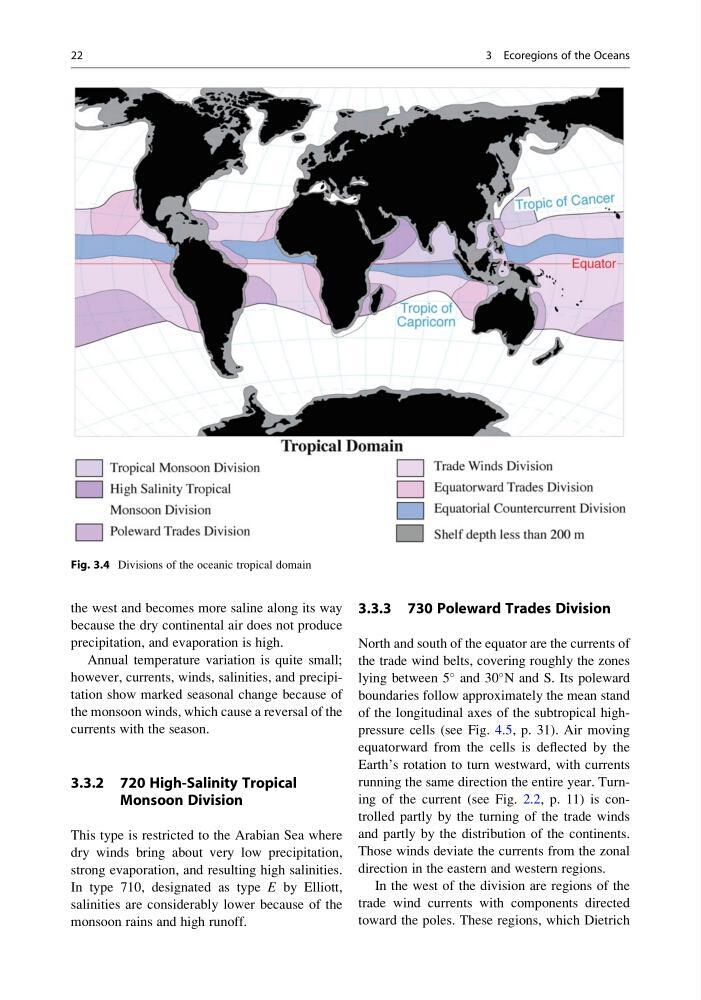
Fig. 3.4 Divisions of the oceanic tropical domain
22
3 Ecoregions of the Oceans
because the dry continental air does not produce
precipitation, and evaporation is high.
Annual temperature variation is quite small;
however, currents, winds, salinities, and precipitation show marked seasonal change because of
the monsoon winds, which cause a reversal of the
currents with the season.
3.3.2 720 High-Salinity Tropical
Monsoon Division
This type is restricted to the Arabian Sea where
dry winds bring about very low precipitation,
strong evaporation, and resulting high salinities.
In type 710, designated as type E by Elliott,
salinities are considerably lower because of the
monsoon rains and high runoff.
3.3.3 730 Poleward Trades Division
North and south of the equator are the currents of
the trade wind belts, covering roughly the zones
lying between 5
and 30
N and S. Its poleward
boundaries follow approximately the mean stand
of the longitudinal axes of the subtropical highpressure cells (see Fig. 4.5, p. 31). Air moving
equatorward from the cells is deflected by the
Earth’s rotation to turn westward, with currents
running the same direction the entire year. Turning of the current (see Fig. 2.2, p. 11) is controlled partly by the turning of the trade winds
and partly by the distribution of the continents.
Those winds deviate the currents from the zonal
direction in the eastern and western regions.
In the west of the division are regions of the
trade wind currents with components directed
toward the poles. These regions, which Dietrich
Fig. 3.4 Divisions of the oceanic tropical domain
22
3 Ecoregions of the Oceans