

recognized by Alexander von Humboldt (1817).
Much later Carl Troll developed a classification
of the mountainous regions of the tropical
Americas (1968), Eurasia (1972), and then
expanded it worldwide (1973). The latitudinal
variation in southern Rocky Mountain forests
was analyzed by Peet (1978).
The position of the montane zone varies with
latitude. It starts at 2,700 m in the Himalayas,
1,200 m in the Sierra Nevada of California,
900 m in the western Alps of Europe, and sea
level in the Chugach Mountains of Alaska. Long,
cold winters and heavy snowfall create ideal
conditions for evergreen conifers, such as pines,
fir, and spruce (Fig. 9.4). Food is limited
in coniferous forests, and mountain animals,
such as deer and many birds migrate to higher
elevations as the weather warms and food
becomes abundant. In the fall, they reverse the
migration. Animals not adapted to living in the
cold mountain winters migrate to the lowest
slopes. Year-round residents, such as bears and
chipmunks, hibernate.
In mid-latitudes, the climates of these montane coniferous forests range from hot and relatively dry to cold, wet, and snowy. The nature of
the forest vegetation reflects this wide climatic
span. In the United States, the sparse woodland
of pinyon and juniper on the desert mountains of
southern California and Nevada contrast strongly
with the mossy and cool spruce-fir forest of
cloud-shrouded Great Smoky Mountains of
North Carolina and Tennessee.
The subalpine zone is a transitional area
between the lush montane forest below and the
harsh alpine zone above. It is characterized by
scattered, stunted, and misshapen coniferous
trees, such as pines, spruces, and hemlocks. As
the upper limit of forest, or tree line, is
approached, the trees grow in prostrate thickets,
called krummholz. Animals in this zone are a
mixture of the animals found in the alpine zone
above and the montane below. Many montane
animals move to the higher elevations in summer
and retreat down to more protected areas during
the winter. The ibex, a goat of the European
Alps, lives in the alpine area in summer and the
subalpine zone in winter. Year-round residents
include the yellow-bellied marmot and the alpine
chipmunk.
Fig 9.1 Landslides that
produce a variation in
landform are widespread in
highlands. From a drawing
by W.M. Davis
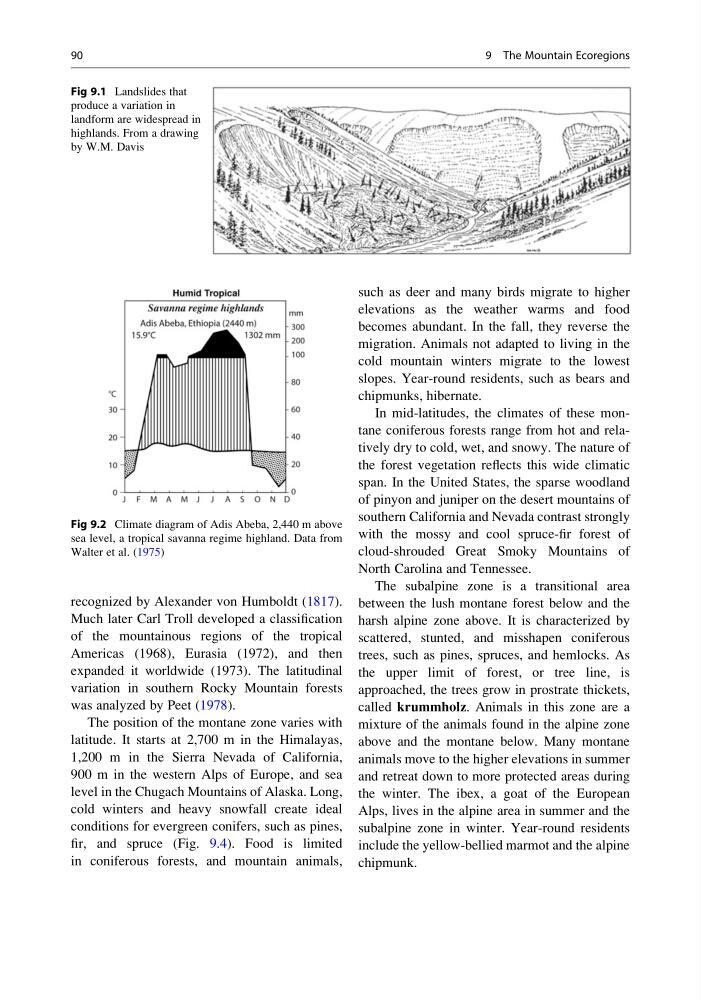
Fig 9.2 Climate diagram of Adis Abeba, 2,440 m above
sea level, a tropical savanna regime highland. Data from
Walter et al. (1975)
90
9 The Mountain Ecoregions
Much later Carl Troll developed a classification
of the mountainous regions of the tropical
Americas (1968), Eurasia (1972), and then
expanded it worldwide (1973). The latitudinal
variation in southern Rocky Mountain forests
was analyzed by Peet (1978).
The position of the montane zone varies with
latitude. It starts at 2,700 m in the Himalayas,
1,200 m in the Sierra Nevada of California,
900 m in the western Alps of Europe, and sea
level in the Chugach Mountains of Alaska. Long,
cold winters and heavy snowfall create ideal
conditions for evergreen conifers, such as pines,
fir, and spruce (Fig. 9.4). Food is limited
in coniferous forests, and mountain animals,
such as deer and many birds migrate to higher
elevations as the weather warms and food
becomes abundant. In the fall, they reverse the
migration. Animals not adapted to living in the
cold mountain winters migrate to the lowest
slopes. Year-round residents, such as bears and
chipmunks, hibernate.
In mid-latitudes, the climates of these montane coniferous forests range from hot and relatively dry to cold, wet, and snowy. The nature of
the forest vegetation reflects this wide climatic
span. In the United States, the sparse woodland
of pinyon and juniper on the desert mountains of
southern California and Nevada contrast strongly
with the mossy and cool spruce-fir forest of
cloud-shrouded Great Smoky Mountains of
North Carolina and Tennessee.
The subalpine zone is a transitional area
between the lush montane forest below and the
harsh alpine zone above. It is characterized by
scattered, stunted, and misshapen coniferous
trees, such as pines, spruces, and hemlocks. As
the upper limit of forest, or tree line, is
approached, the trees grow in prostrate thickets,
called krummholz. Animals in this zone are a
mixture of the animals found in the alpine zone
above and the montane below. Many montane
animals move to the higher elevations in summer
and retreat down to more protected areas during
the winter. The ibex, a goat of the European
Alps, lives in the alpine area in summer and the
subalpine zone in winter. Year-round residents
include the yellow-bellied marmot and the alpine
chipmunk.
Fig 9.1 Landslides that
produce a variation in
landform are widespread in
highlands. From a drawing
by W.M. Davis
Fig 9.2 Climate diagram of Adis Abeba, 2,440 m above
sea level, a tropical savanna regime highland. Data from
Walter et al. (1975)
90
9 The Mountain Ecoregions