

E
...
CD
I
on
lOs 01 m
Waste Disposal and Pollution: Radioactive Pollution
301
Exposure to water and sediment
DeilY Ind dilution
in the water column
DlIIu.ion through
.edlmenl
1.000s 01 m
BonoM WATER
SEDIMENT
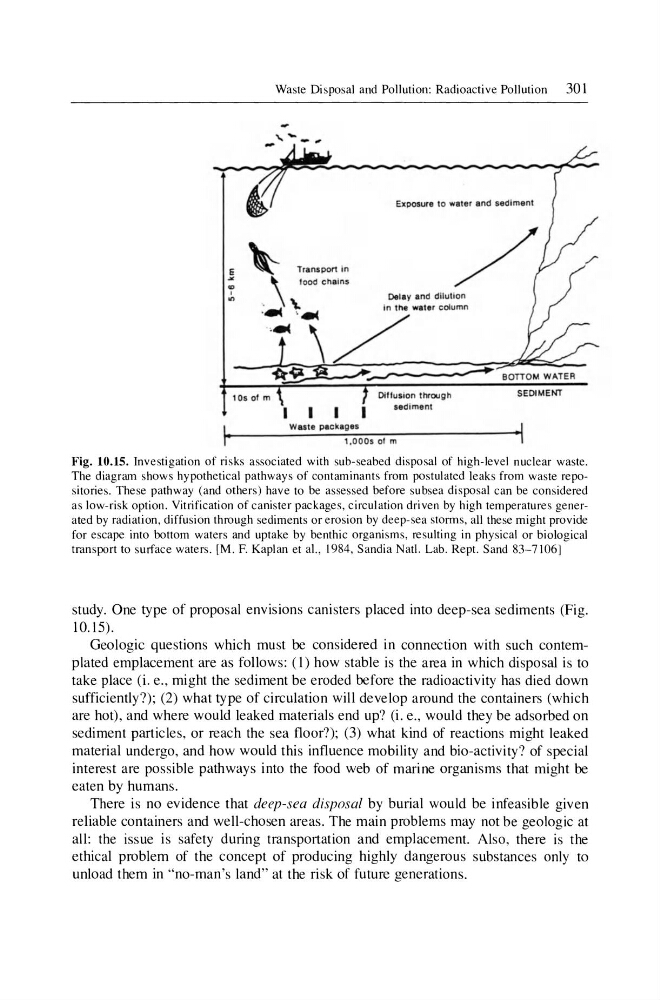
Fig. 10.15. lnvestigation of risks associated with sub- seabed di sposal of high-level nuclear waste.
The diagram shows hypothetical pathways of contaminants from postulated leaks from waste repositories. These pathway (and others) have to be assessed before subsea disposal can be considered
as low-risk option. Vitrification of canister packages, circulation driven by hi gh temperatures generated by radiation, diffusion throug h sediments or erosion by deep- sea storms, all these might provide
for escape into bottom waters and uptake by benthic organisms, resulting in physical or biological
transport to surfac e waters. [M . F. Kaplan et a\. , 1984, Sandia Natl. Lab. Rep!. Sand 83- 7106]
study. One type of proposal envisions canisters placed into deep-sea sediments (Fig.
10.15).
Geologic questions which must be considered in connection with such contemplated emplacement are as follows : (I) how stable is the area in which disposal is to
take place (i. e., might the sediment be eroded before the radioactivity has died down
sufficiently?); (2) what type of circulation will develop around the containers (which
are hot) , and where would leaked materials end up? (i. e., would they be adsorbed on
sediment particles, or reach the sea floor?); (3) what kind of reactions might leaked
material undergo, and how would this influence mobility and bio-activity? of special
interest are possible pathways into the food web of marine organisms that might be
eaten by humans.
There is no evidence that deep-sea disposal by burial would be infeasible given
reliable containers and well-chosen areas . The main problems may not be geologic at
all: the issue is safety during transportation and emplacement. Also, there is the
ethical problem of the concept of producing highly dangerous substances only to
unload them in "no-man's land" at the risk of future generations.
...
CD
I
on
lOs 01 m
Waste Disposal and Pollution: Radioactive Pollution
301
Exposure to water and sediment
DeilY Ind dilution
in the water column
DlIIu.ion through
.edlmenl
1.000s 01 m
BonoM WATER
SEDIMENT
Fig. 10.15. lnvestigation of risks associated with sub- seabed di sposal of high-level nuclear waste.
The diagram shows hypothetical pathways of contaminants from postulated leaks from waste repositories. These pathway (and others) have to be assessed before subsea disposal can be considered
as low-risk option. Vitrification of canister packages, circulation driven by hi gh temperatures generated by radiation, diffusion throug h sediments or erosion by deep- sea storms, all these might provide
for escape into bottom waters and uptake by benthic organisms, resulting in physical or biological
transport to surfac e waters. [M . F. Kaplan et a\. , 1984, Sandia Natl. Lab. Rep!. Sand 83- 7106]
study. One type of proposal envisions canisters placed into deep-sea sediments (Fig.
10.15).
Geologic questions which must be considered in connection with such contemplated emplacement are as follows : (I) how stable is the area in which disposal is to
take place (i. e., might the sediment be eroded before the radioactivity has died down
sufficiently?); (2) what type of circulation will develop around the containers (which
are hot) , and where would leaked materials end up? (i. e., would they be adsorbed on
sediment particles, or reach the sea floor?); (3) what kind of reactions might leaked
material undergo, and how would this influence mobility and bio-activity? of special
interest are possible pathways into the food web of marine organisms that might be
eaten by humans.
There is no evidence that deep-sea disposal by burial would be infeasible given
reliable containers and well-chosen areas . The main problems may not be geologic at
all: the issue is safety during transportation and emplacement. Also, there is the
ethical problem of the concept of producing highly dangerous substances only to
unload them in "no-man's land" at the risk of future generations.