

The Carbon Connection
255
B IOLOG ICAL PUM P
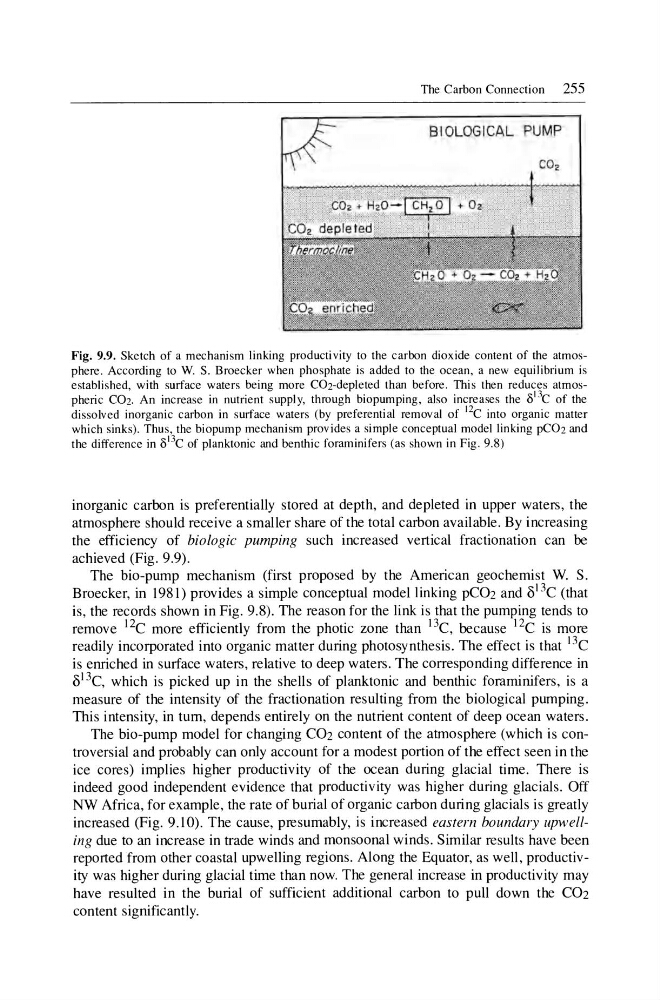
Fig. 9.9. Sketch of a mechanism linking productivity to the carbon dioxide content of the atmosphere. According to W. S. Broecker when phosphate is added to the ocean, a new equilibrium is
established, with surface waters being more C02-depleted than before . This then reduces atmospheric C02. An increase in nutrient supply, through biopumping, also increases the 013C of the
dissolved inorganic carbon in surface waters (by preferential removal of 12C into organic matter
which sinks). Thus, the biopump mechanism provides a simple conceptual model linking pC02 and
the difference in ol3C of planktonic and benthic foraminifers (as shown in Fig. 9.8)
inorganic carbon is preferentially stored at depth, and depleted in upper waters, the
atmosphere should receive a smaller share of the total carbon available. By increasing
the efficiency of biologic pumping such increased vertical fractionation can be
achieved (Fig. 9.9).
The bio-pump mechanism (first proposed by the American geochemist W. S.
Broecker, in 1981) provides a simple conceptual model linking pC02 and 8 13 C (that
is, the records shown in Fig. 9.8). The reason for the link is that the pumping tends to
remove 12C more efficiently from the photic zone than 13C, because 12C is more
readily incorporated into organic matter during photosynthesis. The effect is that 13C
is enriched in surface waters, relative to deep waters. The corresponding difference in
813C, which is picked up in the shells of planktonic and benthic foraminifers, is a
measure of the intensity of the fractionation resulting from the biological pumping.
This intensity, in tum, depends entirely on the nutrient content of deep ocean waters.
The bio-pump model for changing C02 content of the atmosphere (which is controversial and probably can only account for a modest portion of the effect seen in the
ice cores) implies higher productivity of the ocean during glacial time. There is
indeed good independent evidence that productivity was higher during glacials. Off
NW Africa, for example, the rate of burial of organic carbon during glacials is greatly
increased (Fig. 9.\0). The cause, presumably, is increased eastern boundary upwelling due to an increase in trade winds and monsoonal winds. Similar results have been
reported from other coastal upwelling regions. Along the Equator, as well, productivity was higher during glacial time than now. The general increase in productivity may
have resulted in the burial of sufficient additional carbon to pull down the C02
content significantly.
255
B IOLOG ICAL PUM P
Fig. 9.9. Sketch of a mechanism linking productivity to the carbon dioxide content of the atmosphere. According to W. S. Broecker when phosphate is added to the ocean, a new equilibrium is
established, with surface waters being more C02-depleted than before . This then reduces atmospheric C02. An increase in nutrient supply, through biopumping, also increases the 013C of the
dissolved inorganic carbon in surface waters (by preferential removal of 12C into organic matter
which sinks). Thus, the biopump mechanism provides a simple conceptual model linking pC02 and
the difference in ol3C of planktonic and benthic foraminifers (as shown in Fig. 9.8)
inorganic carbon is preferentially stored at depth, and depleted in upper waters, the
atmosphere should receive a smaller share of the total carbon available. By increasing
the efficiency of biologic pumping such increased vertical fractionation can be
achieved (Fig. 9.9).
The bio-pump mechanism (first proposed by the American geochemist W. S.
Broecker, in 1981) provides a simple conceptual model linking pC02 and 8 13 C (that
is, the records shown in Fig. 9.8). The reason for the link is that the pumping tends to
remove 12C more efficiently from the photic zone than 13C, because 12C is more
readily incorporated into organic matter during photosynthesis. The effect is that 13C
is enriched in surface waters, relative to deep waters. The corresponding difference in
813C, which is picked up in the shells of planktonic and benthic foraminifers, is a
measure of the intensity of the fractionation resulting from the biological pumping.
This intensity, in tum, depends entirely on the nutrient content of deep ocean waters.
The bio-pump model for changing C02 content of the atmosphere (which is controversial and probably can only account for a modest portion of the effect seen in the
ice cores) implies higher productivity of the ocean during glacial time. There is
indeed good independent evidence that productivity was higher during glacials. Off
NW Africa, for example, the rate of burial of organic carbon during glacials is greatly
increased (Fig. 9.\0). The cause, presumably, is increased eastern boundary upwelling due to an increase in trade winds and monsoonal winds. Similar results have been
reported from other coastal upwelling regions. Along the Equator, as well, productivity was higher during glacial time than now. The general increase in productivity may
have resulted in the burial of sufficient additional carbon to pull down the C02
content significantly.