

Organisms and Rocky Substrate
169
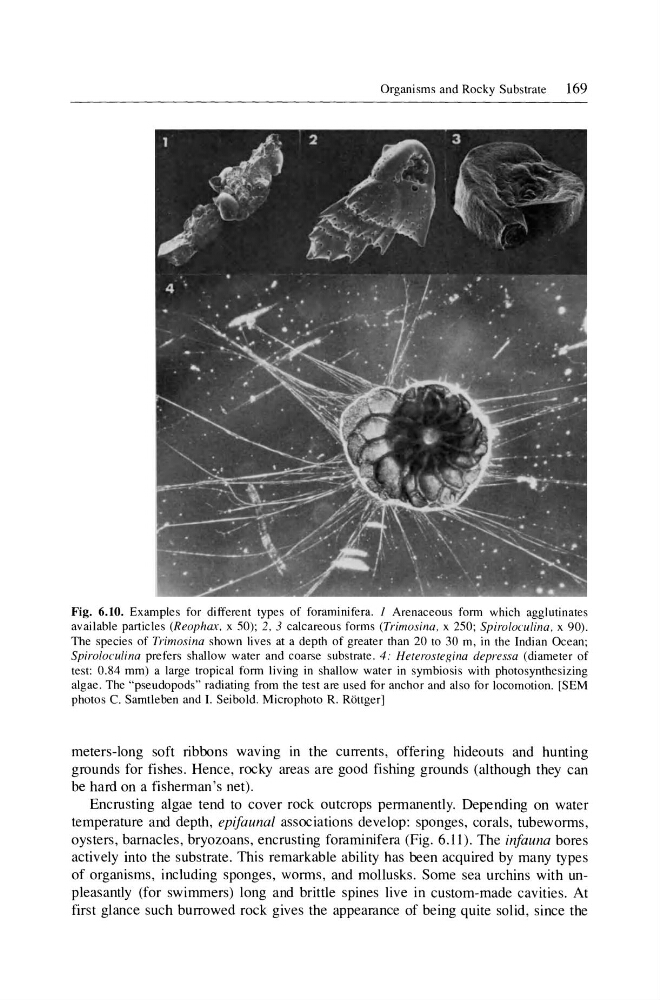
Fig. 6.10. Examples for different types of foraminifera. I Arenaceous form which agglutinates
available particles (Reophax. x 50); 2. 3 calcareous forms (Trimosina. x 250; Spir%('ulina. x 90).
The species of Trimosina shown lives at a depth of greater than 20 to 30 m. in the Indian Ocean;
Spir%cu/ina prefers shallow water and coarse substrate. 4: Heterostegina depressa (diameter of
test: 0.84 mm) a large tropical form living in shallow water in symbiosis with photosynthesizing
algae . The "pseudopods" radiating from the test are used for anchor and also for locomotion. [SEM
photos C. Samtleben and I. Seibold. Microphoto R. Rottger]
meters-long soft ribbons waving in the currents, offering hideouts and hunting
grounds for fishes. Hence, rocky areas are good fishing grounds (although they can
be hard on a fisherman's net).
Encrusting algae tend to cover rock outcrops permanently. Depending on water
temperature and depth, epifaunal associations develop: sponges, corals, tubeworms,
oysters, barnacles, bryozoans, encrusting foraminifera (Fig. 6.11). The infauna bores
actively into the substrate. This remarkable ability has been acquired by many types
of organisms, including sponges, worms, and mollusks. Some sea urchins with unpleasantly (for swimmers) long and brittle spines live in custom-made cavities. At
first glance such burrowed rock gives the appearance of being quite solid, since the
169
Fig. 6.10. Examples for different types of foraminifera. I Arenaceous form which agglutinates
available particles (Reophax. x 50); 2. 3 calcareous forms (Trimosina. x 250; Spir%('ulina. x 90).
The species of Trimosina shown lives at a depth of greater than 20 to 30 m. in the Indian Ocean;
Spir%cu/ina prefers shallow water and coarse substrate. 4: Heterostegina depressa (diameter of
test: 0.84 mm) a large tropical form living in shallow water in symbiosis with photosynthesizing
algae . The "pseudopods" radiating from the test are used for anchor and also for locomotion. [SEM
photos C. Samtleben and I. Seibold. Microphoto R. Rottger]
meters-long soft ribbons waving in the currents, offering hideouts and hunting
grounds for fishes. Hence, rocky areas are good fishing grounds (although they can
be hard on a fisherman's net).
Encrusting algae tend to cover rock outcrops permanently. Depending on water
temperature and depth, epifaunal associations develop: sponges, corals, tubeworms,
oysters, barnacles, bryozoans, encrusting foraminifera (Fig. 6.11). The infauna bores
actively into the substrate. This remarkable ability has been acquired by many types
of organisms, including sponges, worms, and mollusks. Some sea urchins with unpleasantly (for swimmers) long and brittle spines live in custom-made cavities. At
first glance such burrowed rock gives the appearance of being quite solid, since the