

130 Sea Level Processes and Effects of Sea Level Change
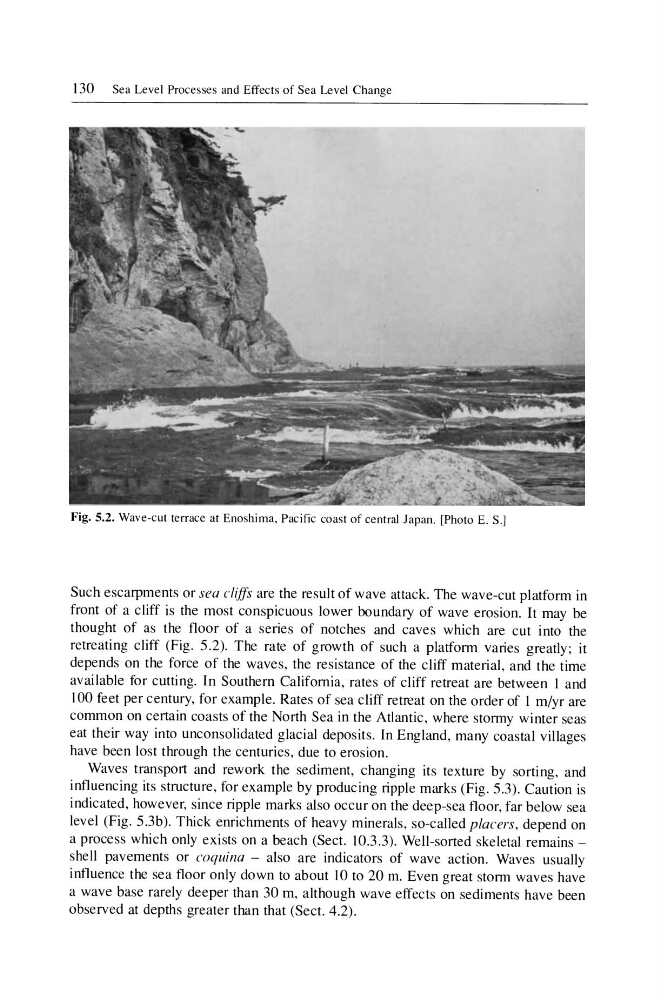
Fig. 5.2. Wave-cut terrace at Enoshima, Pacific coast of central Japan. [Photo E. S.]
Such escarpments or sea cliffs are the result of wave attack. The wave-cut platform in
front of a cliff is the most conspicuous lower boundary of wave erosion. It may be
thought of as the floor of a series of notches and caves which are cut into the
retreating cliff (Fig. 5.2). The rate of growth of such a platform varies greatly; it
depends on the force of the waves, the resistance of the cliff material, and the time
available for cutting. In Southern California, rates of cliff retreat are between 1 and
100 feet per century, for example. Rates of sea cliff retreat on the order of I m/yr are
common on certain coasts of the North Sea in the Atlantic , where stormy winter seas
eat their way into unconsolidated glacial deposits. In England, many coastal villages
have been lost through the centuries, due to erosion.
Waves transport and rework the sediment, changing its texture by sorting, and
influencing its structure, for example by producing ripple marks (Fig. 5.3). Caution is
indicated, however, since ripple marks also occur on the deep-sea floor, far below sea
level (Fig. 5.3b). Thick enrichments of heavy minerals, so-called placers, depend on
a process which only exists on a beach (Sect. 10.3.3). Well-sorted skeletal remains -
shell pavements or coquina - also are indicators of wave action. Waves usually
influence the sea floor only down to about 10 to 20 m. Even great storm waves have
a wave base rarely deeper than 30 m, although wave effects on sediments have been
observed at depths greater than that (Sect. 4.2).
Fig. 5.2. Wave-cut terrace at Enoshima, Pacific coast of central Japan. [Photo E. S.]
Such escarpments or sea cliffs are the result of wave attack. The wave-cut platform in
front of a cliff is the most conspicuous lower boundary of wave erosion. It may be
thought of as the floor of a series of notches and caves which are cut into the
retreating cliff (Fig. 5.2). The rate of growth of such a platform varies greatly; it
depends on the force of the waves, the resistance of the cliff material, and the time
available for cutting. In Southern California, rates of cliff retreat are between 1 and
100 feet per century, for example. Rates of sea cliff retreat on the order of I m/yr are
common on certain coasts of the North Sea in the Atlantic , where stormy winter seas
eat their way into unconsolidated glacial deposits. In England, many coastal villages
have been lost through the centuries, due to erosion.
Waves transport and rework the sediment, changing its texture by sorting, and
influencing its structure, for example by producing ripple marks (Fig. 5.3). Caution is
indicated, however, since ripple marks also occur on the deep-sea floor, far below sea
level (Fig. 5.3b). Thick enrichments of heavy minerals, so-called placers, depend on
a process which only exists on a beach (Sect. 10.3.3). Well-sorted skeletal remains -
shell pavements or coquina - also are indicators of wave action. Waves usually
influence the sea floor only down to about 10 to 20 m. Even great storm waves have
a wave base rarely deeper than 30 m, although wave effects on sediments have been
observed at depths greater than that (Sect. 4.2).