

110 Peter S~ille and Graham Shields
Rn,'= Sr isotopic ratio of river water (0.7111)
Srg,,. = Sr ~oundwater flux ( 1.9 x 10¹²ga "1 )
Rx,~ = Sr isotopic ratio of groundwater (0.711)
Srat. = Sr flux from the recrystallization of carbonates (0.48 x 10¹²ga "1 )
Rac = Sr isotopic ratio of the recrystallization flux (0.7084)
Sroo = Sr flux from oceanic basalts ( 1.26 x 10¹²ga 1 )
Rob = Sr isotopic ratio of basahs (0.703)
The mass balance is similar to that of Faure et al. (1965). New additions are the
contribution from groundwater Sr, Sr which is released by the diagenetic
recrystallization of marine carbonate sediments, and Sr from submarine
hydrothermaI exchange.
O
,,....,
OJ
E
RELATIVE FLUCTUATIONS
OF SEAWATER
9
-,=-- r i s i n g
fatting
o
,oo i
s 'k I s-....t
"~ : tpda Y
,00
300 S~ate*et~ ~)
oo ? ; %
iN
600
'
,
,
, I ,
,
0.7067
0.7075 0.7083
0.7091
PERIOOS
Tertiary
C r e t a c e o u s
Jurassic
Triassic
Perm Jan
Pennsytvanian
M i s s i s s i p i a n
D e v o n i a n
S i l u r i a n
Orclovician
C a m b r i a n
Preeambrian
a'Sr / "Sr
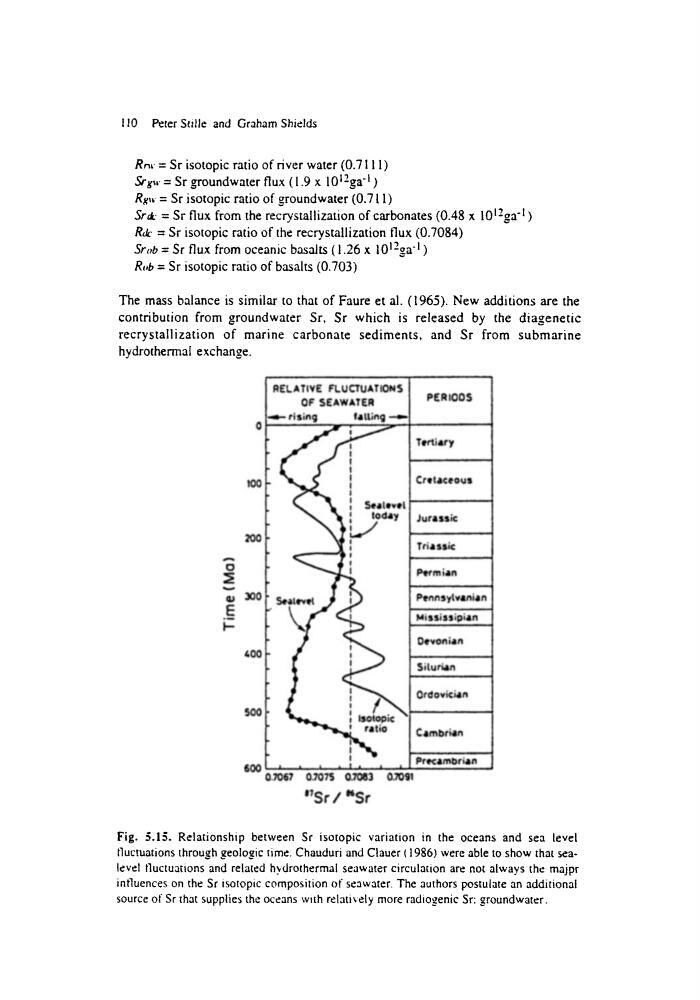
Fig. 5.15. Relationship between Sr isotopic variation in the oceans and sea level
fluctuations through geologic time. Chauduri and Clauer (1986) were able to show that sealevel fluctuations and related hydrothermal seawater circulation are not always the majpr
influences on the Sr isotopic composition of seawater. The authors postulate an additional
source of Sr that supplies the oceans with relatively more radiogenic Sr: groundwater.
Rn,'= Sr isotopic ratio of river water (0.7111)
Srg,,. = Sr ~oundwater flux ( 1.9 x 10¹²ga "1 )
Rx,~ = Sr isotopic ratio of groundwater (0.711)
Srat. = Sr flux from the recrystallization of carbonates (0.48 x 10¹²ga "1 )
Rac = Sr isotopic ratio of the recrystallization flux (0.7084)
Sroo = Sr flux from oceanic basalts ( 1.26 x 10¹²ga 1 )
Rob = Sr isotopic ratio of basahs (0.703)
The mass balance is similar to that of Faure et al. (1965). New additions are the
contribution from groundwater Sr, Sr which is released by the diagenetic
recrystallization of marine carbonate sediments, and Sr from submarine
hydrothermaI exchange.
O
,,....,
OJ
E
RELATIVE FLUCTUATIONS
OF SEAWATER
9
-,=-- r i s i n g
fatting
o
,oo i
s 'k I s-....t
"~ : tpda Y
,00
300 S~ate*et~ ~)
oo ? ; %
iN
600
'
,
,
, I ,
,
0.7067
0.7075 0.7083
0.7091
PERIOOS
Tertiary
C r e t a c e o u s
Jurassic
Triassic
Perm Jan
Pennsytvanian
M i s s i s s i p i a n
D e v o n i a n
S i l u r i a n
Orclovician
C a m b r i a n
Preeambrian
a'Sr / "Sr
Fig. 5.15. Relationship between Sr isotopic variation in the oceans and sea level
fluctuations through geologic time. Chauduri and Clauer (1986) were able to show that sealevel fluctuations and related hydrothermal seawater circulation are not always the majpr
influences on the Sr isotopic composition of seawater. The authors postulate an additional
source of Sr that supplies the oceans with relatively more radiogenic Sr: groundwater.