

2
Physical Properties of Marine Sediments
28
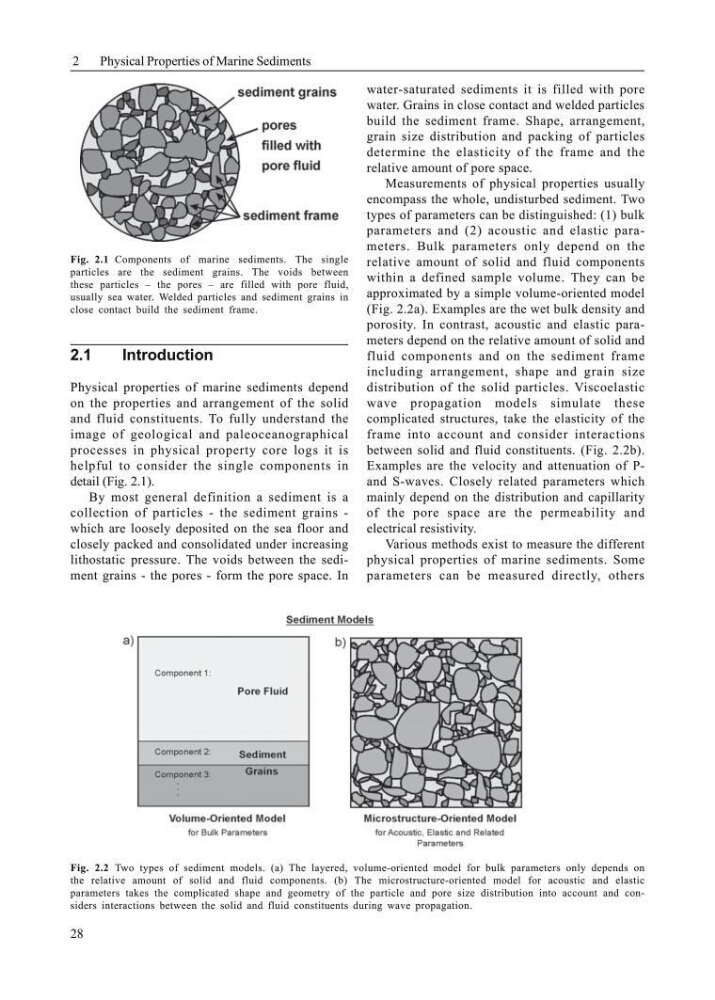
Fig. 2.1 Components of marine sediments. The single
particles are the sediment grains. The voids between
these particles – the pores – are filled with pore fluid,
usually sea water. Welded particles and sediment grains in
close contact build the sediment frame.
Fig. 2.2 Two types of sediment models. (a) The layered, volume-oriented model for bulk parameters only depends on
the relative amount of solid and fluid components. (b) The microstructure-oriented model for acoustic and elastic
parameters takes the complicated shape and geometry of the particle and pore size distribution into account and considers interactions between the solid and fluid constituents during wave propagation.
2.1
Introduction
Physical properties of marine sediments depend
on the properties and arrangement of the solid
and fluid constituents. To fully understand the
image of geological and paleoceanographical
processes in physical property core logs it is
helpful to consider the single components in
detail (Fig. 2.1).
By most general definition a sediment is a
collection of particles - the sediment grains -
which are loosely deposited on the sea floor and
closely packed and consolidated under increasing
lithostatic pressure. The voids between the sediment grains - the pores - form the pore space. In
water-saturated sediments it is filled with pore
water. Grains in close contact and welded particles
build the sediment frame. Shape, arrangement,
grain size distribution and packing of particles
determine the elasticity of the frame and the
relative amount of pore space.
Measurements of physical properties usually
encompass the whole, undisturbed sediment. Two
types of parameters can be distinguished: (1) bulk
parameters and (2) acoustic and elastic parameters. Bulk parameters only depend on the
relative amount of solid and fluid components
within a defined sample volume. They can be
approximated by a simple volume-oriented model
(Fig. 2.2a). Examples are the wet bulk density and
porosity. In contrast, acoustic and elastic parameters depend on the relative amount of solid and
fluid components and on the sediment frame
including arrangement, shape and grain size
distribution of the solid particles. Viscoelastic
wave propagation models simulate these
complicated structures, take the elasticity of the
frame into account and consider interactions
between solid and fluid constituents. (Fig. 2.2b).
Examples are the velocity and attenuation of Pand S-waves. Closely related parameters which
mainly depend on the distribution and capillarity
of the pore space are the permeability and
electrical resistivity.
Various methods exist to measure the different
physical properties of marine sediments. Some
parameters can be measured directly, others
Physical Properties of Marine Sediments
28
Fig. 2.1 Components of marine sediments. The single
particles are the sediment grains. The voids between
these particles – the pores – are filled with pore fluid,
usually sea water. Welded particles and sediment grains in
close contact build the sediment frame.
Fig. 2.2 Two types of sediment models. (a) The layered, volume-oriented model for bulk parameters only depends on
the relative amount of solid and fluid components. (b) The microstructure-oriented model for acoustic and elastic
parameters takes the complicated shape and geometry of the particle and pore size distribution into account and considers interactions between the solid and fluid constituents during wave propagation.
2.1
Introduction
Physical properties of marine sediments depend
on the properties and arrangement of the solid
and fluid constituents. To fully understand the
image of geological and paleoceanographical
processes in physical property core logs it is
helpful to consider the single components in
detail (Fig. 2.1).
By most general definition a sediment is a
collection of particles - the sediment grains -
which are loosely deposited on the sea floor and
closely packed and consolidated under increasing
lithostatic pressure. The voids between the sediment grains - the pores - form the pore space. In
water-saturated sediments it is filled with pore
water. Grains in close contact and welded particles
build the sediment frame. Shape, arrangement,
grain size distribution and packing of particles
determine the elasticity of the frame and the
relative amount of pore space.
Measurements of physical properties usually
encompass the whole, undisturbed sediment. Two
types of parameters can be distinguished: (1) bulk
parameters and (2) acoustic and elastic parameters. Bulk parameters only depend on the
relative amount of solid and fluid components
within a defined sample volume. They can be
approximated by a simple volume-oriented model
(Fig. 2.2a). Examples are the wet bulk density and
porosity. In contrast, acoustic and elastic parameters depend on the relative amount of solid and
fluid components and on the sediment frame
including arrangement, shape and grain size
distribution of the solid particles. Viscoelastic
wave propagation models simulate these
complicated structures, take the elasticity of the
frame into account and consider interactions
between solid and fluid constituents. (Fig. 2.2b).
Examples are the velocity and attenuation of Pand S-waves. Closely related parameters which
mainly depend on the distribution and capillarity
of the pore space are the permeability and
electrical resistivity.
Various methods exist to measure the different
physical properties of marine sediments. Some
parameters can be measured directly, others