

227
The direct determination of denitrification rates
has been carried out by a number of different
methods which all have certain advantages and
restrictions. It is beyond the scope of this chapter
to describe all of these methods in detail so that
we will only give a short summary of the general
principles. A more detailed overview of this
subject can be found, for example, in Koike and
Sørensen (1988); Seitzinger et al. (1993); and Kana
et al. (1998).
The most important methods of measuring
denitrification are (1) the detection of totally
produced N 2 gas by incubation, (2) isotope-labeling methods with
15
N and
13
N, and (3) the acetylene (C 2 H 2 ) inhibition technique.
(1) The first method aims at measuring the total
production of N 2 as equal to the rate of denitrification (Eq. 6.6-6.8) by sediment incubation (Seitzinger et al. 1984; Devol 1991). At present, this is
thought to be the best method to accurately determine rates of overall denitrification, although the
contamination with atmospheric N 2 is possible
during long incubation periods and thought to be
the main restriction (Koike and Sørensen 1988;
Seitzinger 1988). More recently, however, the
technique of membrane inlet mass spectrometry,
which is able to detect small changes of dissolved
nitrogen with high temporal resolution and without perturbation of the sediment has been developed (Kana et al. 1994, 1998; Hartnett and Seitzinger 2003). Perturbations by atmospheric nitrogen are avoided by detecting changes of N 2 /Ar
ratio relative to seawater standards.
(2) The intention of the isotope methods is to
add
15
NO 3 or
13
NO 3 to the nitrate pool of the supernatant water during incubation and to measure the
15
N and
13
N content of the total amount of produced N 2 . As the half-life of
13
N is 10 minutes, this
method is only of limited use. The
15
N method
already applied by Goering and Pamatmat (1970) to
marine sediments off Peru is, in contrast, widely
accepted and was used in a number of recent
incubation studies of shallow marine and freshwater environments (e.g. Nielsen 1992; Rysgaard
et al. 1994). This so-called ion-pairing method
(Nielsen 1992) allows the determination of the
total rate of denitrification and its dependence on
the nitrate concentration in bottom water. Additionally, a number of authors (e.g. Nielsen 1992;
Rysgaard et al. 1994; Sloth et al. 1995) believe that
it also enables to distinguish between the source
of nitrate, either as coming directly from the
bottom water or from nitrification. This, however,
has caused an intense discussion regarding the
potential of the method and the benefits of its
performance (Middelburg et al. 1996bc; Nielsen et
al. 1996).
(3) At last, the C 2 H 2 inhibition technique takes
advantage of the property of acetylene to block
the reduction of N 2 O to N 2 after it is injected into
the sediment. The total amount of N 2 O produced
is then the measure for the denitrification rate as it
is easy to determine by gas chromatography
(Andersen et al. 1984) or by microsensors (Christensen et al. 1989). The advantage of this
method is that analyses can be carried out rapidly and sensitively. Problems are: (a) N 2 O reduction is sometimes incomplete, (b) a homogenous distribution of C 2 H 2 in the pore water is
difficult to maintain, (c) C 2 H 2 inhibits nitrification in the sediment meaning that the coupled
system (nitrification / denitrification) might be
seriously affected due to the applied method, and
(d) might lose its inhibitory properties in the
presence of hydrogensulfide (Sørensen et al. 1987;
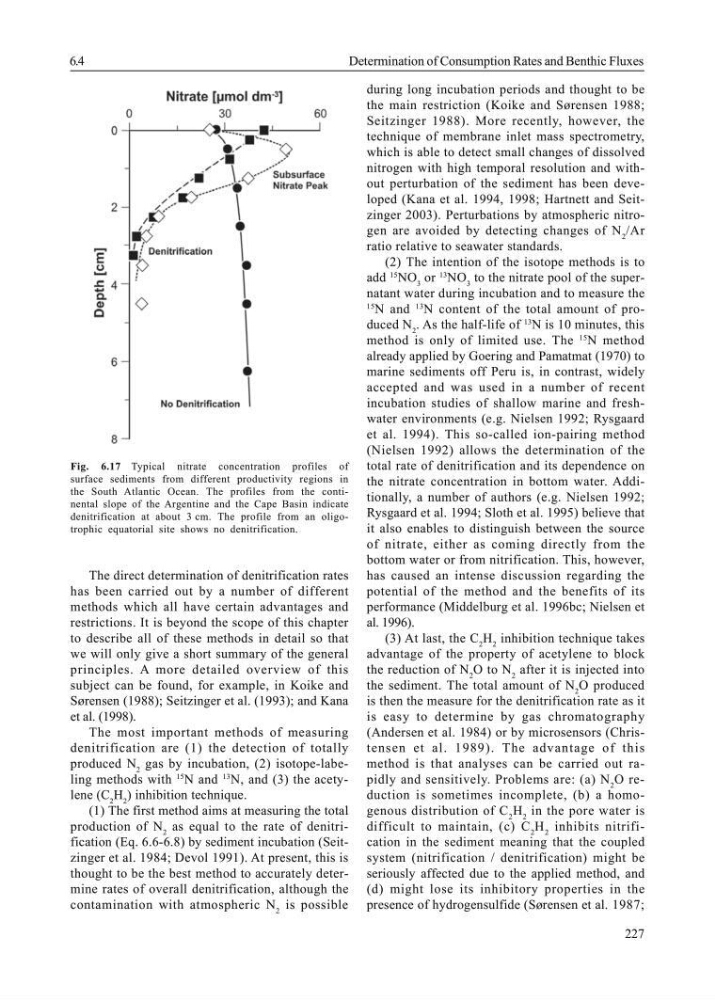
Fig. 6.17 Typical nitrate concentration profiles of
surface sediments from different productivity regions in
the South Atlantic Ocean. The profiles from the continental slope of the Argentine and the Cape Basin indicate
denitrification at about 3 cm. The profile from an oligotrophic equatorial site shows no denitrification.
6.4
Determination of Consumption Rates and Benthic Fluxes
The direct determination of denitrification rates
has been carried out by a number of different
methods which all have certain advantages and
restrictions. It is beyond the scope of this chapter
to describe all of these methods in detail so that
we will only give a short summary of the general
principles. A more detailed overview of this
subject can be found, for example, in Koike and
Sørensen (1988); Seitzinger et al. (1993); and Kana
et al. (1998).
The most important methods of measuring
denitrification are (1) the detection of totally
produced N 2 gas by incubation, (2) isotope-labeling methods with
15
N and
13
N, and (3) the acetylene (C 2 H 2 ) inhibition technique.
(1) The first method aims at measuring the total
production of N 2 as equal to the rate of denitrification (Eq. 6.6-6.8) by sediment incubation (Seitzinger et al. 1984; Devol 1991). At present, this is
thought to be the best method to accurately determine rates of overall denitrification, although the
contamination with atmospheric N 2 is possible
during long incubation periods and thought to be
the main restriction (Koike and Sørensen 1988;
Seitzinger 1988). More recently, however, the
technique of membrane inlet mass spectrometry,
which is able to detect small changes of dissolved
nitrogen with high temporal resolution and without perturbation of the sediment has been developed (Kana et al. 1994, 1998; Hartnett and Seitzinger 2003). Perturbations by atmospheric nitrogen are avoided by detecting changes of N 2 /Ar
ratio relative to seawater standards.
(2) The intention of the isotope methods is to
add
15
NO 3 or
13
NO 3 to the nitrate pool of the supernatant water during incubation and to measure the
15
N and
13
N content of the total amount of produced N 2 . As the half-life of
13
N is 10 minutes, this
method is only of limited use. The
15
N method
already applied by Goering and Pamatmat (1970) to
marine sediments off Peru is, in contrast, widely
accepted and was used in a number of recent
incubation studies of shallow marine and freshwater environments (e.g. Nielsen 1992; Rysgaard
et al. 1994). This so-called ion-pairing method
(Nielsen 1992) allows the determination of the
total rate of denitrification and its dependence on
the nitrate concentration in bottom water. Additionally, a number of authors (e.g. Nielsen 1992;
Rysgaard et al. 1994; Sloth et al. 1995) believe that
it also enables to distinguish between the source
of nitrate, either as coming directly from the
bottom water or from nitrification. This, however,
has caused an intense discussion regarding the
potential of the method and the benefits of its
performance (Middelburg et al. 1996bc; Nielsen et
al. 1996).
(3) At last, the C 2 H 2 inhibition technique takes
advantage of the property of acetylene to block
the reduction of N 2 O to N 2 after it is injected into
the sediment. The total amount of N 2 O produced
is then the measure for the denitrification rate as it
is easy to determine by gas chromatography
(Andersen et al. 1984) or by microsensors (Christensen et al. 1989). The advantage of this
method is that analyses can be carried out rapidly and sensitively. Problems are: (a) N 2 O reduction is sometimes incomplete, (b) a homogenous distribution of C 2 H 2 in the pore water is
difficult to maintain, (c) C 2 H 2 inhibits nitrification in the sediment meaning that the coupled
system (nitrification / denitrification) might be
seriously affected due to the applied method, and
(d) might lose its inhibitory properties in the
presence of hydrogensulfide (Sørensen et al. 1987;
Fig. 6.17 Typical nitrate concentration profiles of
surface sediments from different productivity regions in
the South Atlantic Ocean. The profiles from the continental slope of the Argentine and the Cape Basin indicate
denitrification at about 3 cm. The profile from an oligotrophic equatorial site shows no denitrification.
6.4
Determination of Consumption Rates and Benthic Fluxes