

181
require work: growth and division, synthesis of
macromolecules, transport of solutes across the
cell membrane, secretion of exoenzymes or exopolymers, movement etc. The organisms catalyze
reduction-oxidation (redox) processes from which
they conserve a part of the energy and couple it to
the formation of a proton gradient across the
cytoplasmic membrane. The socalled proton motive
force established by this gradient is comparable to
the electron motive force of an ordinary battery. It
is created by the difference in electrical charge and
H
+
concentration between the inside (negative and
low H
+
, i.e. alkaline) and the outside (positive and
high H
+
) of the membrane. By reentry of protons
into the cell through membrane-bound ATPase
protein complexes, it drives the formation of high
energy phosphate bonds in compounds such as
ATP (adenosine triphosphate), which functions as
a transient storage of the energy and is continuously recycled as the phosphate bond is
cleaved in energy-requiring processes. ATP is
utilized very widely in organisms as the fuel to
drive energy requiring processes, and a fundamental question in all cellular processes is, how
much ATP do they produce or consume?
Redox processes, whether biological or
chemical, involve a transfer of one or more electrons between the chemical reactants. An example
is the oxidation of ferrous iron to ferric iron by
oxygen at low pH:
2Fe 2+ + ½O 2 + 2H + → 2Fe 3+ + H 2 O
(5.13)
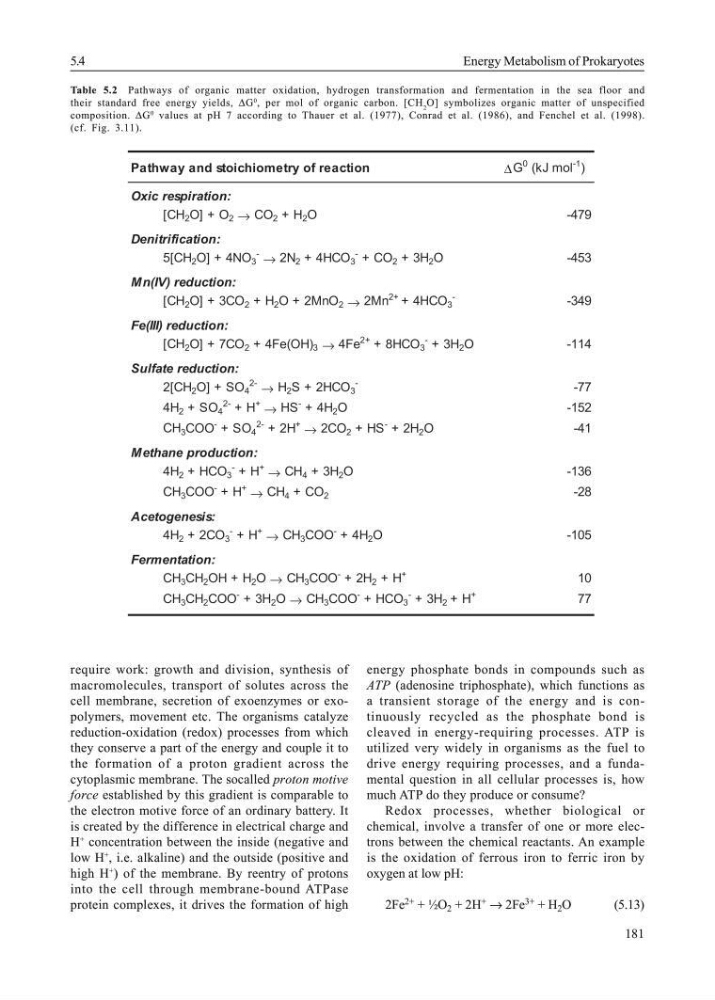
Table 5.2 Pathways of organic matter oxidation, hydrogen transformation and fermentation in the sea floor and
their standard free energy yields, ∆G
0 , per mol of organic carbon. [CH 2 O] symbolizes organic matter of unspecified
composition. ∆G
0 values at pH 7 according to Thauer et al. (1977), Conrad et al. (1986), and Fenchel et al. (1998).
(cf. Fig. 3.11).
5.4
Energy Metabolism of Prokaryotes
Pathway and stoichiometry of reaction
∆G
0 (kJ mol
-1 )
Oxic respiration:
[CH 2 O] + O 2 → CO 2 + H 2 O
-479
Denitrification:
5[CH 2 O] + 4NO 3
- → 2N 2 + 4HCO 3
- + CO 2 + 3H 2 O
-453
Mn(IV) reduction:
[CH 2 O] + 3CO 2 + H 2 O + 2MnO 2 → 2Mn
2+ + 4HCO 3
-
-349
Fe(III) reduction:
[CH 2 O] + 7CO 2 + 4Fe(OH) 3 → 4Fe
2+ + 8HCO 3
- + 3H 2 O
-114
Sulfate reduction:
2[CH 2 O] + SO 4
2- → H 2 S + 2HCO 3
-
-77
4H 2 + SO 4
2- + H
+ → HS
- + 4H 2 O
- 1 5 2
CH 3 COO
- + SO 4
2- + 2H
+ → 2CO 2 + HS
- + 2H 2 O
- 4 1
Methane production:
4H 2 + HCO 3
- + H
+ → CH 4 + 3H 2 O
-136
CH 3 COO
- + H
+ → CH 4 + CO 2
-28
Acetogenesis:
4H 2 + 2CO 3
- + H
+ → CH 3 COO
- + 4H 2 O
-105
Fermentation:
CH 3 CH 2 OH + H 2 O → CH 3 COO
- + 2H 2 + H
+
10
CH 3 CH 2 COO
- + 3H 2 O → CH 3 COO
- + HCO 3
- + 3H 2 + H
+
77
require work: growth and division, synthesis of
macromolecules, transport of solutes across the
cell membrane, secretion of exoenzymes or exopolymers, movement etc. The organisms catalyze
reduction-oxidation (redox) processes from which
they conserve a part of the energy and couple it to
the formation of a proton gradient across the
cytoplasmic membrane. The socalled proton motive
force established by this gradient is comparable to
the electron motive force of an ordinary battery. It
is created by the difference in electrical charge and
H
+
concentration between the inside (negative and
low H
+
, i.e. alkaline) and the outside (positive and
high H
+
) of the membrane. By reentry of protons
into the cell through membrane-bound ATPase
protein complexes, it drives the formation of high
energy phosphate bonds in compounds such as
ATP (adenosine triphosphate), which functions as
a transient storage of the energy and is continuously recycled as the phosphate bond is
cleaved in energy-requiring processes. ATP is
utilized very widely in organisms as the fuel to
drive energy requiring processes, and a fundamental question in all cellular processes is, how
much ATP do they produce or consume?
Redox processes, whether biological or
chemical, involve a transfer of one or more electrons between the chemical reactants. An example
is the oxidation of ferrous iron to ferric iron by
oxygen at low pH:
2Fe 2+ + ½O 2 + 2H + → 2Fe 3+ + H 2 O
(5.13)
Table 5.2 Pathways of organic matter oxidation, hydrogen transformation and fermentation in the sea floor and
their standard free energy yields, ∆G
0 , per mol of organic carbon. [CH 2 O] symbolizes organic matter of unspecified
composition. ∆G
0 values at pH 7 according to Thauer et al. (1977), Conrad et al. (1986), and Fenchel et al. (1998).
(cf. Fig. 3.11).
5.4
Energy Metabolism of Prokaryotes
Pathway and stoichiometry of reaction
∆G
0 (kJ mol
-1 )
Oxic respiration:
[CH 2 O] + O 2 → CO 2 + H 2 O
-479
Denitrification:
5[CH 2 O] + 4NO 3
- → 2N 2 + 4HCO 3
- + CO 2 + 3H 2 O
-453
Mn(IV) reduction:
[CH 2 O] + 3CO 2 + H 2 O + 2MnO 2 → 2Mn
2+ + 4HCO 3
-
-349
Fe(III) reduction:
[CH 2 O] + 7CO 2 + 4Fe(OH) 3 → 4Fe
2+ + 8HCO 3
- + 3H 2 O
-114
Sulfate reduction:
2[CH 2 O] + SO 4
2- → H 2 S + 2HCO 3
-
-77
4H 2 + SO 4
2- + H
+ → HS
- + 4H 2 O
- 1 5 2
CH 3 COO
- + SO 4
2- + 2H
+ → 2CO 2 + HS
- + 2H 2 O
- 4 1
Methane production:
4H 2 + HCO 3
- + H
+ → CH 4 + 3H 2 O
-136
CH 3 COO
- + H
+ → CH 4 + CO 2
-28
Acetogenesis:
4H 2 + 2CO 3
- + H
+ → CH 3 COO
- + 4H 2 O
-105
Fermentation:
CH 3 CH 2 OH + H 2 O → CH 3 COO
- + 2H 2 + H
+
10
CH 3 CH 2 COO
- + 3H 2 O → CH 3 COO
- + HCO 3
- + 3H 2 + H
+
77