

139
compounds of the purine or pyrimidine type. During
biosynthesis, the genetic information is transcribed into
sequences of amino acids, which occur as peptides,
proteins or enzymes in the living cell. These
macromolecules vary widely in the number of amino
acids and thus in molecular weight. They account for
most of the nitrogen-bearing compounds in the cell
and serve in such different functions as catalysis of
biochemical reactions and formation of skeletal
structures (e.g. shells, fibers, muscles).
During sedimentation of decayed organisms,
nucleic acids and proteins are readily hydrolyzed
chemically or enzymatically into smaller, water-soluble
units. Refined analytical techniques, however, allow
traces of DNA in sedimentary sequences, in combination with lipids, to be used to trace changes in phytoplanktonic populations with geological time (e.g.
Coolen et al. 2004). Amino acids occur in rapidly
decreasing concentrations in recent and subrecent
sediments, but may also survive in small concentrations
in older sediments, particularly if they are protected,
e.g., by the calcareous frustules or shells of marine
organisms. Nitrogen-bearing aromatic organic compounds in sediments and crude oils may relate to the
purine and pyrimidine bases in nucleic acids, but this
awaits unequivocal confirmation. A certain fraction of
the nucleic acids and proteins reaching the sediment
surface may be bound into the macromolecular organic
matter network (humic substances, kerogen) of the
sediments and there become protected against further
rapid hydrolysis. Experiments in the laboratory have
shown that kerogen-like material (melanoidins) can be
obtained by heating amino acids with sugar.
Saccharides, Lignin, Cutin, Suberin
Sugars are polyhydroxylated hydrocarbons that
together with their polymeric forms (oligosaccharides,
polysaccharides) constitute an abundant proportion
of the biological material, particularly in the plant
kingdom. Polysaccharides occur as supporting units
in skeletal tissues (cellulose, pectin, chitin) or serve as
an energy depot, for example, in seeds (starch).
Although polysaccharides are largely insoluble in
water, they are easily converted to soluble C 5 (pentoses)
and C 6 sugars (hexoses) by hydrolysis and, thus, in
the sedimentary environment will have a short-term
fate similar to that of the proteins.
Lignin is a structural component of plant tissues
where it occurs as a three-dimensional network together
with cellulose. Lignin is a macromolecular condensation
product of three different propenyl (C 3 -substituted)
phenols (one type of few biogenic aromatic
compounds). It is preserved, even during transport from
land to ocean and during sedimentation to the seafloor
where it occurs predominantly in humic organic matter
of deltaic environments.
Cutin and suberin are lipid biopolymers of variable composition which are part of the protective
outer coatings of all higher plants. Chemically, cutin
and suberin are closely related polyesters composed of long-chain fatty and hydroxy fatty acid
monomers. Both types of biopolymers represent
labile, easily metabolizable terrigenous organic
matter because they are sensitive to hydrolysis.
After sedimentation, they have only a moderate preservation potential.
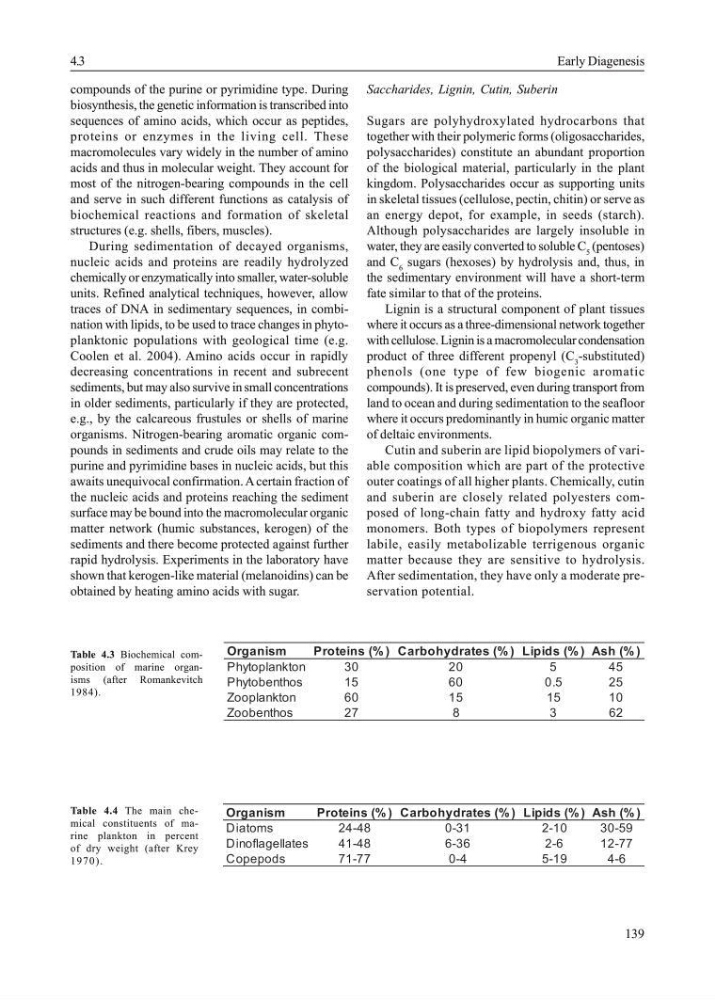
Table 4.3 Biochemical composition of marine organisms (after Romankevitch
1984).
Table 4.4 The main chemical constituents of marine plankton in percent
of dry weight (after Krey
1970).
4.3
Early Diagenesis
Organism
Proteins (% ) Carbohydrates (% ) Lipids (% ) Ash (% )
Phytoplankton
30
20
5
45
Phytobenthos
15
60
0.5
25
Zooplankton
60
15
15
10
Zoobenthos
27
8
3
62
Organism
Proteins (% ) Carbohydrates (% ) Lipids (% ) Ash (% )
Diatoms
24-48
0-31
2-10
30-59
Dinoflagellates
41-48
6-36
2-6
12-77
Copepods
71-77
0-4
5-19
4-6
compounds of the purine or pyrimidine type. During
biosynthesis, the genetic information is transcribed into
sequences of amino acids, which occur as peptides,
proteins or enzymes in the living cell. These
macromolecules vary widely in the number of amino
acids and thus in molecular weight. They account for
most of the nitrogen-bearing compounds in the cell
and serve in such different functions as catalysis of
biochemical reactions and formation of skeletal
structures (e.g. shells, fibers, muscles).
During sedimentation of decayed organisms,
nucleic acids and proteins are readily hydrolyzed
chemically or enzymatically into smaller, water-soluble
units. Refined analytical techniques, however, allow
traces of DNA in sedimentary sequences, in combination with lipids, to be used to trace changes in phytoplanktonic populations with geological time (e.g.
Coolen et al. 2004). Amino acids occur in rapidly
decreasing concentrations in recent and subrecent
sediments, but may also survive in small concentrations
in older sediments, particularly if they are protected,
e.g., by the calcareous frustules or shells of marine
organisms. Nitrogen-bearing aromatic organic compounds in sediments and crude oils may relate to the
purine and pyrimidine bases in nucleic acids, but this
awaits unequivocal confirmation. A certain fraction of
the nucleic acids and proteins reaching the sediment
surface may be bound into the macromolecular organic
matter network (humic substances, kerogen) of the
sediments and there become protected against further
rapid hydrolysis. Experiments in the laboratory have
shown that kerogen-like material (melanoidins) can be
obtained by heating amino acids with sugar.
Saccharides, Lignin, Cutin, Suberin
Sugars are polyhydroxylated hydrocarbons that
together with their polymeric forms (oligosaccharides,
polysaccharides) constitute an abundant proportion
of the biological material, particularly in the plant
kingdom. Polysaccharides occur as supporting units
in skeletal tissues (cellulose, pectin, chitin) or serve as
an energy depot, for example, in seeds (starch).
Although polysaccharides are largely insoluble in
water, they are easily converted to soluble C 5 (pentoses)
and C 6 sugars (hexoses) by hydrolysis and, thus, in
the sedimentary environment will have a short-term
fate similar to that of the proteins.
Lignin is a structural component of plant tissues
where it occurs as a three-dimensional network together
with cellulose. Lignin is a macromolecular condensation
product of three different propenyl (C 3 -substituted)
phenols (one type of few biogenic aromatic
compounds). It is preserved, even during transport from
land to ocean and during sedimentation to the seafloor
where it occurs predominantly in humic organic matter
of deltaic environments.
Cutin and suberin are lipid biopolymers of variable composition which are part of the protective
outer coatings of all higher plants. Chemically, cutin
and suberin are closely related polyesters composed of long-chain fatty and hydroxy fatty acid
monomers. Both types of biopolymers represent
labile, easily metabolizable terrigenous organic
matter because they are sensitive to hydrolysis.
After sedimentation, they have only a moderate preservation potential.
Table 4.3 Biochemical composition of marine organisms (after Romankevitch
1984).
Table 4.4 The main chemical constituents of marine plankton in percent
of dry weight (after Krey
1970).
4.3
Early Diagenesis
Organism
Proteins (% ) Carbohydrates (% ) Lipids (% ) Ash (% )
Phytoplankton
30
20
5
45
Phytobenthos
15
60
0.5
25
Zooplankton
60
15
15
10
Zoobenthos
27
8
3
62
Organism
Proteins (% ) Carbohydrates (% ) Lipids (% ) Ash (% )
Diatoms
24-48
0-31
2-10
30-59
Dinoflagellates
41-48
6-36
2-6
12-77
Copepods
71-77
0-4
5-19
4-6