

Lidar Measurements: Atmospheric Constituents .. .
700
~ 500
.S 500
0
-5
~ -10
.!:
Z
-15
')
z· -20
<0
- 25
-30
-35
315 320
Aofl in nm
I • x~ = 280.9' nm. ' " = 282.72 rvnl
,
' .
. -. _'7_-:_:""-~:-- ~:~'-=:I~:-:-:
- -- - - ,-,,"'- -- -./
:>.. .... :::; 270 nrn
),""" :::; 20450 I'WT'I
Aeot. = 275 nm
). . . . . = 2SO nm
), ... :::; 280 rvn
>...=255nm
XM =28Snm
). .. :::; 260 nm
A~ :::; 290 rvn
).. ... =265rm
). .... =29S nrn
-40 +-=:::;:::;:::~=:'~=-:;:::::;:====----,-----~
270 272 274
276 278 280 282 284 286 288 290 292 294 296 298 300
1,011 in nm
233
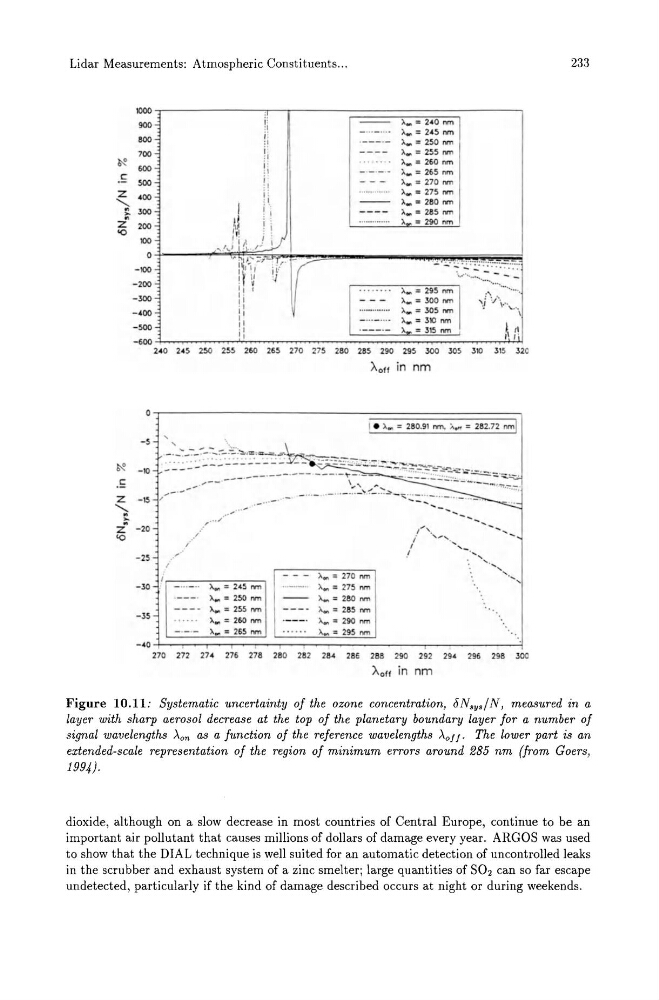
Figure 10.11: Systematic uncertainty of the ozone concentration, oNsys/N, measured in a
layer with sharp aerosol decrease at the top of the planetary boundary layer for a number of
signal wavelengths Aon as a function of the reference wavelengths Ao/ /. The lower part is an
extended-scale representation of the region of minimum errors around 285 nm (from Goers,
1994)·
dioxide, although on a slow decrease in most countries of Central Europe, continue to be an
important air pollutant that causes millions of dollars of damage every year. ARGOS was used
to show that the DIAL technique is well suited for an automatic detection of uncontrolled leaks
in the scrubber and exhaust system of a zinc smelter; large quantities of S02 can so far escape
undetected, particularly if the kind of damage described occurs at night or during weekends.
700
~ 500
.S 500
0
-5
~ -10
.!:
Z
-15
')
z· -20
<0
- 25
-30
-35
315 320
Aofl in nm
I • x~ = 280.9' nm. ' " = 282.72 rvnl
,
' .
. -. _'7_-:_:""-~:-- ~:~'-=:I~:-:-:
- -- - - ,-,,"'- -- -./
:>.. .... :::; 270 nrn
),""" :::; 20450 I'WT'I
Aeot. = 275 nm
). . . . . = 2SO nm
), ... :::; 280 rvn
>...=255nm
XM =28Snm
). .. :::; 260 nm
A~ :::; 290 rvn
).. ... =265rm
). .... =29S nrn
-40 +-=:::;:::;:::~=:'~=-:;:::::;:====----,-----~
270 272 274
276 278 280 282 284 286 288 290 292 294 296 298 300
1,011 in nm
233
Figure 10.11: Systematic uncertainty of the ozone concentration, oNsys/N, measured in a
layer with sharp aerosol decrease at the top of the planetary boundary layer for a number of
signal wavelengths Aon as a function of the reference wavelengths Ao/ /. The lower part is an
extended-scale representation of the region of minimum errors around 285 nm (from Goers,
1994)·
dioxide, although on a slow decrease in most countries of Central Europe, continue to be an
important air pollutant that causes millions of dollars of damage every year. ARGOS was used
to show that the DIAL technique is well suited for an automatic detection of uncontrolled leaks
in the scrubber and exhaust system of a zinc smelter; large quantities of S02 can so far escape
undetected, particularly if the kind of damage described occurs at night or during weekends.