

Lidar Measurements: Atmospheric Constituents ...
TRANSMITTER
TRIGGER
AND RECEIVER
DETECTOR TELESCOPE TUBE
YAW
COMPENSAnON
LASER FIRING SIGNAL
WAVELENGTH CONTROL
ELEVAnON ANGLE CONTROL
LASER TRIGGER PULSE
COMPASS COURSE
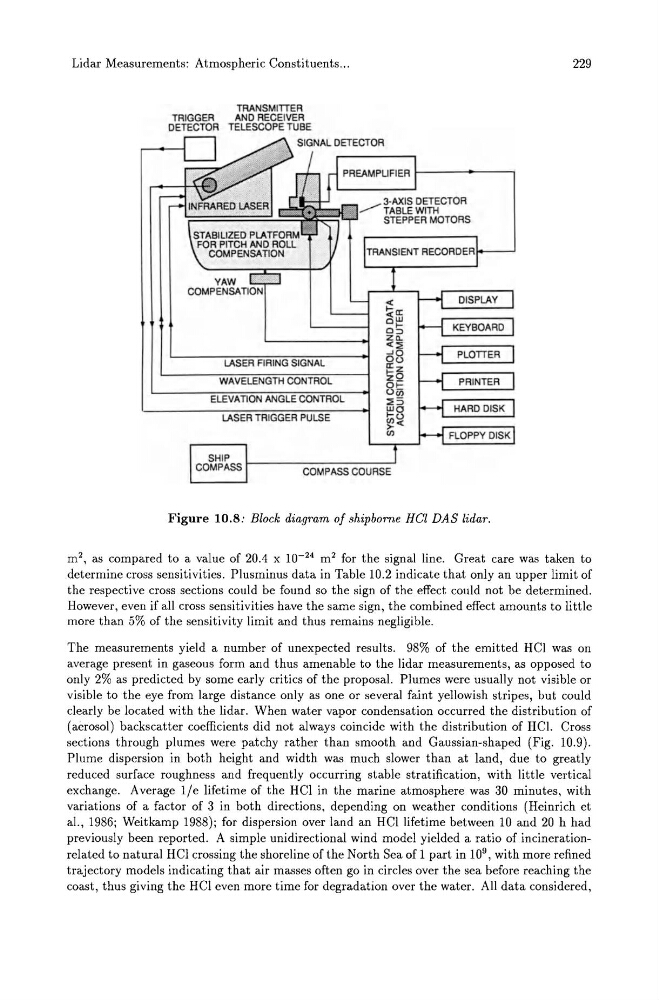
Figure 10.8: Block diagram of shipbome Hel DAB lidar.
229
m 2 , as compared to a value of 20.4 x 10- 24 m 2 for the signal line. Great care was taken to
determine cross sensitivities. Plusminus data in Table 10.2 indicate that only an upper limit of
the respective cross sections could be found so the sign of the effect could not be determined.
However, even if all cross sensitivities have the same sign, the combined effect amounts to little
more than 5% of the sensitivity limit and thus remains negligible.
The measurements yield a number of unexpected results. 98% of the emitted HCI was on
average present in gaseous form and thus amenable to the lidar measurements, as opposed to
only 2% as predicted by some early critics of the proposal. Plumes were usually not visible or
visible to the eye from large distance only as one or several faint yellowish stripes, but could
clearly be located with the lidar. When water vapor condensation occurred the distribution of
(aerosol) backscatter coefficients did not always coincide with the distribution of HCl. Cross
sections through plumes were patchy rather than smooth and Gaussian-shaped (Fig. 10.9).
Plume dispersion in both height and width was much slower than at land, due to greatly
reduced surface roughness and frequently occurring stable stratification, with little vertical
exchange. Average lie lifetime of the HCI in the marine atmosphere was 30 minutes, with
variations of a factor of 3 in both directions, depending on weather conditions (Heinrich et
aI., 1986; Weitkamp 1988); for dispersion over land an HCllifetime between 10 and 20 h had
previously been reported. A simple unidirectional wind model yielded a ratio of incinerationrelated to natural HCI crossing the shoreline of the North Sea of 1 part in 10 9 , with more refined
trajectory models indicating that air masses often go in circles over the sea before reaching the
coast, thus giving the HCI even more time for degradation over the water. All data considered,
TRANSMITTER
TRIGGER
AND RECEIVER
DETECTOR TELESCOPE TUBE
YAW
COMPENSAnON
LASER FIRING SIGNAL
WAVELENGTH CONTROL
ELEVAnON ANGLE CONTROL
LASER TRIGGER PULSE
COMPASS COURSE
Figure 10.8: Block diagram of shipbome Hel DAB lidar.
229
m 2 , as compared to a value of 20.4 x 10- 24 m 2 for the signal line. Great care was taken to
determine cross sensitivities. Plusminus data in Table 10.2 indicate that only an upper limit of
the respective cross sections could be found so the sign of the effect could not be determined.
However, even if all cross sensitivities have the same sign, the combined effect amounts to little
more than 5% of the sensitivity limit and thus remains negligible.
The measurements yield a number of unexpected results. 98% of the emitted HCI was on
average present in gaseous form and thus amenable to the lidar measurements, as opposed to
only 2% as predicted by some early critics of the proposal. Plumes were usually not visible or
visible to the eye from large distance only as one or several faint yellowish stripes, but could
clearly be located with the lidar. When water vapor condensation occurred the distribution of
(aerosol) backscatter coefficients did not always coincide with the distribution of HCl. Cross
sections through plumes were patchy rather than smooth and Gaussian-shaped (Fig. 10.9).
Plume dispersion in both height and width was much slower than at land, due to greatly
reduced surface roughness and frequently occurring stable stratification, with little vertical
exchange. Average lie lifetime of the HCI in the marine atmosphere was 30 minutes, with
variations of a factor of 3 in both directions, depending on weather conditions (Heinrich et
aI., 1986; Weitkamp 1988); for dispersion over land an HCllifetime between 10 and 20 h had
previously been reported. A simple unidirectional wind model yielded a ratio of incinerationrelated to natural HCI crossing the shoreline of the North Sea of 1 part in 10 9 , with more refined
trajectory models indicating that air masses often go in circles over the sea before reaching the
coast, thus giving the HCI even more time for degradation over the water. All data considered,