

radiative transfer models may be the only reliable method to estimate both LWC
and C m with MODIS or VIIRS (Rian ˜o et al. 2005; Hao and Qu 2007; Yebra et al.
2008).
20.9 Robust Inversion Algorithms for Canopy Water Content
The interaction between the incoming radiative energy from the sun and the
vegetation canopy and its soil background can be modeled to obtain canopy
reflectance (Jacquemoud et al. 2009). Input parameters to the models include
LWC, C m , leaf chlorophyll content, and variables to characterize the canopy
structure such as LAI, leaf angle distribution, and sun-target-sensor angles
(Jacquemoud et al. 2009). Model inversion starts with canopy reflectances to
estimate the input parameters that would result in the same canopy reflectances
(Jacquemoud et al. 2000; Zarco-Tejada et al. 2003). Other data sources may be used
to narrow down the possible range of solutions for the inversion, for example, landcover type or LAI (Rian ˜o et al. 2005; Trombetti et al. 2008; Yebra and Chuvieco
2009a, b).
There are several different algorithms that can be used to invert radiative transfer
models. A drawback is that the model inversions are computationally very expensive (Fang and Liang 2003), so inversions require optimization techniques to allow
the calculation of CWC and other parameters for large data sets. For example,
lookup tables can speed the inversion process (Champagne et al. 2003; Yebra et al.
2008). Using the PROSAIL model to train an artificial neural network for the
inversion, Trombetti et al. (2008) estimated CWC for the continental USA from
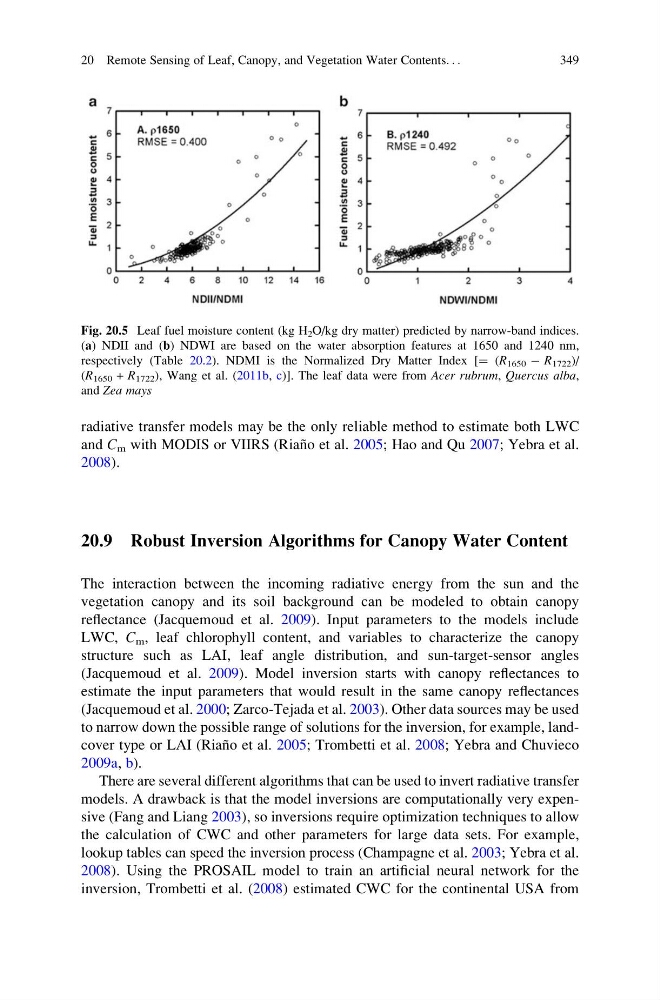
Fig. 20.5 Leaf fuel moisture content (kg H 2 O/kg dry matter) predicted by narrow-band indices.
(a) NDII and (b) NDWI are based on the water absorption features at 1650 and 1240 nm,
respectively (Table 20.2). NDMI is the Normalized Dry Matter Index [¼ (R 1650 À R 1722 )/
(R 1650 + R 1722 ), Wang et al. (2011b, c)]. The leaf data were from Acer rubrum, Quercus alba,
and Zea mays
20 Remote Sensing of Leaf, Canopy, and Vegetation Water Contents. . .
349
and C m with MODIS or VIIRS (Rian ˜o et al. 2005; Hao and Qu 2007; Yebra et al.
2008).
20.9 Robust Inversion Algorithms for Canopy Water Content
The interaction between the incoming radiative energy from the sun and the
vegetation canopy and its soil background can be modeled to obtain canopy
reflectance (Jacquemoud et al. 2009). Input parameters to the models include
LWC, C m , leaf chlorophyll content, and variables to characterize the canopy
structure such as LAI, leaf angle distribution, and sun-target-sensor angles
(Jacquemoud et al. 2009). Model inversion starts with canopy reflectances to
estimate the input parameters that would result in the same canopy reflectances
(Jacquemoud et al. 2000; Zarco-Tejada et al. 2003). Other data sources may be used
to narrow down the possible range of solutions for the inversion, for example, landcover type or LAI (Rian ˜o et al. 2005; Trombetti et al. 2008; Yebra and Chuvieco
2009a, b).
There are several different algorithms that can be used to invert radiative transfer
models. A drawback is that the model inversions are computationally very expensive (Fang and Liang 2003), so inversions require optimization techniques to allow
the calculation of CWC and other parameters for large data sets. For example,
lookup tables can speed the inversion process (Champagne et al. 2003; Yebra et al.
2008). Using the PROSAIL model to train an artificial neural network for the
inversion, Trombetti et al. (2008) estimated CWC for the continental USA from
Fig. 20.5 Leaf fuel moisture content (kg H 2 O/kg dry matter) predicted by narrow-band indices.
(a) NDII and (b) NDWI are based on the water absorption features at 1650 and 1240 nm,
respectively (Table 20.2). NDMI is the Normalized Dry Matter Index [¼ (R 1650 À R 1722 )/
(R 1650 + R 1722 ), Wang et al. (2011b, c)]. The leaf data were from Acer rubrum, Quercus alba,
and Zea mays
20 Remote Sensing of Leaf, Canopy, and Vegetation Water Contents. . .
349