

272
M.J. Esteban-Parra, D. Pow-Vazquez, F.S. Rodrigo, Y. Castro-Dfez
1100
,.SO
UiI4D
lI'm'
1':'0
>C1.o
AUTUt.AN (lsI PC)
Z
Q
~
100
a:
<:;
~-1
Q.
-I~IOO'±-~~''C:'"~~'''''''''~~'''''''''''''''''''''''"'''''-"""'''''
SUMMER (2nd PC)
.too
,.,., .... It" , ...
AUTUMN (2nd PC)
...
~1OO
~ 0.
U
c.J
irQ.
1100
1t40
'''0
I
SUMMER (3rd PC)
" ..
2000
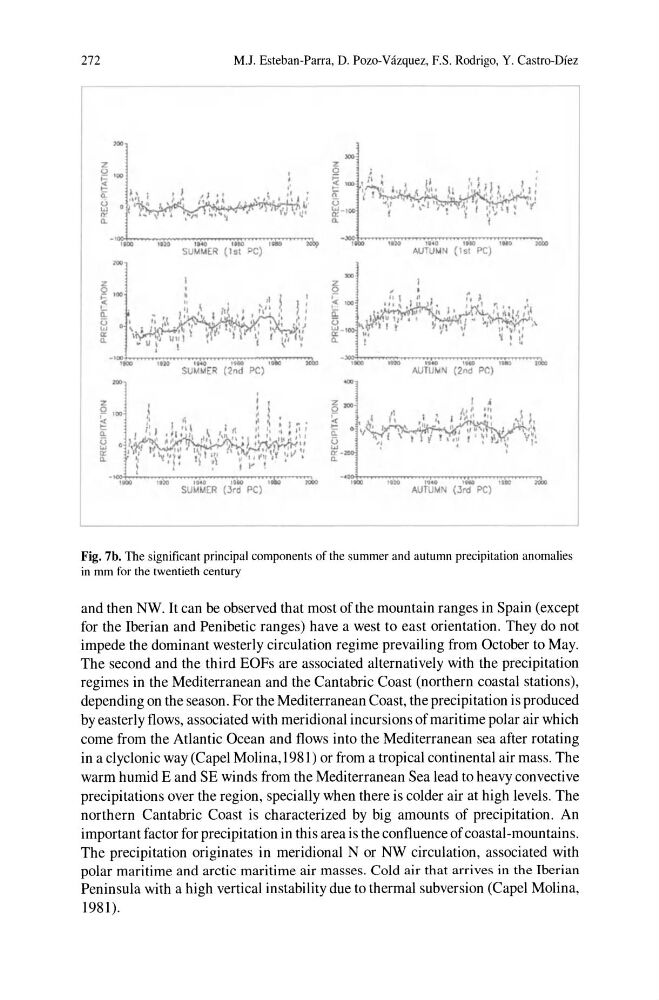
Fig. 7b. The significant principal components of the summer and autumn precipitation anomalies
in mm for the twentieth century
and then NW. 1t can be observed that most of the mountain ranges in Spain (except
for the Iberian and Penibetic ranges) have a west to east orientation. They do not
impede the dominant westerly circulation regime prevailing from October to May.
The second and the third EOFs are associated alternatively with the precipitation
regimes in the Mediterranean and the Cantabric Coast (northern coastal stations),
depending on the season. For the Mediterranean Coast, the precipitation is produced
by easterly flows, associated with meridional incursions of maritime polar air which
come from the Atlantic Ocean and flows into the Mediterranean sea after rotating
in a cJycJonic way (Capel Molina, 1981) or from a tropical continental air mass. The
warm humid E and SE winds from the Mediterranean Sea lead to heavy convective
precipitations over the region, specially when there is colder air at high levels. The
northern Cantabric Coast is characterized by big amounts of precipitation. An
important factor for precipitation in this area is the confluence of coastal-mountains.
The precipitation originates in meridional N or NW circulation, associated with
polar maritime and arctic maritime air masses. Cold air that arrives in the Iberian
Peninsula with a high vertical instability due to thermal subversion (Capel Molina,
1981).
M.J. Esteban-Parra, D. Pow-Vazquez, F.S. Rodrigo, Y. Castro-Dfez
1100
,.SO
UiI4D
lI'm'
1':'0
>C1.o
AUTUt.AN (lsI PC)
Z
Q
~
100
a:
<:;
~-1
Q.
-I~IOO'±-~~''C:'"~~'''''''''~~'''''''''''''''''''''''"'''''-"""'''''
SUMMER (2nd PC)
.too
,.,., .... It" , ...
AUTUMN (2nd PC)
...
~1OO
~ 0.
U
c.J
irQ.
1100
1t40
'''0
I
SUMMER (3rd PC)
" ..
2000
Fig. 7b. The significant principal components of the summer and autumn precipitation anomalies
in mm for the twentieth century
and then NW. 1t can be observed that most of the mountain ranges in Spain (except
for the Iberian and Penibetic ranges) have a west to east orientation. They do not
impede the dominant westerly circulation regime prevailing from October to May.
The second and the third EOFs are associated alternatively with the precipitation
regimes in the Mediterranean and the Cantabric Coast (northern coastal stations),
depending on the season. For the Mediterranean Coast, the precipitation is produced
by easterly flows, associated with meridional incursions of maritime polar air which
come from the Atlantic Ocean and flows into the Mediterranean sea after rotating
in a cJycJonic way (Capel Molina, 1981) or from a tropical continental air mass. The
warm humid E and SE winds from the Mediterranean Sea lead to heavy convective
precipitations over the region, specially when there is colder air at high levels. The
northern Cantabric Coast is characterized by big amounts of precipitation. An
important factor for precipitation in this area is the confluence of coastal-mountains.
The precipitation originates in meridional N or NW circulation, associated with
polar maritime and arctic maritime air masses. Cold air that arrives in the Iberian
Peninsula with a high vertical instability due to thermal subversion (Capel Molina,
1981).