

NaBH 4 Reduction of DE-Unsaturated Chromium Carbene Complexes 41
[Cr]
OEt
Ph
H
–
[Cr]
OEt
Ph
H
–
H
+
[Cr]
H
OEt
Ph
H*
OEt
H
Ph
H
1
2
H labeled position with NaBD 4
H labeled position with CD 3 OD
1,4-Hydride addition
Scheme 7.4b
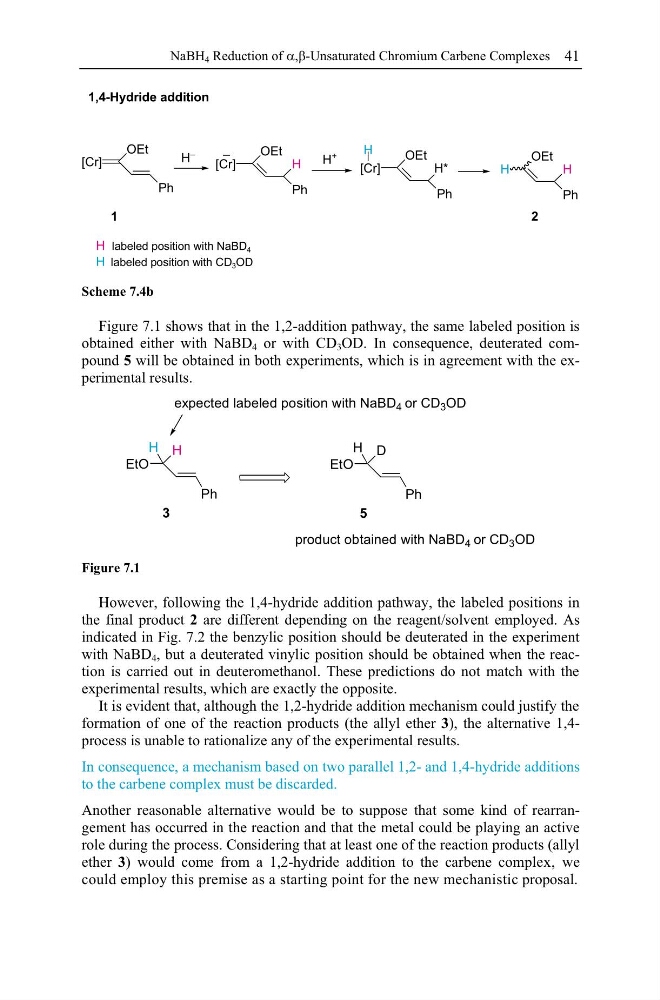
Figure 7.1 shows that in the 1,2-addition pathway, the same labeled position is
obtained either with NaBD 4 or with CD 3 OD. In consequence, deuterated compound 5 will be obtained in both experiments, which is in agreement with the experimental results.
Ph
EtO
H H
Ph
EtO
H D
3
5
expected labeled position with NaBD 4 or CD 3 OD
product obtained with NaBD 4 or CD 3 OD
Figure 7.1
However, following the 1,4-hydride addition pathway, the labeled positions in
the final product 2 are different depending on the reagent/solvent employed. As
indicated in Fig. 7.2 the benzylic position should be deuterated in the experiment
with NaBD 4 , but a deuterated vinylic position should be obtained when the reaction is carried out in deuteromethanol. These predictions do not match with the
experimental results, which are exactly the opposite.
It is evident that, although the 1,2-hydride addition mechanism could justify the
formation of one of the reaction products (the allyl ether 3), the alternative 1,4process is unable to rationalize any of the experimental results.
In consequence, a mechanism based on two parallel 1,2- and 1,4-hydride additions
to the carbene complex must be discarded.
Another reasonable alternative would be to suppose that some kind of rearrangement has occurr r ed in the reaction and that the metal could be playing an active
role during the process. Considering that at least one of the reaction products (allyl
ether 3) would come from a 1,2-hydride addition to the carbene complex, we
could employ this premise as a starting point for the new mechanistic proposal.
[Cr]
OEt
Ph
H
–
[Cr]
OEt
Ph
H
–
H
+
[Cr]
H
OEt
Ph
H*
OEt
H
Ph
H
1
2
H labeled position with NaBD 4
H labeled position with CD 3 OD
1,4-Hydride addition
Scheme 7.4b
Figure 7.1 shows that in the 1,2-addition pathway, the same labeled position is
obtained either with NaBD 4 or with CD 3 OD. In consequence, deuterated compound 5 will be obtained in both experiments, which is in agreement with the experimental results.
Ph
EtO
H H
Ph
EtO
H D
3
5
expected labeled position with NaBD 4 or CD 3 OD
product obtained with NaBD 4 or CD 3 OD
Figure 7.1
However, following the 1,4-hydride addition pathway, the labeled positions in
the final product 2 are different depending on the reagent/solvent employed. As
indicated in Fig. 7.2 the benzylic position should be deuterated in the experiment
with NaBD 4 , but a deuterated vinylic position should be obtained when the reaction is carried out in deuteromethanol. These predictions do not match with the
experimental results, which are exactly the opposite.
It is evident that, although the 1,2-hydride addition mechanism could justify the
formation of one of the reaction products (the allyl ether 3), the alternative 1,4process is unable to rationalize any of the experimental results.
In consequence, a mechanism based on two parallel 1,2- and 1,4-hydride additions
to the carbene complex must be discarded.
Another reasonable alternative would be to suppose that some kind of rearrangement has occurr r ed in the reaction and that the metal could be playing an active
role during the process. Considering that at least one of the reaction products (allyl
ether 3) would come from a 1,2-hydride addition to the carbene complex, we
could employ this premise as a starting point for the new mechanistic proposal.