

24
1 Introduction to Analytical Chemistry
Technique
Analytical process
Preliminary
Signal
Data
operations
...... measurement r--- acquisition
and transducing
and pro
Procedure
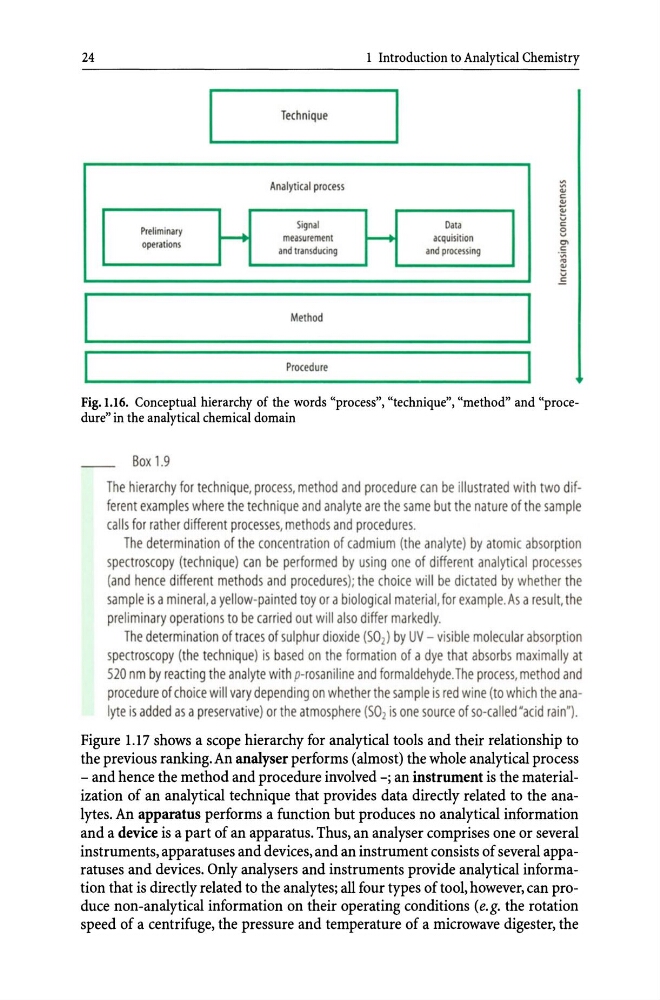
Fig.1.16. Conceptual hierarchy of the words "process", "technique", "method" and "procedure" in the analytical chemical domain
Box 1.9
The hierarchy for technique, process, method and procedure can be ill ustrated with two different examples where the technique and analyte are the same but the nature of the sample
calls for rather different processes, methods and procedures.
The determination of the concentration of cadmium (the analyte) by atomic absorption
spectroscopy (technique) can be performed by using one of different analytical processes
(and hence different methods and procedures); the choice will be dictated by whether the
sample is a mineral, a yellow-painted toy or a biological material, for example. As a result, the
preliminary operations to be carried out will also differ markedly.
The determination of traces of sulphur dioxide (502) by UV - visible molecular absorption
spectroscopy (the technique) is based on the formation of a dye that absorbs maximally at
520 nm by reacting the analyte with p-rosaniline and formaldehyde. The process, method and
procedure of choice will vary depending on whether the sample is red wine (to which the anaIyte is added as a preservative) or the atmosphere (50 2 is one source of so-called "acid rain").
Figure 1.17 shows a scope hierarchy for analytical tools and their relationship to
the previous ranking. An analyser performs (almost) the whole analytical process
- and hence the method and procedure involved -; an instrument is the materialization of an analytical technique that provides data directly related to the analytes. An apparatus performs a function but produces no analytical information
and a device is a part of an apparatus. Thus, an analyser comprises one or several
instruments, apparatuses and devices, and an instrument consists of several apparatuses and devices. Only analysers and instruments provide analytical information that is directly related to the analytes; all four types of tool, however, can produce non-analytical information on their operating conditions (e.g. the rotation
speed of a centrifuge, the pressure and temperature of a microwave digester, the
1 Introduction to Analytical Chemistry
Technique
Analytical process
Preliminary
Signal
Data
operations
...... measurement r--- acquisition
and transducing
and pro
Procedure
Fig.1.16. Conceptual hierarchy of the words "process", "technique", "method" and "procedure" in the analytical chemical domain
Box 1.9
The hierarchy for technique, process, method and procedure can be ill ustrated with two different examples where the technique and analyte are the same but the nature of the sample
calls for rather different processes, methods and procedures.
The determination of the concentration of cadmium (the analyte) by atomic absorption
spectroscopy (technique) can be performed by using one of different analytical processes
(and hence different methods and procedures); the choice will be dictated by whether the
sample is a mineral, a yellow-painted toy or a biological material, for example. As a result, the
preliminary operations to be carried out will also differ markedly.
The determination of traces of sulphur dioxide (502) by UV - visible molecular absorption
spectroscopy (the technique) is based on the formation of a dye that absorbs maximally at
520 nm by reacting the analyte with p-rosaniline and formaldehyde. The process, method and
procedure of choice will vary depending on whether the sample is red wine (to which the anaIyte is added as a preservative) or the atmosphere (50 2 is one source of so-called "acid rain").
Figure 1.17 shows a scope hierarchy for analytical tools and their relationship to
the previous ranking. An analyser performs (almost) the whole analytical process
- and hence the method and procedure involved -; an instrument is the materialization of an analytical technique that provides data directly related to the analytes. An apparatus performs a function but produces no analytical information
and a device is a part of an apparatus. Thus, an analyser comprises one or several
instruments, apparatuses and devices, and an instrument consists of several apparatuses and devices. Only analysers and instruments provide analytical information that is directly related to the analytes; all four types of tool, however, can produce non-analytical information on their operating conditions (e.g. the rotation
speed of a centrifuge, the pressure and temperature of a microwave digester, the