

336
8 Analytical Chemistry and Quality
8.8 Costs and Benefits of Analytical Quality Systems
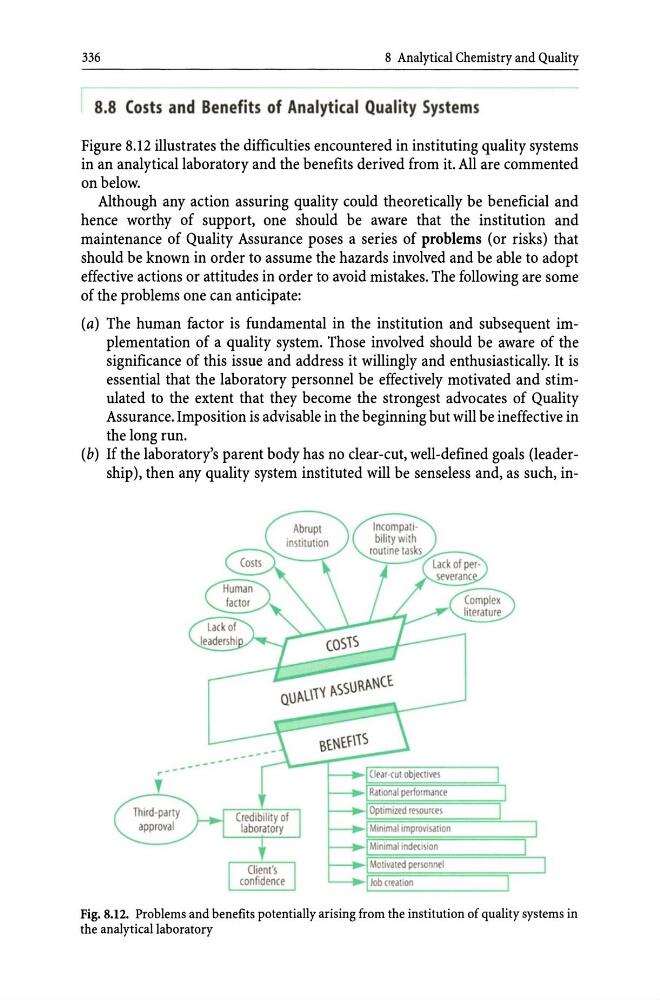
Figure 8.12 illustrates the difficulties encountered in instituting quality systems
in an analytical laboratory and the benefits derived from it. All are commented
on below.
Although any action assuring quality could theoretically be beneficial and
hence worthy of support, one should be aware that the institution and
maintenance of Quality Assurance poses a series of problems (or risks) that
should be known in order to assume the hazards involved and be able to adopt
effective actions or attitudes in order to avoid mistakes. The following are some
of the problems one can anticipate:
(a) The human factor is fundamental in the institution and subsequent implementation of a quality system. Those involved should be aware of the
significance of this issue and address it willingly and enthusiastically. It is
essential that the laboratory personnel be effectively motivated and stimulated to the extent that they become the strongest advocates of Quality
Assurance. Imposition is advisable in the beginning but will be ineffective in
the long run.
(b) If the laboratory's parent body has no clear-cut, well-defined goals (leadership), then any quality system instituted will be senseless and, as such, inI Clear·cut objectives
I Rational performa~ce
IOptlmized resources
I Minimal,mprovililtlon
I Minimal indeCiSion
I Motivated personnel
IJob creation
Fig. 8.12. Problems and benefits potentially arising from the institution of quality systems in
the analytical laboratory
8 Analytical Chemistry and Quality
8.8 Costs and Benefits of Analytical Quality Systems
Figure 8.12 illustrates the difficulties encountered in instituting quality systems
in an analytical laboratory and the benefits derived from it. All are commented
on below.
Although any action assuring quality could theoretically be beneficial and
hence worthy of support, one should be aware that the institution and
maintenance of Quality Assurance poses a series of problems (or risks) that
should be known in order to assume the hazards involved and be able to adopt
effective actions or attitudes in order to avoid mistakes. The following are some
of the problems one can anticipate:
(a) The human factor is fundamental in the institution and subsequent implementation of a quality system. Those involved should be aware of the
significance of this issue and address it willingly and enthusiastically. It is
essential that the laboratory personnel be effectively motivated and stimulated to the extent that they become the strongest advocates of Quality
Assurance. Imposition is advisable in the beginning but will be ineffective in
the long run.
(b) If the laboratory's parent body has no clear-cut, well-defined goals (leadership), then any quality system instituted will be senseless and, as such, inI Clear·cut objectives
I Rational performa~ce
IOptlmized resources
I Minimal,mprovililtlon
I Minimal indeCiSion
I Motivated personnel
IJob creation
Fig. 8.12. Problems and benefits potentially arising from the institution of quality systems in
the analytical laboratory