

1.5 Evolution of Analytical Chemistry
Relationship to
social and
economic areas
Relationship to
sc ientific and
technical areas
Laboratories
libraries
ANALYTICAL
CHEMISTRY
Process
analysers
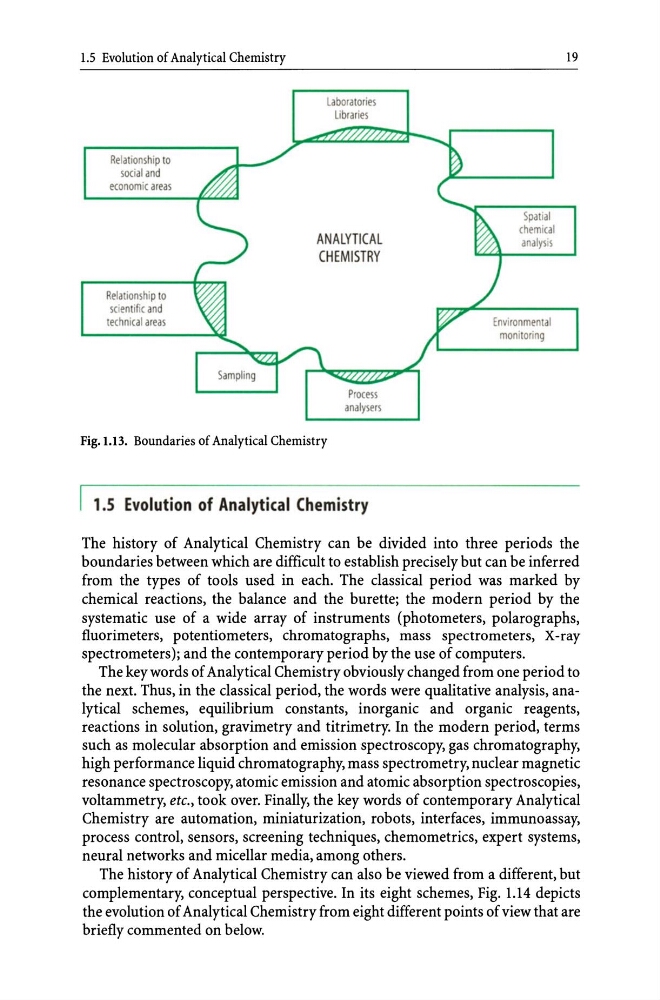
Fig. 1.13. Boundaries of Analytical Chemistry
1.S Evolution of Analytical Chemistry
Spatial
chemical
analysis
19
The history of Analytical Chemistry can be divided into three periods the
boundaries between which are difficult to establish precisely but can be inferred
from the types of tools used in each. The classical period was marked by
chemical reactions, the balance and the burette; the modern period by the
systematic use of a wide array of instruments (photometers, polarographs,
fluorimeters, potentiometers, chromatographs, mass spectrometers, X-ray
spectrometers); and the contemporary period by the use of computers.
The key words of Analytical Chemistry obviously changed from one period to
the next. Thus, in the classical period, the words were qualitative analysis, analytical schemes, equilibrium constants, inorganic and organic reagents,
reactions in solution, gravimetry and titrimetry. In the modern period, terms
such as molecular absorption and emission spectroscopy, gas chromatography,
high performance liquid chromatography, mass spectrometry, nuclear magnetic
resonance spectroscopy, atomic emission and atomic absorption spectroscopies,
voltammetry, etc., took over. Finally, the key words of contemporary Analytical
Chemistry are automation, miniaturization, robots, interfaces, immunoassay,
process control, sensors, screening techniques, chemometrics, expert systems,
neural networks and micellar media, among others.
The history of Analytical Chemistry can also be viewed from a different, but
complementary, conceptual perspective. In its eight schemes, Fig. 1.14 depicts
the evolution of Analytical Chemistry from eight different points of view that are
briefly commented on below.
Relationship to
social and
economic areas
Relationship to
sc ientific and
technical areas
Laboratories
libraries
ANALYTICAL
CHEMISTRY
Process
analysers
Fig. 1.13. Boundaries of Analytical Chemistry
1.S Evolution of Analytical Chemistry
Spatial
chemical
analysis
19
The history of Analytical Chemistry can be divided into three periods the
boundaries between which are difficult to establish precisely but can be inferred
from the types of tools used in each. The classical period was marked by
chemical reactions, the balance and the burette; the modern period by the
systematic use of a wide array of instruments (photometers, polarographs,
fluorimeters, potentiometers, chromatographs, mass spectrometers, X-ray
spectrometers); and the contemporary period by the use of computers.
The key words of Analytical Chemistry obviously changed from one period to
the next. Thus, in the classical period, the words were qualitative analysis, analytical schemes, equilibrium constants, inorganic and organic reagents,
reactions in solution, gravimetry and titrimetry. In the modern period, terms
such as molecular absorption and emission spectroscopy, gas chromatography,
high performance liquid chromatography, mass spectrometry, nuclear magnetic
resonance spectroscopy, atomic emission and atomic absorption spectroscopies,
voltammetry, etc., took over. Finally, the key words of contemporary Analytical
Chemistry are automation, miniaturization, robots, interfaces, immunoassay,
process control, sensors, screening techniques, chemometrics, expert systems,
neural networks and micellar media, among others.
The history of Analytical Chemistry can also be viewed from a different, but
complementary, conceptual perspective. In its eight schemes, Fig. 1.14 depicts
the evolution of Analytical Chemistry from eight different points of view that are
briefly commented on below.