

8.4 Quality Systems in the Analytical Laboratory
150-9000
generic
standard
Others
Critical
points
QUALITY SYSTEMS
IN ANALYTICAL
LABORATORIES
TOM
(Total Quality
Management)
Combination of both
standard families
321
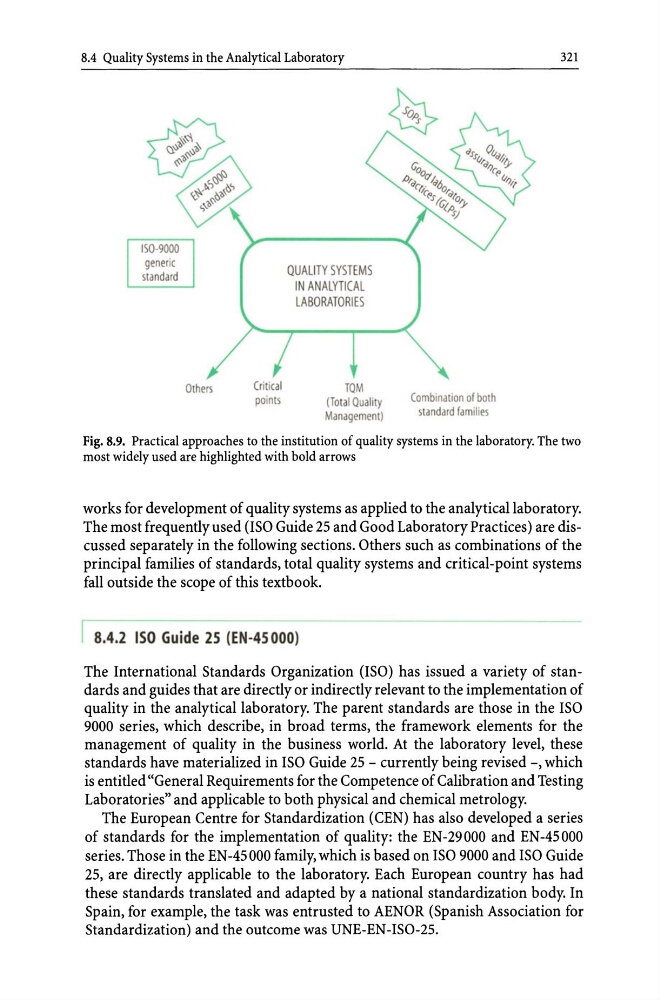
Fig. 8.9. Practical approaches to the institution of quality systems in the laboratory. The two
most widely used are highlighted with bold arrows
works for development of quality systems as applied to the analytical laboratory.
The most frequently used (ISO Guide 25 and Good Laboratory Practices) are discussed separately in the following sections. Others such as combinations of the
principal families of standards, total quality systems and critical-point systems
fall outside the scope of this textbook.
r 8.4.2 ISO Guide 25 (EN-45000)
The International Standards Organization (ISO) has issued a variety of standards and guides that are directly or indirectly relevant to the implementation of
quality in the analytical laboratory. The parent standards are those in the ISO
9000 series, which describe, in broad terms, the framework elements for the
management of quality in the business world. At the laboratory level, these
standards have materialized in ISO Guide 25 - currently being revised -, which
is entitled "General Requirements for the Competence of Calibration and Testing
Laboratories" and applicable to both physical and chemical metrology.
The European Centre for Standardization (CEN) has also developed a series
of standards for the implementation of quality: the EN-29000 and EN-45000
series. Those in the EN-45 000 family, which is based on ISO 9000 and ISO Guide
25, are directly applicable to the laboratory. Each European country has had
these standards translated and adapted by a national standardization body. In
Spain, for example, the task was entrusted to AENOR (Spanish Association for
Standardization) and the outcome was UNE-EN-ISO-25.
150-9000
generic
standard
Others
Critical
points
QUALITY SYSTEMS
IN ANALYTICAL
LABORATORIES
TOM
(Total Quality
Management)
Combination of both
standard families
321
Fig. 8.9. Practical approaches to the institution of quality systems in the laboratory. The two
most widely used are highlighted with bold arrows
works for development of quality systems as applied to the analytical laboratory.
The most frequently used (ISO Guide 25 and Good Laboratory Practices) are discussed separately in the following sections. Others such as combinations of the
principal families of standards, total quality systems and critical-point systems
fall outside the scope of this textbook.
r 8.4.2 ISO Guide 25 (EN-45000)
The International Standards Organization (ISO) has issued a variety of standards and guides that are directly or indirectly relevant to the implementation of
quality in the analytical laboratory. The parent standards are those in the ISO
9000 series, which describe, in broad terms, the framework elements for the
management of quality in the business world. At the laboratory level, these
standards have materialized in ISO Guide 25 - currently being revised -, which
is entitled "General Requirements for the Competence of Calibration and Testing
Laboratories" and applicable to both physical and chemical metrology.
The European Centre for Standardization (CEN) has also developed a series
of standards for the implementation of quality: the EN-29000 and EN-45000
series. Those in the EN-45 000 family, which is based on ISO 9000 and ISO Guide
25, are directly applicable to the laboratory. Each European country has had
these standards translated and adapted by a national standardization body. In
Spain, for example, the task was entrusted to AENOR (Spanish Association for
Standardization) and the outcome was UNE-EN-ISO-25.