

298
Analytical
information supplied
7 The Analytical Problem
Analytical
information required
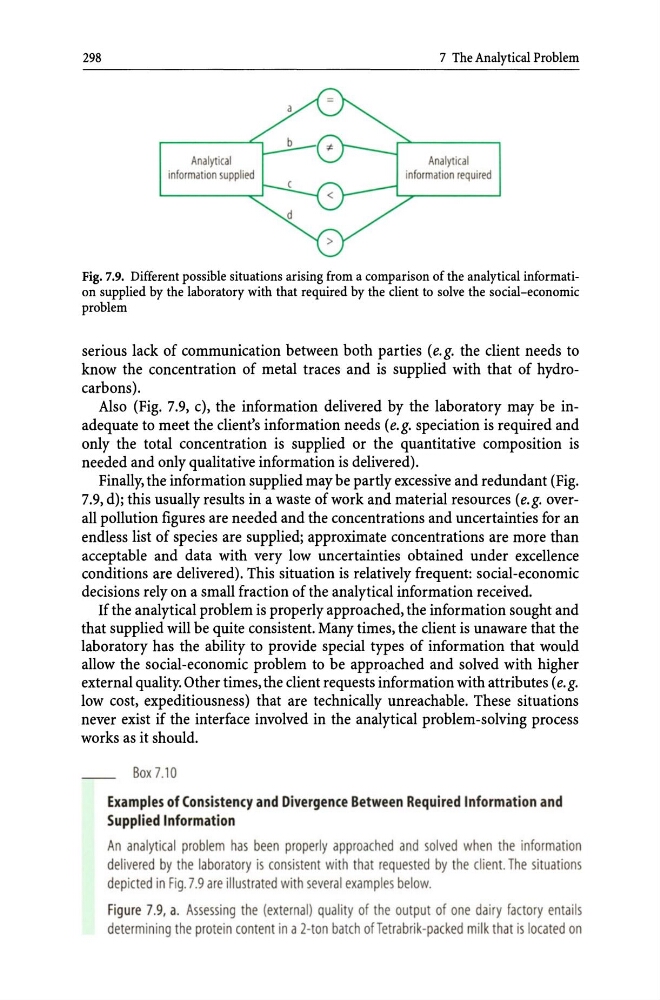
Fig. 7.9. Different possible situations arising from a comparison of the analytical information supplied by the laboratory with that required by the client to solve the social-economic
problem
serious lack of communication between both parties (e.g. the client needs to
know the concentration of metal traces and is supplied with that of hydrocarbons).
Also (Fig. 7.9, c), the information delivered by the laboratory may be inadequate to meet the client's information needs (e.g. speciation is required and
only the total concentration is supplied or the quantitative composition is
needed and only qualitative information is delivered).
Finally, the information supplied may be partly excessive and redundant (Fig.
7.9, d); this usually results in a waste of work and material resources (e.g. overall pollution figures are needed and the concentrations and uncertainties for an
endless list of species are supplied; approximate concentrations are more than
acceptable and data with very low uncertainties obtained under excellence
conditions are delivered). This situation is relatively frequent: social-economic
decisions rely on a small fraction of the analytical information received.
If the analytical problem is properly approached, the information sought and
that supplied will be quite consistent. Many times, the client is unaware that the
laboratory has the ability to provide special types of information that would
allow the social-economic problem to be approached and solved with higher
external quality. Other times, the client requests information with attributes (e. g.
low cost, expeditiousness) that are technically unreachable. These situations
never exist if the interface involved in the analytical problem-solving process
works as it should.
Box 7.10
Examples of Consistency and Divergence Between Required Information and
Supplied Information
An analytical problem has been properly approached and solved when the information
delivered by the laboratory is consistent with that requested by the client. The situations
depicted in Fig. 7.9 are illustrated with several examples below.
Figure 7.9, a. Assessing the (external) quality of the output of one dairy factory entails
determining the protein content in a 2-ton batch ofTetrabrik-packed milk that is located on
Analytical
information supplied
7 The Analytical Problem
Analytical
information required
Fig. 7.9. Different possible situations arising from a comparison of the analytical information supplied by the laboratory with that required by the client to solve the social-economic
problem
serious lack of communication between both parties (e.g. the client needs to
know the concentration of metal traces and is supplied with that of hydrocarbons).
Also (Fig. 7.9, c), the information delivered by the laboratory may be inadequate to meet the client's information needs (e.g. speciation is required and
only the total concentration is supplied or the quantitative composition is
needed and only qualitative information is delivered).
Finally, the information supplied may be partly excessive and redundant (Fig.
7.9, d); this usually results in a waste of work and material resources (e.g. overall pollution figures are needed and the concentrations and uncertainties for an
endless list of species are supplied; approximate concentrations are more than
acceptable and data with very low uncertainties obtained under excellence
conditions are delivered). This situation is relatively frequent: social-economic
decisions rely on a small fraction of the analytical information received.
If the analytical problem is properly approached, the information sought and
that supplied will be quite consistent. Many times, the client is unaware that the
laboratory has the ability to provide special types of information that would
allow the social-economic problem to be approached and solved with higher
external quality. Other times, the client requests information with attributes (e. g.
low cost, expeditiousness) that are technically unreachable. These situations
never exist if the interface involved in the analytical problem-solving process
works as it should.
Box 7.10
Examples of Consistency and Divergence Between Required Information and
Supplied Information
An analytical problem has been properly approached and solved when the information
delivered by the laboratory is consistent with that requested by the client. The situations
depicted in Fig. 7.9 are illustrated with several examples below.
Figure 7.9, a. Assessing the (external) quality of the output of one dairy factory entails
determining the protein content in a 2-ton batch ofTetrabrik-packed milk that is located on