

7.5 Steps of the Analytical Problem-solving Process
293
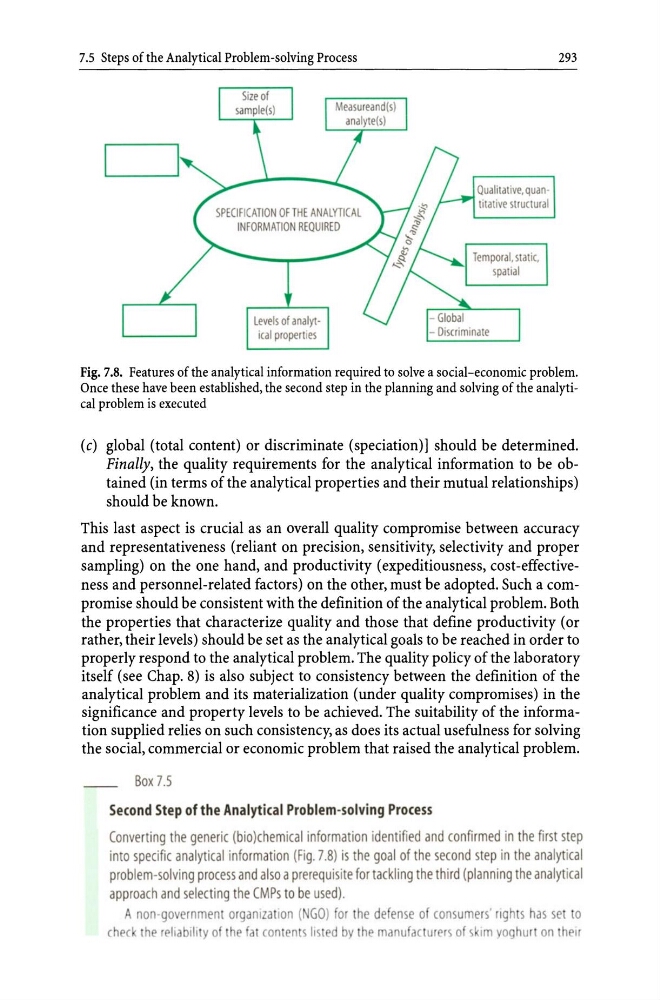
Fig. 7.8. Features of the analytical information required to solve a social-economic problem.
Once these have been established, the second step in the planning and solving of the analytical problem is executed
(c) global (total content) or discriminate (speciation)] should be determined.
Finally, the quality requirements for the analytical information to be obtained (in terms of the analytical properties and their mutual relationships)
should be known.
This last aspect is crucial as an overall quality compromise between accuracy
and representativeness (reliant on precision, sensitivity, selectivity and proper
sampling) on the one hand, and productivity (expeditiousness, cost-effectiveness and personnel-related factors) on the other, must be adopted. Such a compromise should be consistent with the definition of the analytical problem. Both
the properties that characterize quality and those that define productivity (or
rather, their levels) should be set as the analytical goals to be reached in order to
properly respond to the analytical problem. The quality policy of the laboratory
itself (see Chap. 8) is also subject to consistency between the definition of the
analytical problem and its materialization (under quality compromises) in the
significance and property levels to be achieved. The suitability of the information supplied relies on such consistency, as does its actual usefulness for solving
the social, commercial or economic problem that raised the analytical problem.
Box 7.S
Second Step of the Analytical Problem-solving Process
Converting the generic (bio)chemical information identified and confirmed in the first step
into specific analytical information (Fig. 7.8) is the goal of the second step in the analytical
problem-solving process and also a prerequisite for tackling the third (planning the analytical
approach and selecting the CMPs to be used).
A non-government organization (NGO) for the de ense of consumers' rights has set to
(he( the reliability of the fat contents listed by the manufacturers of skim yoghurt on heir
293
Fig. 7.8. Features of the analytical information required to solve a social-economic problem.
Once these have been established, the second step in the planning and solving of the analytical problem is executed
(c) global (total content) or discriminate (speciation)] should be determined.
Finally, the quality requirements for the analytical information to be obtained (in terms of the analytical properties and their mutual relationships)
should be known.
This last aspect is crucial as an overall quality compromise between accuracy
and representativeness (reliant on precision, sensitivity, selectivity and proper
sampling) on the one hand, and productivity (expeditiousness, cost-effectiveness and personnel-related factors) on the other, must be adopted. Such a compromise should be consistent with the definition of the analytical problem. Both
the properties that characterize quality and those that define productivity (or
rather, their levels) should be set as the analytical goals to be reached in order to
properly respond to the analytical problem. The quality policy of the laboratory
itself (see Chap. 8) is also subject to consistency between the definition of the
analytical problem and its materialization (under quality compromises) in the
significance and property levels to be achieved. The suitability of the information supplied relies on such consistency, as does its actual usefulness for solving
the social, commercial or economic problem that raised the analytical problem.
Box 7.S
Second Step of the Analytical Problem-solving Process
Converting the generic (bio)chemical information identified and confirmed in the first step
into specific analytical information (Fig. 7.8) is the goal of the second step in the analytical
problem-solving process and also a prerequisite for tackling the third (planning the analytical
approach and selecting the CMPs to be used).
A non-government organization (NGO) for the de ense of consumers' rights has set to
(he( the reliability of the fat contents listed by the manufacturers of skim yoghurt on heir