

270
6 Quantitative Aspects of Analytical Chemistry
If any hypochlorite is formed by hydrolysis of the chlorine ((12 + H 2 0 ~ CIO - + (1 - + 2 H 1.
the original stoichiometry will still be preserved since the reaction between (10- and 1- also
yields one molecule of iodine:
CIO- + 21 - + 2W H 1 2 + (1 - + H 2 0
The iodine thus formed is titrated with 52 0~ -, using starch as indicator:
252 0~ - + 12 H 540l-+ 21At the end-point, the blue colour of the Ir starch system disappears.
The S2 0~ - solution is the secondary standard, which must previously be standardized with
a primary standard. This is done by using K10 3 , which, in the presence of an unmeasured
excess of 1 -, produces 12 in stoichiometric amounts:
10j + 51- + 6W H 31 2 + 3H20
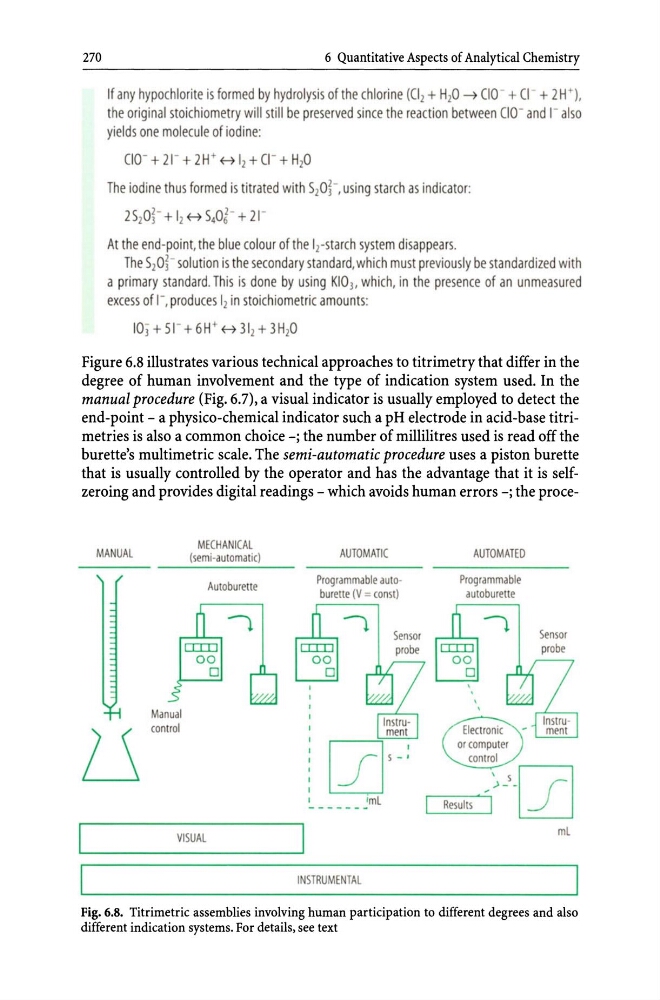
Figure 6.8 illustrates various technical approaches to titrimetry that differ in the
degree of human involvement and the type of indication system used. In the
manual procedure (Fig. 6.7), a visual indicator is usually employed to detect the
end-point - a physico-chemical indicator such a pH electrode in acid-base titrimetries is also a common choice -; the number of millilitres used is read off the
burette's multimetric scale. The semi-automatic procedure uses a piston burette
that is usually controlled by the operator and has the advantage that it is selfzeroing and provides digital readings - which avoids human errors -; the proceMANUAL
Manual
control
MECHANICAL
(semi-automatic)
Autoburette
~
VISUAL
AUTOMATIC
Programmable autoburette (V = const)
~ Sensor
probe
INSTRUMENTAL
AUTOMATED
Programmable
autoburette
~
Sensor
probe
mL
Fig. 6.8. Titrimetric assemblies involving human participation to different degrees and also
different indication systems. For details, see text
6 Quantitative Aspects of Analytical Chemistry
If any hypochlorite is formed by hydrolysis of the chlorine ((12 + H 2 0 ~ CIO - + (1 - + 2 H 1.
the original stoichiometry will still be preserved since the reaction between (10- and 1- also
yields one molecule of iodine:
CIO- + 21 - + 2W H 1 2 + (1 - + H 2 0
The iodine thus formed is titrated with 52 0~ -, using starch as indicator:
252 0~ - + 12 H 540l-+ 21At the end-point, the blue colour of the Ir starch system disappears.
The S2 0~ - solution is the secondary standard, which must previously be standardized with
a primary standard. This is done by using K10 3 , which, in the presence of an unmeasured
excess of 1 -, produces 12 in stoichiometric amounts:
10j + 51- + 6W H 31 2 + 3H20
Figure 6.8 illustrates various technical approaches to titrimetry that differ in the
degree of human involvement and the type of indication system used. In the
manual procedure (Fig. 6.7), a visual indicator is usually employed to detect the
end-point - a physico-chemical indicator such a pH electrode in acid-base titrimetries is also a common choice -; the number of millilitres used is read off the
burette's multimetric scale. The semi-automatic procedure uses a piston burette
that is usually controlled by the operator and has the advantage that it is selfzeroing and provides digital readings - which avoids human errors -; the proceMANUAL
Manual
control
MECHANICAL
(semi-automatic)
Autoburette
~
VISUAL
AUTOMATIC
Programmable autoburette (V = const)
~ Sensor
probe
INSTRUMENTAL
AUTOMATED
Programmable
autoburette
~
Sensor
probe
mL
Fig. 6.8. Titrimetric assemblies involving human participation to different degrees and also
different indication systems. For details, see text