

266
6 Quantitative Aspects of Analytical Chemistry
Titrimetric react ion
A+R<7 B
products
Equivalence point: theoretical mL of R
End-point: practical mL of R
Bureue
Sample containing
the analyte
End -point
indication
system
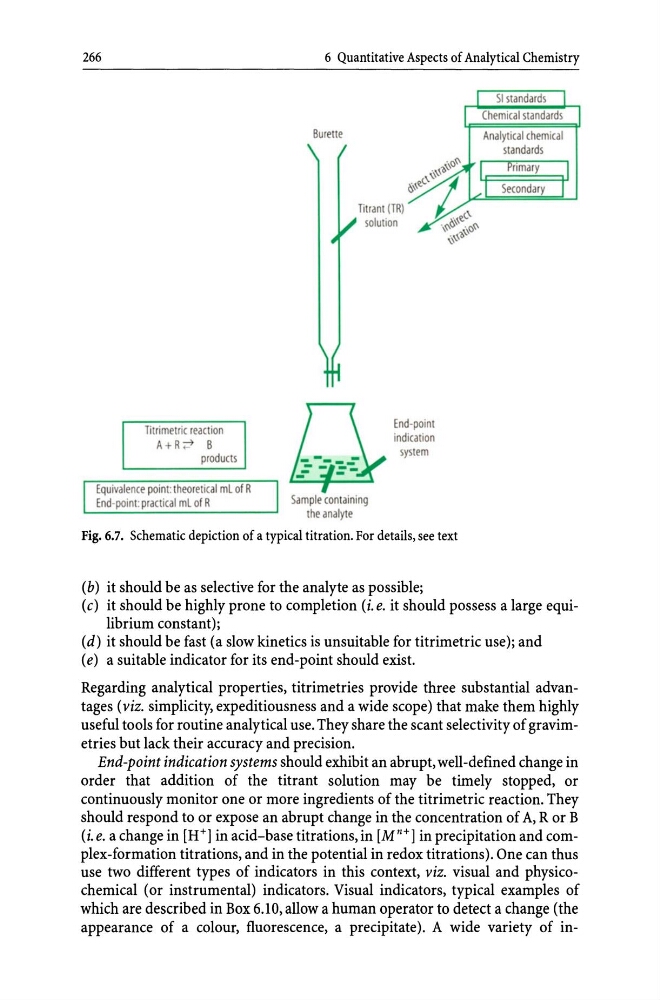
Fig.6.7. Schematic depiction of a typical titration. For details, see text
(b) it should be as selective for the analyte as possible;
I SI standards I
I Chemical standards
Analytical chemical
standards
(c) it should be highly prone to completion (i.e. it should possess a large equilibrium constant);
(d) it should be fast (a slow kinetics is unsuitable for titrimetric use); and
(e) a suitable indicator for its end-point should exist.
Regarding analytical properties, titrimetries provide three substantial advantages (viz. simplicity, expeditiousness and a wide scope) that make them highly
useful tools for routine analytical use. They share the scant selectivity of gravimetries but lack their accuracy and precision.
End-point indication systems should exhibit an abrupt, well-defined change in
order that addition of the titrant solution may be timely stopped, or
continuously monitor one or more ingredients of the titrimetric reaction. They
should respond to or expose an abrupt change in the concentration of A, R or B
(i. e. a change in [H+] in acid-base titrations, in [M"+] in precipitation and complex-formation titrations, and in the potential in redox titrations). One can thus
use two different types of indicators in this context, viz. visual and physicochemical (or instrumental) indicators. Visual indicators, typical examples of
which are described in Box 6.10, allow a human operator to detect a change (the
appearance of a colour, fluorescence, a precipitate). A wide variety of in-
6 Quantitative Aspects of Analytical Chemistry
Titrimetric react ion
A+R<7 B
products
Equivalence point: theoretical mL of R
End-point: practical mL of R
Bureue
Sample containing
the analyte
End -point
indication
system
Fig.6.7. Schematic depiction of a typical titration. For details, see text
(b) it should be as selective for the analyte as possible;
I SI standards I
I Chemical standards
Analytical chemical
standards
(c) it should be highly prone to completion (i.e. it should possess a large equilibrium constant);
(d) it should be fast (a slow kinetics is unsuitable for titrimetric use); and
(e) a suitable indicator for its end-point should exist.
Regarding analytical properties, titrimetries provide three substantial advantages (viz. simplicity, expeditiousness and a wide scope) that make them highly
useful tools for routine analytical use. They share the scant selectivity of gravimetries but lack their accuracy and precision.
End-point indication systems should exhibit an abrupt, well-defined change in
order that addition of the titrant solution may be timely stopped, or
continuously monitor one or more ingredients of the titrimetric reaction. They
should respond to or expose an abrupt change in the concentration of A, R or B
(i. e. a change in [H+] in acid-base titrations, in [M"+] in precipitation and complex-formation titrations, and in the potential in redox titrations). One can thus
use two different types of indicators in this context, viz. visual and physicochemical (or instrumental) indicators. Visual indicators, typical examples of
which are described in Box 6.10, allow a human operator to detect a change (the
appearance of a colour, fluorescence, a precipitate). A wide variety of in-