

6.1 Fundamentals
253
Instrumental analysis
,
,
,
,
,
,
,
,
,
, Equipment calibratio~
[ ~ ~ ~ ~ ~ ~ ~ ~ ~ J
:
I
I
1
: 1
: Method calibration :
I :
:
:
:
:
•
I
I
I
,
Base (51) ~tandards
:
I :
,
,
'
r---~~~--~~----'-----------~----------' ,
Chemical standards
:
:
' :
i
:- - - - - - - - - - - ~- - - - - - - - - _.J I
: : I
I':
.
Analytical chemical standards
.
~-------------~--------------]--------------j--------------4
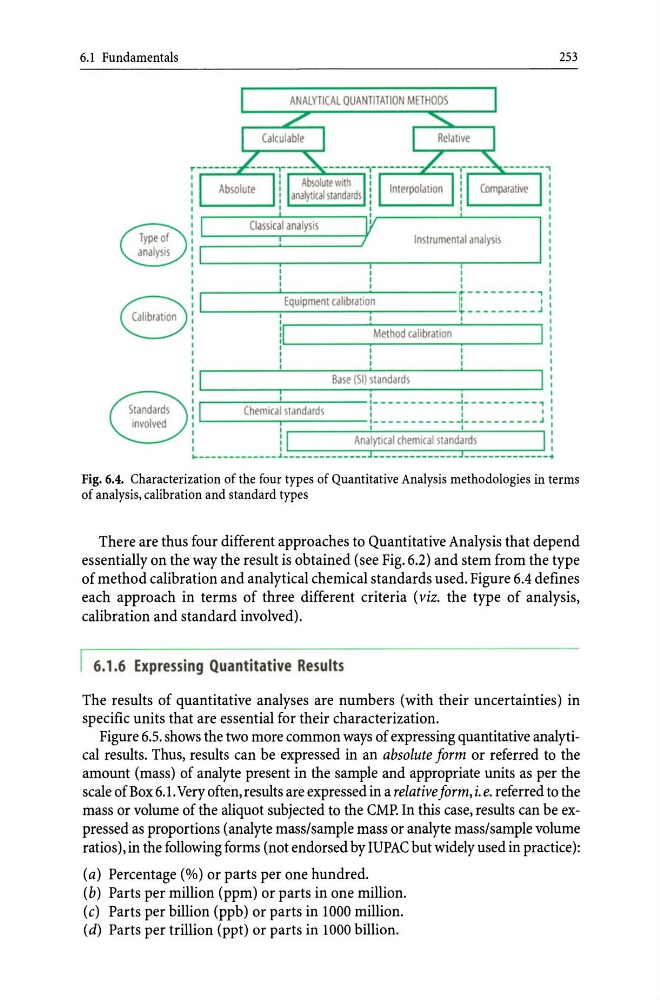
Fig. 6.4. Characterization of the four types of Quantitative Analysis methodologies in terms
of analysis, calibration and standard types
There are thus four different approaches to Quantitative Analysis that depend
essentially on the way the result is obtained (see Fig. 6.2) and stem from the type
of method calibration and analytical chemical standards used. Figure 6.4 defines
each approach in terms of three different criteria (viz. the type of analysis,
calibration and standard involved).
I 6.1.6 Expressing Quantitative Results
The results of quantitative analyses are numbers (with their uncertainties) in
specific units that are essential for their characterization.
Figure 6.5. shows the two more common ways of expressing quantitative analytical results. Thus, results can be expressed in an absolute form or referred to the
amount (mass) of analyte present in the sample and appropriate units as per the
scale of Box 6.1. Very often, results are expressed in a relative form, i. e. referred to the
mass or volume of the aliquot subjected to the CMP. In this case, results can be expressed as proportions (analyte mass/sample mass or analyte mass/sample volume
ratios), in the following forms (not endorsed by IUPAC but widely used in practice):
(a) Percentage (%) or parts per one hundred.
(b) Parts per million (ppm) or parts in one million.
(c) Parts per billion (ppb) or parts in 1000 million.
(d) Parts per trillion (ppt) or parts in 1000 billion.
253
Instrumental analysis
,
,
,
,
,
,
,
,
,
, Equipment calibratio~
[ ~ ~ ~ ~ ~ ~ ~ ~ ~ J
:
I
I
1
: 1
: Method calibration :
I :
:
:
:
:
•
I
I
I
,
Base (51) ~tandards
:
I :
,
,
'
r---~~~--~~----'-----------~----------' ,
Chemical standards
:
:
' :
i
:- - - - - - - - - - - ~- - - - - - - - - _.J I
: : I
I':
.
Analytical chemical standards
.
~-------------~--------------]--------------j--------------4
Fig. 6.4. Characterization of the four types of Quantitative Analysis methodologies in terms
of analysis, calibration and standard types
There are thus four different approaches to Quantitative Analysis that depend
essentially on the way the result is obtained (see Fig. 6.2) and stem from the type
of method calibration and analytical chemical standards used. Figure 6.4 defines
each approach in terms of three different criteria (viz. the type of analysis,
calibration and standard involved).
I 6.1.6 Expressing Quantitative Results
The results of quantitative analyses are numbers (with their uncertainties) in
specific units that are essential for their characterization.
Figure 6.5. shows the two more common ways of expressing quantitative analytical results. Thus, results can be expressed in an absolute form or referred to the
amount (mass) of analyte present in the sample and appropriate units as per the
scale of Box 6.1. Very often, results are expressed in a relative form, i. e. referred to the
mass or volume of the aliquot subjected to the CMP. In this case, results can be expressed as proportions (analyte mass/sample mass or analyte mass/sample volume
ratios), in the following forms (not endorsed by IUPAC but widely used in practice):
(a) Percentage (%) or parts per one hundred.
(b) Parts per million (ppm) or parts in one million.
(c) Parts per billion (ppb) or parts in 1000 million.
(d) Parts per trillion (ppt) or parts in 1000 billion.