

1.2 Analytical Chemical Information
\ !./
l \
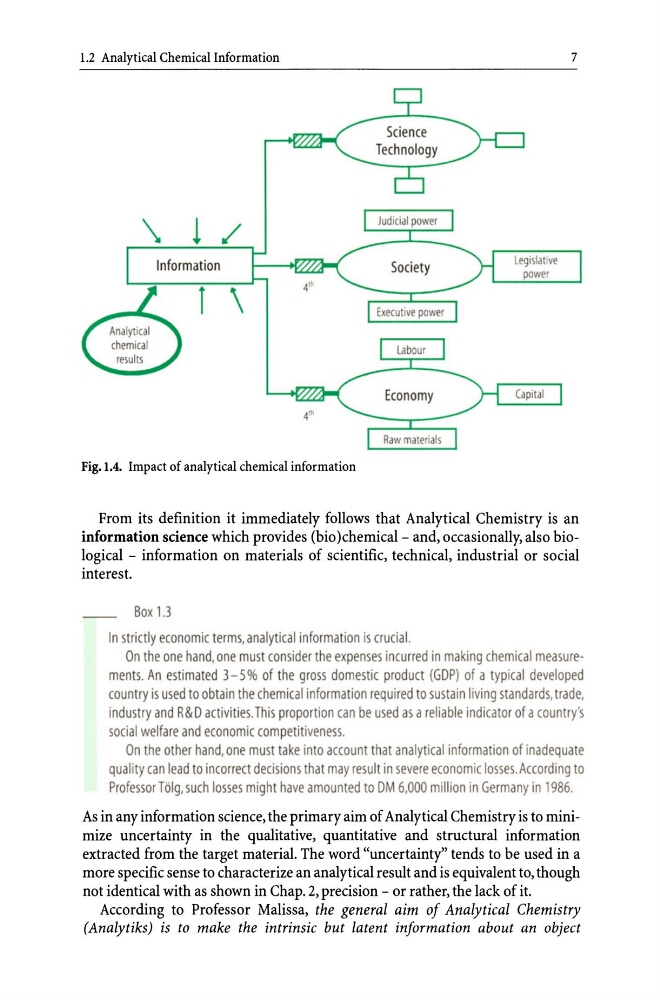
Fig.l.4. Impact of analytical chemical information
Science
Technology
Raw materials
Legislative
power
7
From its definition it immediately follows that Analytical Chemistry is an
information science which provides (bio )chemical - and, occasionally, also biological - information on materials of scientific, technical, industrial or social
interest.
Box 1.3
In strictly economic terms, analytical information is crucial.
On the one hand. one must consider the expenses incurred in making chemical measurements. An estimated 3 - 5 % of the gross domestic product (GDP) of a typical developed
country is used to obtain the chemical information required to sustain living standards. trade.
industry and R& D activities. This proportion can be used as a reliable indicator of a country's
social welfare and economic competitiveness.
On the other hand. one must take into account that analytical information of inadequate
quality can lead to incorrect decisions that may resul t in severe economic losses. According to
Professor Tolg, such losses might have amounted to DM 6.000 million in Germany in 1986.
As in any information science, the primary aim of Analytical Chemistry is to minimize uncertainty in the qualitative, quantitative and structural information
extracted from the target material. The word "uncertainty" tends to be used in a
more specific sense to characterize an analytical result and is equivalent to, though
not identical with as shown in Chap. 2, precision - or rather, the lack of it.
According to Professor Malissa, the general aim of Analytical Chemistry
(Analytiks) is to make the intrinsic but latent information about an object
\ !./
l \
Fig.l.4. Impact of analytical chemical information
Science
Technology
Raw materials
Legislative
power
7
From its definition it immediately follows that Analytical Chemistry is an
information science which provides (bio )chemical - and, occasionally, also biological - information on materials of scientific, technical, industrial or social
interest.
Box 1.3
In strictly economic terms, analytical information is crucial.
On the one hand. one must consider the expenses incurred in making chemical measurements. An estimated 3 - 5 % of the gross domestic product (GDP) of a typical developed
country is used to obtain the chemical information required to sustain living standards. trade.
industry and R& D activities. This proportion can be used as a reliable indicator of a country's
social welfare and economic competitiveness.
On the other hand. one must take into account that analytical information of inadequate
quality can lead to incorrect decisions that may resul t in severe economic losses. According to
Professor Tolg, such losses might have amounted to DM 6.000 million in Germany in 1986.
As in any information science, the primary aim of Analytical Chemistry is to minimize uncertainty in the qualitative, quantitative and structural information
extracted from the target material. The word "uncertainty" tends to be used in a
more specific sense to characterize an analytical result and is equivalent to, though
not identical with as shown in Chap. 2, precision - or rather, the lack of it.
According to Professor Malissa, the general aim of Analytical Chemistry
(Analytiks) is to make the intrinsic but latent information about an object