

3.6 Specific Meanings of Traceability
Relat ionship
to standards
Documented
history of
production
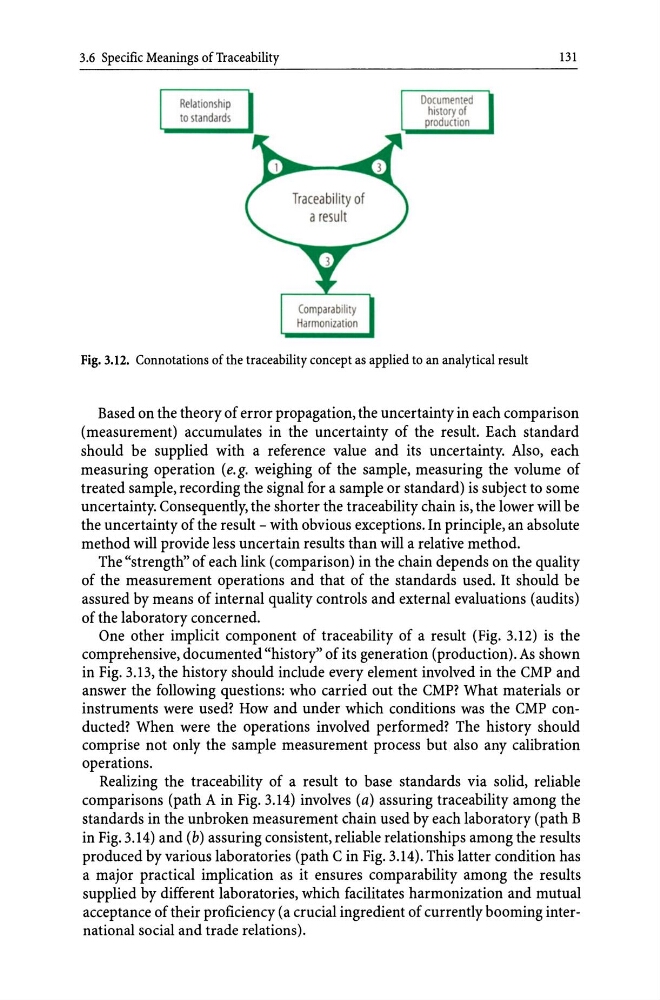
Fig. 3.12. Connotations of the traceability concept as applied to an analytical result
131
Based on the theory of error propagation, the uncertainty in each comparison
(measurement) accumulates in the uncertainty of the result. Each standard
should be supplied with a reference value and its uncertainty. Also, each
measuring operation (e.g. weighing of the sample, measuring the volume of
treated sample, recording the signal for a sample or standard) is subject to some
uncertainty. Consequently, the shorter the traceability chain is, the lower will be
the uncertainty of the result - with obvious exceptions. In principle, an absolute
method will provide less uncertain results than will a relative method.
The «strength" of each link (comparison) in the chain depends on the quality
of the measurement operations and that of the standards used. It should be
assured by means of internal quality controls and external evaluations (audits)
of the laboratory concerned.
One other implicit component of traceability of a result (Fig. 3.12) is the
comprehensive, documented «history" of its generation (production). As shown
in Fig. 3.13, the history should include every element involved in the CMP and
answer the following questions: who carried out the CMP? What materials or
instruments were used? How and under which conditions was the CMP conducted? When were the operations involved performed? The history should
comprise not only the sample measurement process but also any calibration
operations.
Realizing the traceability of a result to base standards via solid, reliable
comparisons (path A in Fig. 3.14) involves (a) assuring traceability among the
standards in the unbroken measurement chain used by each laboratory (path B
in Fig. 3.14) and (b) assuring consistent, reliable relationships among the results
produced by various laboratories (path C in Fig. 3.14). This latter condition has
a major practical implication as it ensures comparability among the results
supplied by different laboratories, which facilitates harmonization and mutual
acceptance of their proficiency (a crucial ingredient of currently booming international social and trade relations).
Relat ionship
to standards
Documented
history of
production
Fig. 3.12. Connotations of the traceability concept as applied to an analytical result
131
Based on the theory of error propagation, the uncertainty in each comparison
(measurement) accumulates in the uncertainty of the result. Each standard
should be supplied with a reference value and its uncertainty. Also, each
measuring operation (e.g. weighing of the sample, measuring the volume of
treated sample, recording the signal for a sample or standard) is subject to some
uncertainty. Consequently, the shorter the traceability chain is, the lower will be
the uncertainty of the result - with obvious exceptions. In principle, an absolute
method will provide less uncertain results than will a relative method.
The «strength" of each link (comparison) in the chain depends on the quality
of the measurement operations and that of the standards used. It should be
assured by means of internal quality controls and external evaluations (audits)
of the laboratory concerned.
One other implicit component of traceability of a result (Fig. 3.12) is the
comprehensive, documented «history" of its generation (production). As shown
in Fig. 3.13, the history should include every element involved in the CMP and
answer the following questions: who carried out the CMP? What materials or
instruments were used? How and under which conditions was the CMP conducted? When were the operations involved performed? The history should
comprise not only the sample measurement process but also any calibration
operations.
Realizing the traceability of a result to base standards via solid, reliable
comparisons (path A in Fig. 3.14) involves (a) assuring traceability among the
standards in the unbroken measurement chain used by each laboratory (path B
in Fig. 3.14) and (b) assuring consistent, reliable relationships among the results
produced by various laboratories (path C in Fig. 3.14). This latter condition has
a major practical implication as it ensures comparability among the results
supplied by different laboratories, which facilitates harmonization and mutual
acceptance of their proficiency (a crucial ingredient of currently booming international social and trade relations).