

294
A. Berkessel
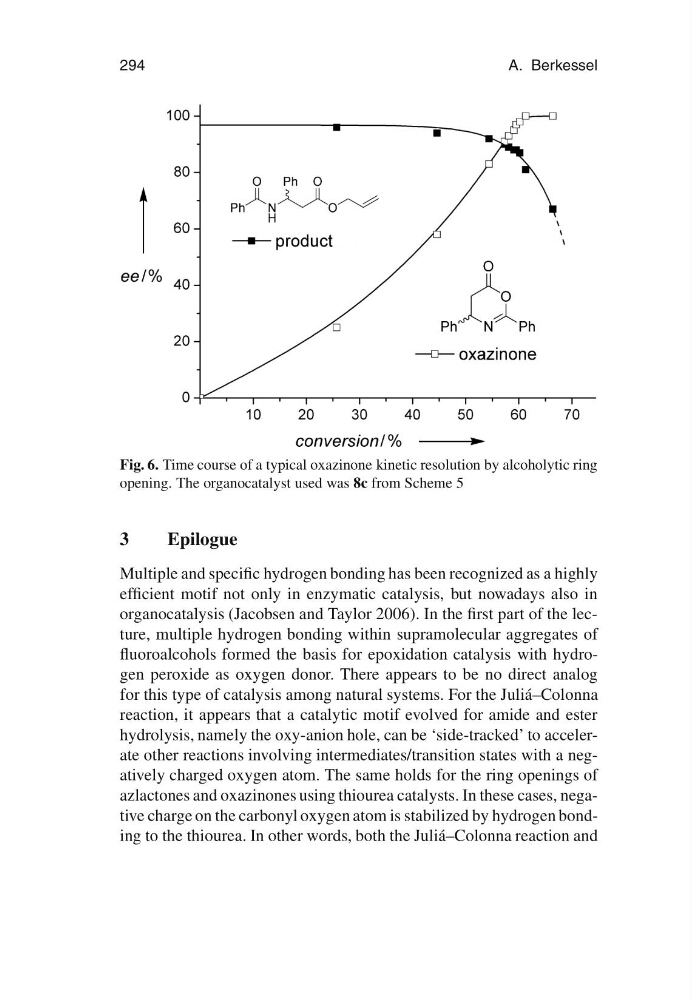
Fig. 6. Time course of a typical oxazinone kinetic resolution by alcoholytic ring
opening. The organocatalyst used was 8c from Scheme 5
3
Epilogue
Multiple and specific hydrogen bonding has been recognized as a highly
efficient motif not only in enzymatic catalysis, but nowadays also in
organocatalysis (Jacobsen and Taylor 2006). In the first part of the lecture, multiple hydrogen bonding within supramolecular aggregates of
fluoroalcohols formed the basis for epoxidation catalysis with hydrogen peroxide as oxygen donor. There appears to be no direct analog
for this type of catalysis among natural systems. For the Juliá–Colonna
reaction, it appears that a catalytic motif evolved for amide and ester
hydrolysis, namely the oxy-anion hole, can be ‘side-tracked’ to accelerate other reactions involving intermediates/transition states with a negatively charged oxygen atom. The same holds for the ring openings of
azlactones and oxazinones using thiourea catalysts. In these cases, negative charge on the carbonyl oxygen atom is stabilized by hydrogen bonding to the thiourea. In other words, both the Juliá–Colonna reaction and