

New Developments in EnantioselectiveBrønsted Acid Catalysis
233
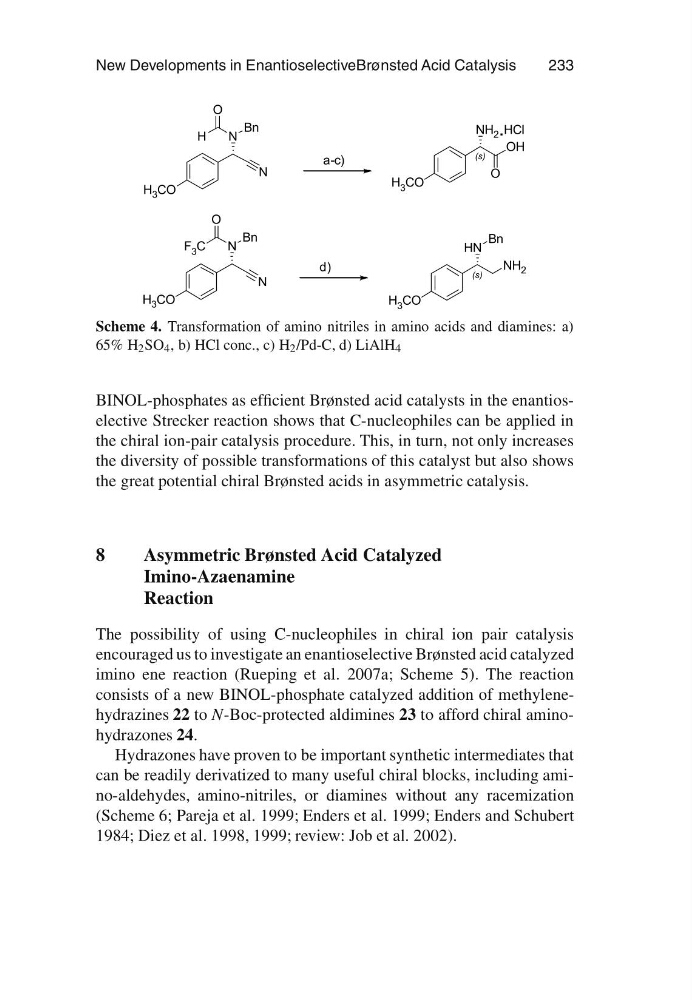
Scheme 4. Transformation of amino nitriles in amino acids and diamines: a)
65% H 2 SO 4 , b) HCl conc., c) H 2 /Pd-C, d) LiAlH 4
BINOL-phosphates as efficient Brønsted acid catalysts in the enantioselective Strecker reaction shows that C-nucleophiles can be applied in
the chiral ion-pair catalysis procedure. This, in turn, not only increases
the diversity of possible transformations of this catalyst but also shows
the great potential chiral Brønsted acids in asymmetric catalysis.
8
Asymmetric Brønsted Acid Catalyzed
Imino-Azaenamine
Reaction
The possibility of using C-nucleophiles in chiral ion pair catalysis
encouraged us to investigate an enantioselective Brønsted acid catalyzed
imino ene reaction (Rueping et al. 2007a; Scheme 5). The reaction
consists of a new BINOL-phosphate catalyzed addition of methylenehydrazines 22 to N-Boc-protected aldimines 23 to afford chiral aminohydrazones 24.
Hydrazones have proven to be important synthetic intermediates that
can be readily derivatized to many useful chiral blocks, including amino-aldehydes, amino-nitriles, or diamines without any racemization
(Scheme 6; Pareja et al. 1999; Enders et al. 1999; Enders and Schubert
1984; Diez et al. 1998, 1999; review: Job et al. 2002).