

190
K. Zeitler
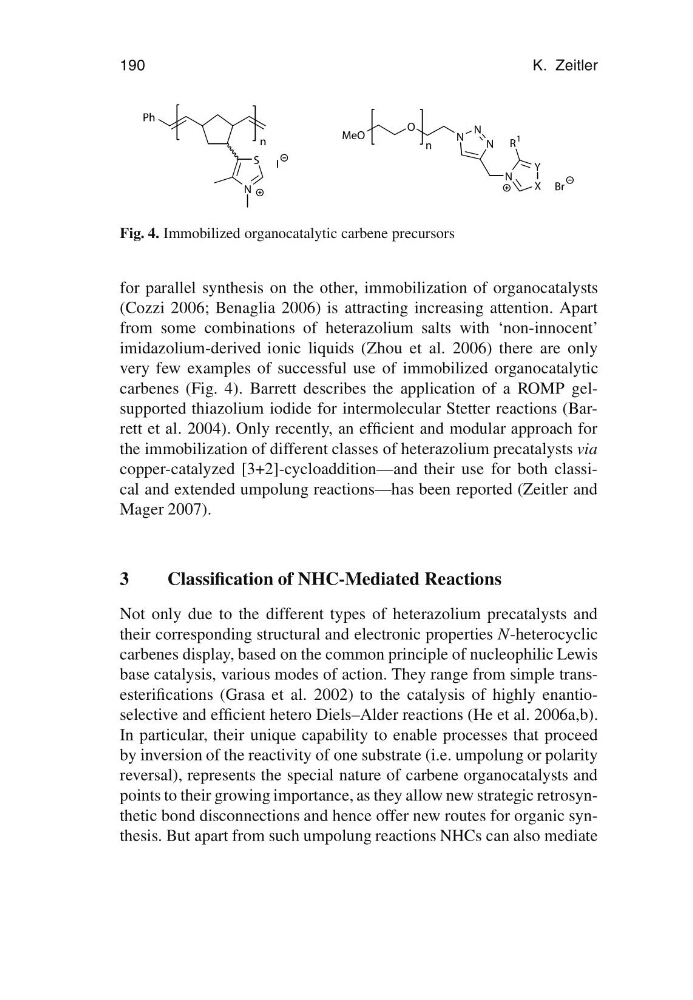
Fig. 4. Immobilized organocatalytic carbene precursors
for parallel synthesis on the other, immobilization of organocatalysts
(Cozzi 2006; Benaglia 2006) is attracting increasing attention. Apart
from some combinations of heterazolium salts with ‘non-innocent’
imidazolium-derived ionic liquids (Zhou et al. 2006) there are only
very few examples of successful use of immobilized organocatalytic
carbenes (Fig. 4). Barrett describes the application of a ROMP gelsupported thiazolium iodide for intermolecular Stetter reactions (Barrett et al. 2004). Only recently, an efficient and modular approach for
the immobilization of different classes of heterazolium precatalysts via
copper-catalyzed [3+2]-cycloaddition—and their use for both classical and extended umpolung reactions—has been reported (Zeitler and
Mager 2007).
3
Classification of NHC-Mediated Reactions
Not only due to the different types of heterazolium precatalysts and
their corresponding structural and electronic properties N-heterocyclic
carbenes display, based on the common principle of nucleophilic Lewis
base catalysis, various modes of action. They range from simple transesterifications (Grasa et al. 2002) to the catalysis of highly enantioselective and efficient hetero Diels–Alder reactions (He et al. 2006a,b).
In particular, their unique capability to enable processes that proceed
by inversion of the reactivity of one substrate (i.e. umpolung or polarity
reversal), represents the special nature of carbene organocatalysts and
points to their growing importance, as they allow new strategic retrosynthetic bond disconnections and hence offer new routes for organic synthesis. But apart from such umpolung reactions NHCs can also mediate